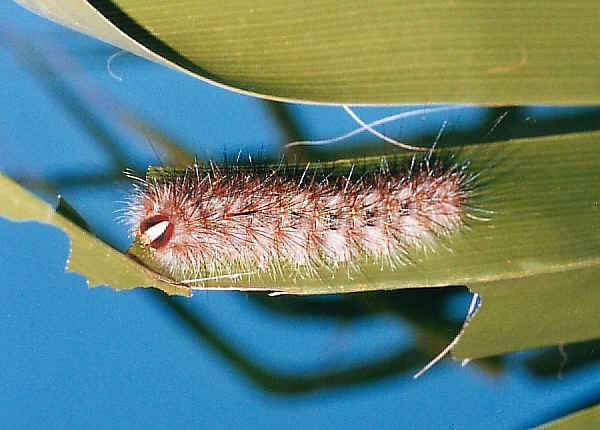
Palm Anthelid Moth - Anthela sp.
Family Anthelidae
- This page contains information about Palm Anthelid Moths that we found in the Brisbane area, Queensland, Australia.
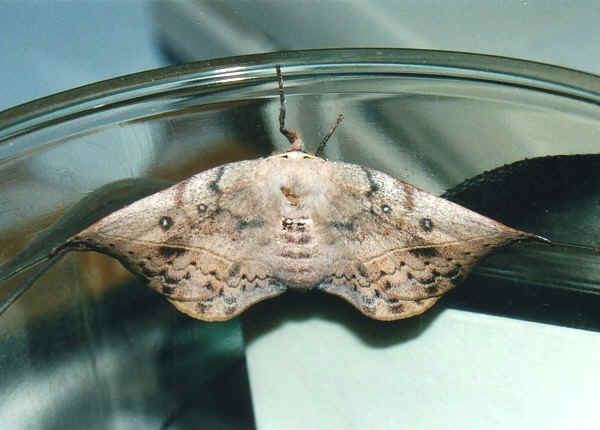
- Moth wingspan 70mm
- Caterpillar 50mm
- We found the hairy caterpillar on the palm tree in our front yard in late summer. We kept it in a bottle with some palm leaf. After a few days, it turned into a silk cocoon. The cocoon was dark brown in colour, formed on the bottom of the bottle covered by the palm leaf.
- We handle the caterpillar very carefully for we know that its dense hair will cause severe urticaria if contacted.

- About four weeks later, we saw a light brown moth came out. It flied away after we took some photos. We sometimes see this Anthelid Moth coming to our windows at night.
- To raise caterpillars is fun, especially if we find an unknown caterpillar. It is easily too. We have raised some caterpillars such as the Wanderer, the Crow , the Orchard Butterflies and the Brown Tussock moths. You may like to raise one too. Try it yourself next time when you find a caterpillar. Email me if you successfully raise one or if you find any problem.