|
| |
Order
Orthoptera
- This page contains pictures and information about Grasshoppers, Crickets and
Katydids that we found in the Brisbane area, Queensland, Australia.
-
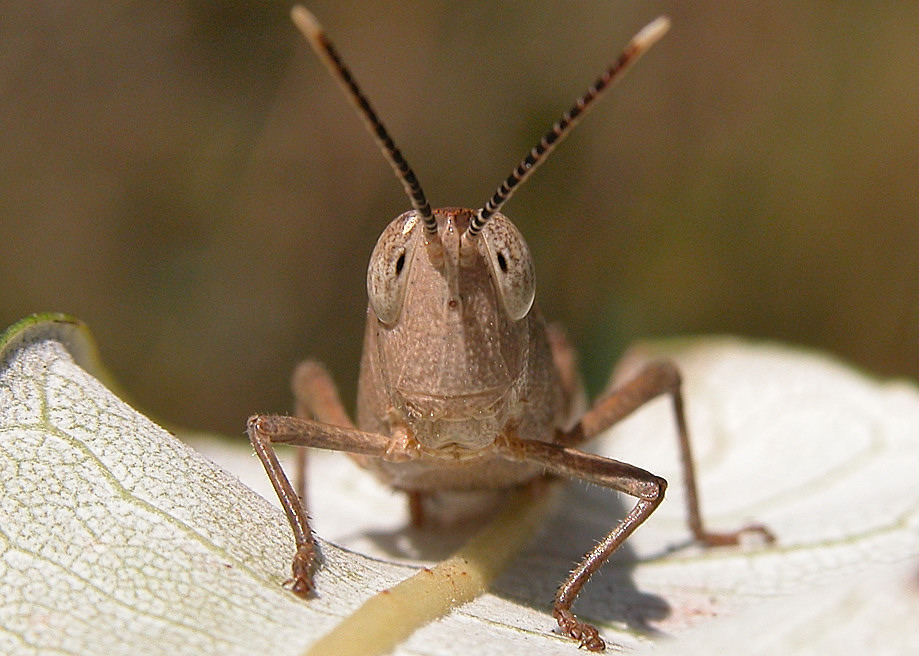 - "Hi, welcome to have a closer look on Grasshoppers."
-
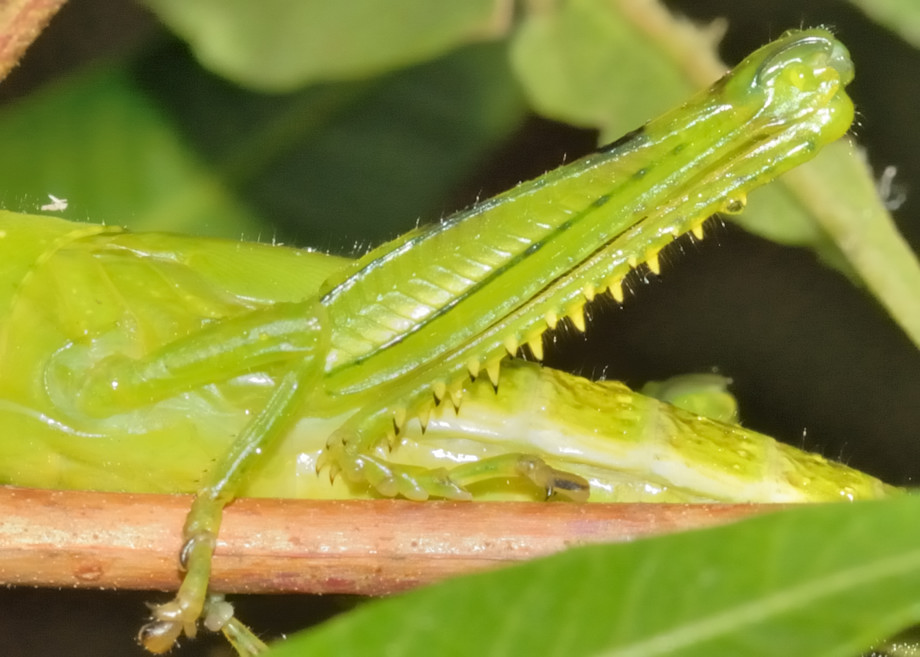
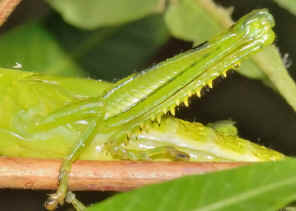
- Grasshoppers, crickets and katydids are in Order Orthoptera. Their size ranges from 5mm to 100mm.
Most of them have the hind
legs highly developed, much stronger and larger than the other four legs.
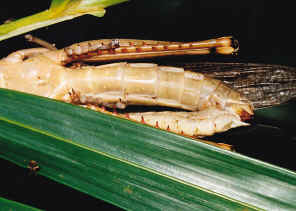
They are good in jumping. The adults insects have four wings, the front
wings, knows as tegmina, is tough and narrow when compare with the hind wings.
At rest, the hind wings folded like a fans, covered and protected by the
tegmina. The flight is mainly achieved by the broadly opened membranous hind
wings and the tegmina will give only little help.
More about insects structure can be found in this page.
-
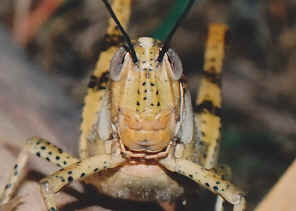 -
- They are incomplete metamorphosis and their young, the nymphs, look much
the same as their adults excepts smaller and wingless. Later instars have
wing buds but still cannot fly.
-
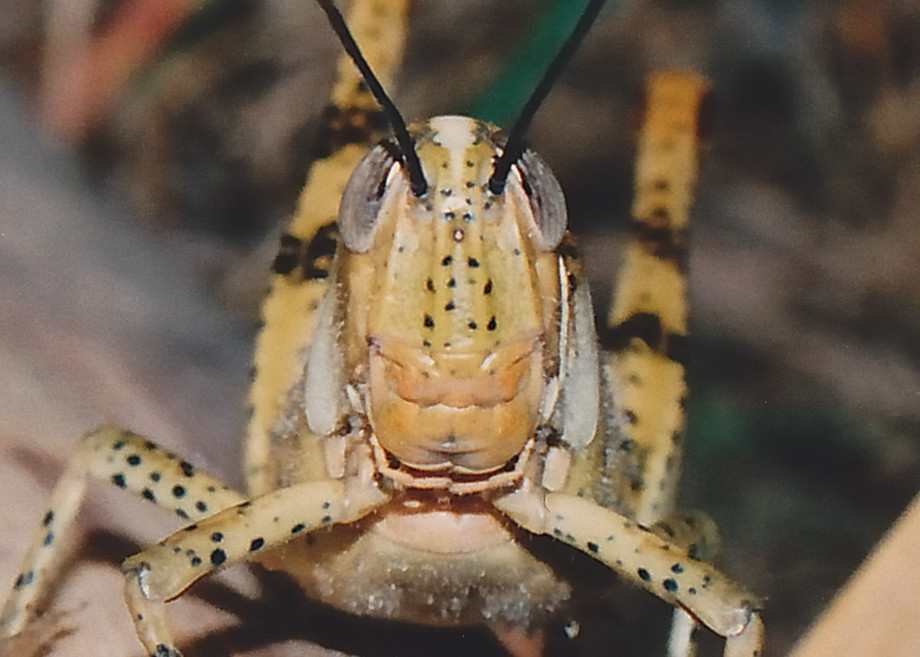
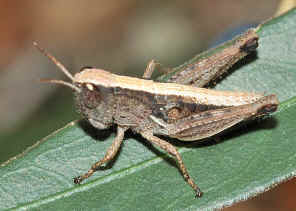 - Notice the tympanum, which is the grasshopper's hearing
organ.
-
- Many species in this order can sing by stridulation. Males use sound to attract females.
For most species sound is produced by rubbing modified portions of the forewings
together. A good example of how cricket makes those sound can be found in
this page.
-
- To
quickly identify the grasshopper you found, try our Field
Guide page.
Classification :
- In the Orthoptera Order, the are two suborder: the Suborder Ensifera and Suborder Caelifera, each of which contains a numbers of families. Followings
are the list of families that we found up to this moment.
-
-
Suborder Ensifera
- Crickets
and Katydids
- Members in this Suborder have very long antennae, some may be several times of their body length. The auditory organs
located on the fore legs. Their
stridulation are produced by the mechanisms on the base of their
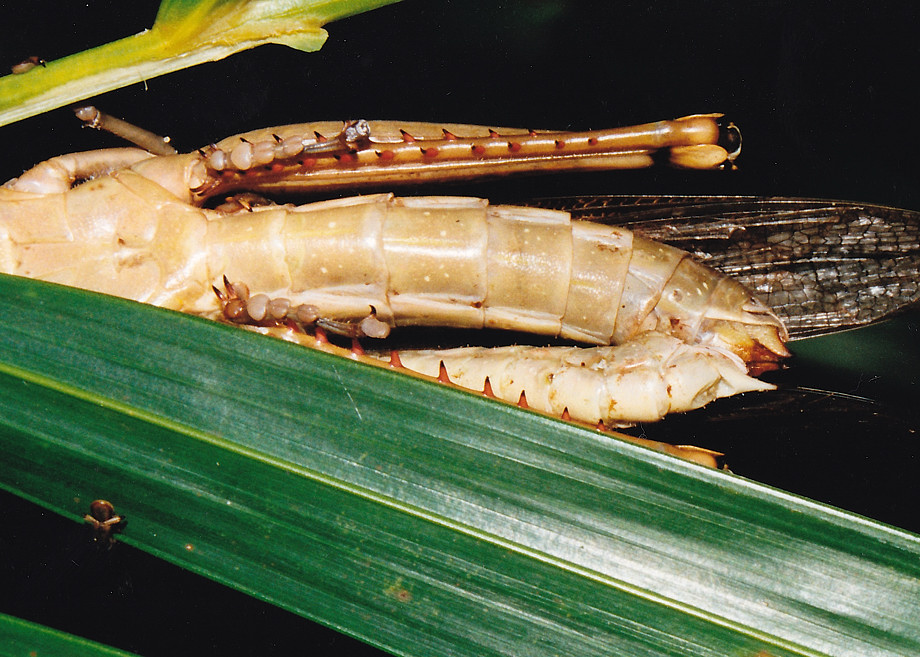
forewings. The females usually have long ovipositors extended from the end
of their abdomen.
-
- Suborder Caelifera
This suborder includes the short-horned grasshoppers, grasshoppers and locust.
Members in this suborder have the antennae not very long. Most species feed on grass and low bushes.
The auditory organs are on the first segment of their abdomen. They produce
their love song, the stridulation, by lateral part of their forewings. Females normally larger than males
and with short ovipositors.
-
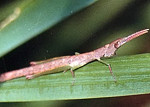
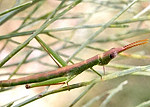
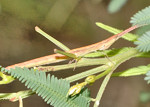
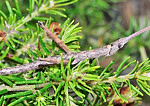
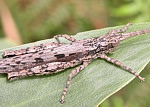
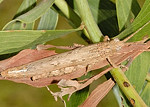
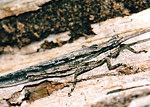
- Family EUMASTACIDAE - Morabine
Grasshoppers
Most members in this family are wingless. They are usually very elongated and
narrow. They are well camouflaged and hide in the plants.
 -
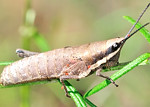
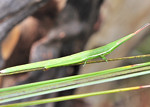
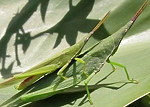
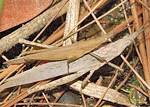
- Family PYRGOMORPHIDAE - Pyrgomorphs
- This family is very close related with the Family ACRIDIDAE
and sometimes put under ACRIDIDAE as the subfamily. They are medium in size.
Usually they hide in grasses, not quite jump or fly. Protection simply relies on
their camouflage colour.
 -
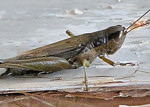
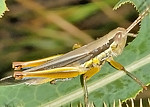
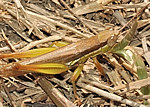
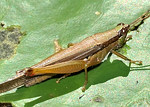
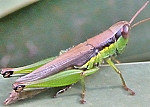
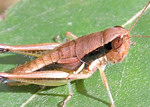
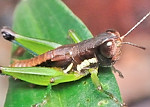
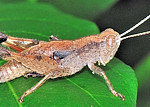
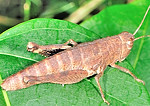
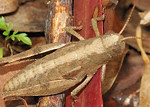
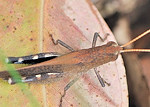
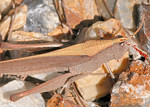
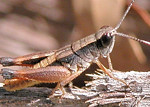
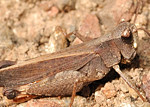
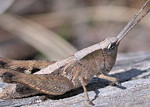
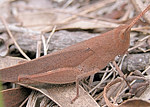
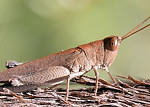
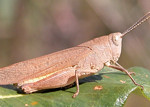
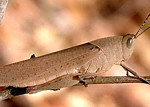
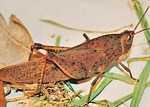
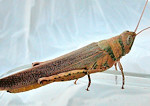
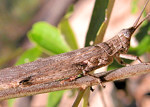
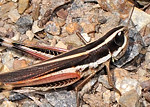
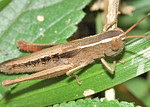
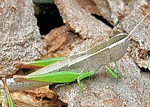
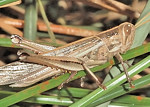
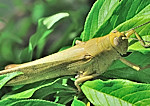
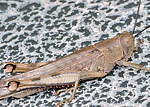
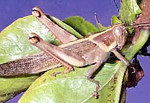
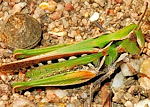
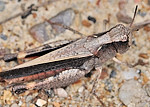
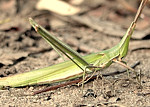
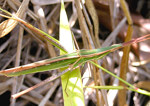
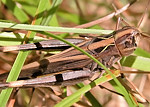
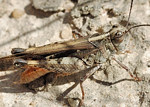
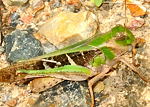
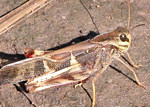
- Family ACRIDIDAE - Typical Grasshoppers
-
Members in this family usually have their wings well developed and sometimes brightly
coloured. Most of them have an annual life cycle. Some species, under some
conditions, will migrate in a dense swarms form, known as locusts, bring large
damage to the crop.
  -
- Family
Tetrigidae - Pygmy Grasshoppers
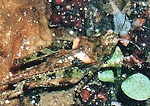
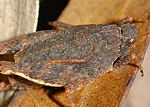
- Pygmy Grasshoppers prefer wet habitat. They may be found along
watercourses, sit on mud and amongst stones along creeks. Some of them were
found on rainforest floor. They feed on algae and vegetation.
 -
- Reference:
- 1. Insects
of Australia, CSIRO, Division of Entomology, Melbourne University
Press, 2nd Edition 1991, pp 369.
- 2. Insects of Australia and New Zealand - R. J. Tillyard, Angus
& Robertson, Ltd, Sydney, 1926, p94.
- 3. A Guide to Australian Grasshoppers and Locusts - DCF
Rentz, RC Lewis, YN Su and MS Upton, 2003.
- 4. Northern
Territory Insects, A Comprehensive Guide CD - Graham Brown, 2009.
Back to top
[ Field Guide ] [ Questions for Discussion ] [ Eumastacidae ] [ Pyrgomorphs ] [ Acrididae ] [ Tetrigidae ] [ Unidentified Grasshoppers ] | |
|