Home
 
Grasshoppers
Field Guide
Questions for Discussion
 

Gryllacrididae 
Striped Raspy Cricket
SpiderFaceLeafRollingCricket 
 
Tettigoniidae
Conocephalinae 
BlackishMeadow Katydid
Spine-headed Katydid 
Meconematine
Predatory Katydid 
Pseudophyllinae
False Leaf Katydid 
Phaneropterinae 
Mountain Katydid
32-Spotted Katydid
Gum Leaf Katydid
Small Grassland Katydid
Small Gum Tree Katydid
Stout-body Katydid 
Common Garden Katydid
White Back Nymph
Unidentified Katydids
 
Gryllidae
Slow-chirpingMottled Field Cricket
Silent Bush Cricket
Scale Cricket 
 
Gryllotalpidae
Common Mole Cricket
Dark Night Mole Cricket 
 

Eumastacidae
Matchstick 
 
Pyrgomorphidae
NorthernGrassPyrgimorph
 
Acrididae
Oxyinae
Creek Grasshopper 
Catantopini
Genera Goniaea
MimeticGumleafGhopper
Black-kneed GumleafGhopper
Slender Gumleaf Ghopper
Gumleaf Grasshopper
Other Catantopini
Bicoloured Cedarinia
Epallia Grasshopper
Queensland White-tips
Common Pardillana
Common Adreppus
BarkmimickingGhopper 
Handsome Macrotona
False Perloccia 
Cyrtacanthacridini 
Spur-throated Locust
Giant Grasshopper
Acridinae
Froggatt's Buzzer
Golden Bandwing
Giant Green Slantface
Caledia 
Yellow-winged Locust
 
Tetrigidae
Pygmy Grasshoppers 
 
UnidentifiedGhoppers 


Tribe Cyrtacanthacridini - Giant Spur-throated Grasshoppers

Family ACRIDIDAE

Grasshoppers in this group are large to very large in size, included the largest grasshopper in Australia.

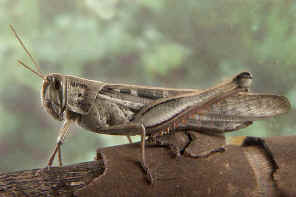
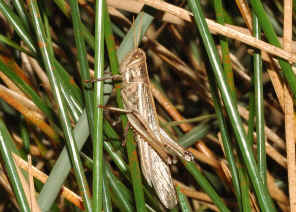
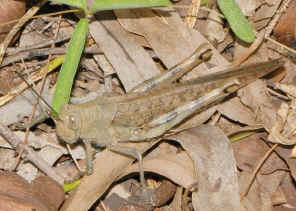
Spur-throated Locust
wpeF.jpg (28181 bytes)  DSC_5006.jpg (116016 bytes)
Photo: Keith Power, Toowoomba
Austracris proxima, tribe Cyrtacanthacridini,
This is one of the pest locust,  forms swarms and can reach plague status in Australia. They attack various crops like sorghum, sunflower or soybean. More information please click on here.
 
 
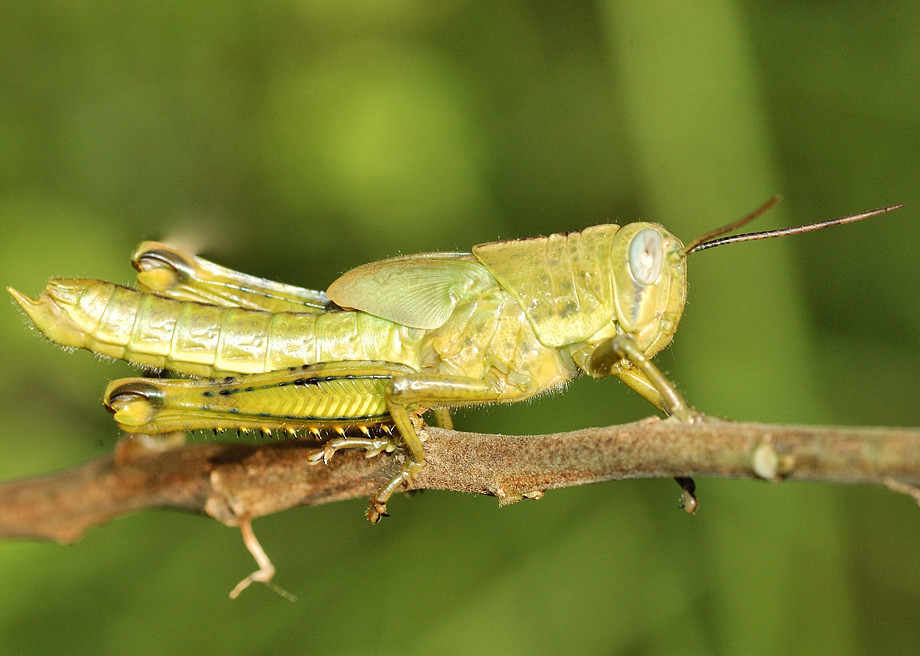
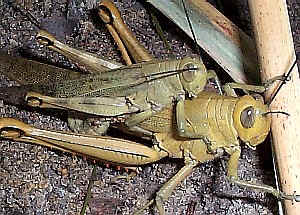
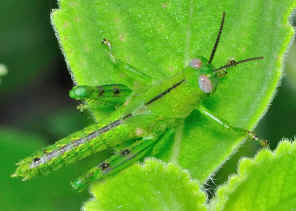
Giant Grasshopper, Giant Valanga
 
Valanga irregularis, tribe Cyrtacanthacridini, nymph length 50mm, female length 90mm
They also commonly known as Hedge Grasshopper. They have large compound eyes, can see meters away. If you approach near to them, they try to hide behind the leaf or branches, will still peep at you by either one of their large eyes. We easily found these grasshoppers on different plants in our back yard. They eat almost all kinds of leaves. In the morning, they were found sun-bathing on the trees. At that time they are easy to catch. After they have been warmed up, they jump very high and fly away quickly. Notice the spines on its hind legs, if they are caught by birds or by spider web, they will attack their predators by their hind legs. We have more information on this grasshopper, please click here.


Reference:
1. Insects of Australia, CSIRO, Division of Entomology, Melbourne University Press, 2nd Edition 1991, p391.
2. Grasshopper Country - the Abundant Orthopteroid Insects of Australia, D Rentz, UNSW Press, 1996, p192.

Back to top

Up ] Subfamily Oxyinae ] Tribe Catantopini ] [ Tribe Cyrtacanthacridini ] Subfamily Acridinae ]


See us in our Home page. Download large pictures in our Wallpaper web page. Give us comments by sending email to us. A great way to support us is to buy the CD from us.  
Last updated: May 02, 2007.