Home
 
Grasshoppers
Field Guide
Questions for Discussion
 

Gryllacrididae 
Striped Raspy Cricket
 
Tettigoniidae
Conocephalinae 
BlackishMeadow Katydid
Spine-headed Katydid 
Meconematine
Predatory Katydid 
Pseudophyllinae
False Leaf Katydid 
Phaneropterinae 
Mountain Katydid
32-Spotted Katydid
Gum Leaf Katydid
Small Grassland Katydid
Small Gum Tree Katydid 
Common Garden Katydid
White Back Nymph
Unidentified Katydids
 
Gryllidae
Slow-chirpingMottled Field Cricket
Silent Bush Cricket
 
Gryllotalpidae
Common Mole Cricket
Dark Night Mole Cricket 
 

Eumastacidae
Matchstick 
 
Pyrgomorphidae
NorthernGrassPyrgimorph
 
Acrididae
Oxyinae
Creek Grasshopper 
Catantopini
Genera Goniaea
MimeticGumleafGhopper
Black-kneed GumleafGhopper
Slender Gumleaf Ghopper
Gumleaf Grasshopper
Other Catantopini
Bicoloured Cedarinia
Epallia Grasshopper
Queensland White-tips
Common Pardillana
Common Adreppus
BarkmimickingGhopper 
Handsome Macrotona
False Perloccia 
Cyrtacanthacridini 
Spur-throated Locust
Giant Grasshopper
Acridinae
Froggatt's Buzzer
Golden Bandwing
Giant Green Slantface
Caledia 
Yellow-winged Locust
UnidentifiedGhoppers 


Bicoloured Cedarinia - Cedarinia sp.

Family Acrididae

This page contains pictures and information about the Bicoloured Cedarinia Grasshoppers that we found in the Brisbane area, Queensland, Australia.  
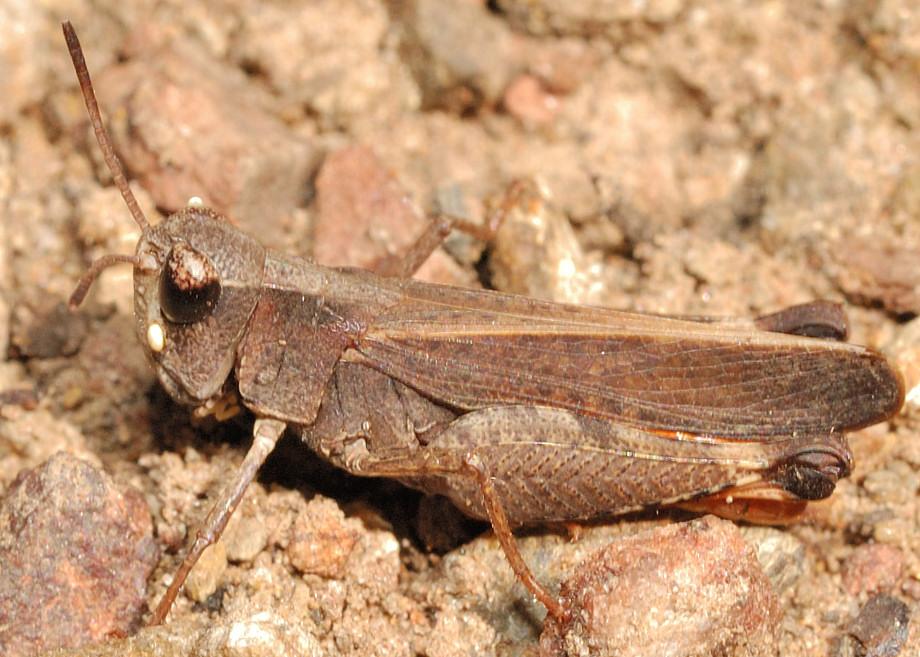
Body length female 35mm, male 20mm 
 
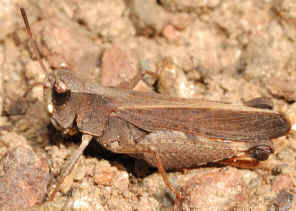
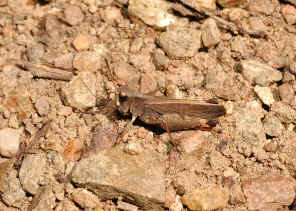
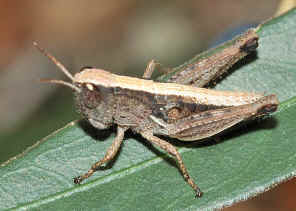
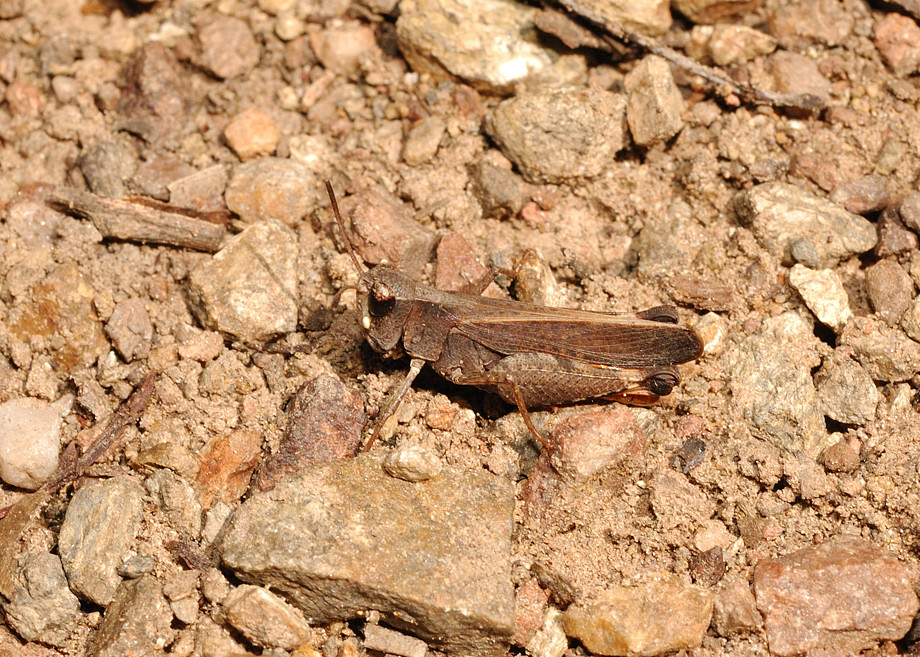
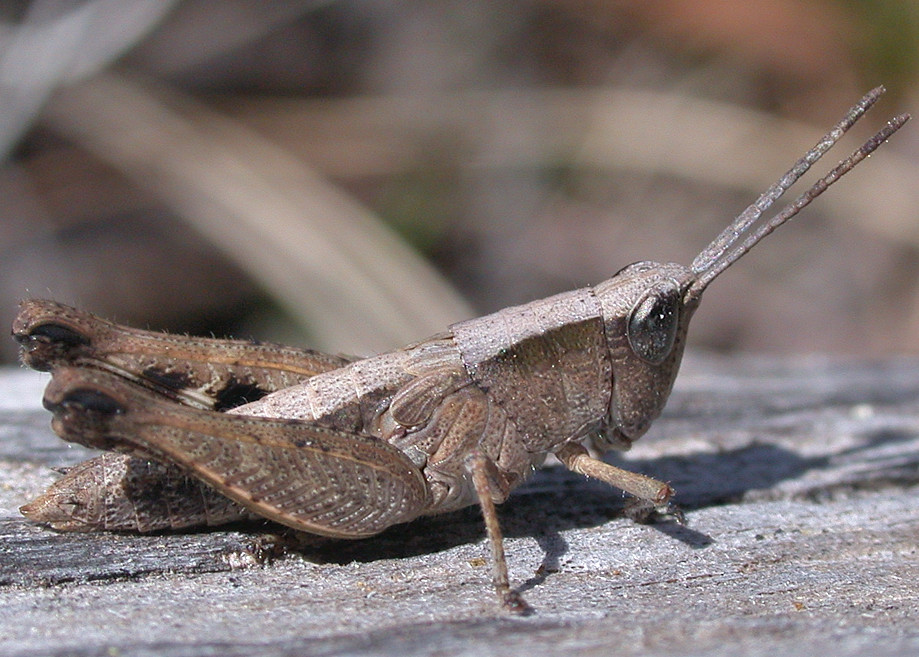
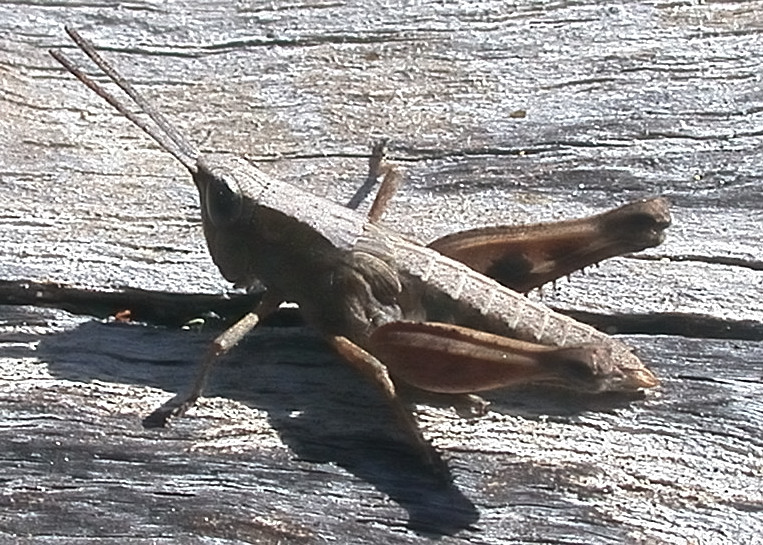
Both female and male of this grasshopper have very tiny wings. The female size is more than double of the male. The female is pale brown in colour. The male is darker in colour and look quite different too. 
wpe1A.jpg (40989 bytes)  wpeB.jpg (31989 bytes)
 
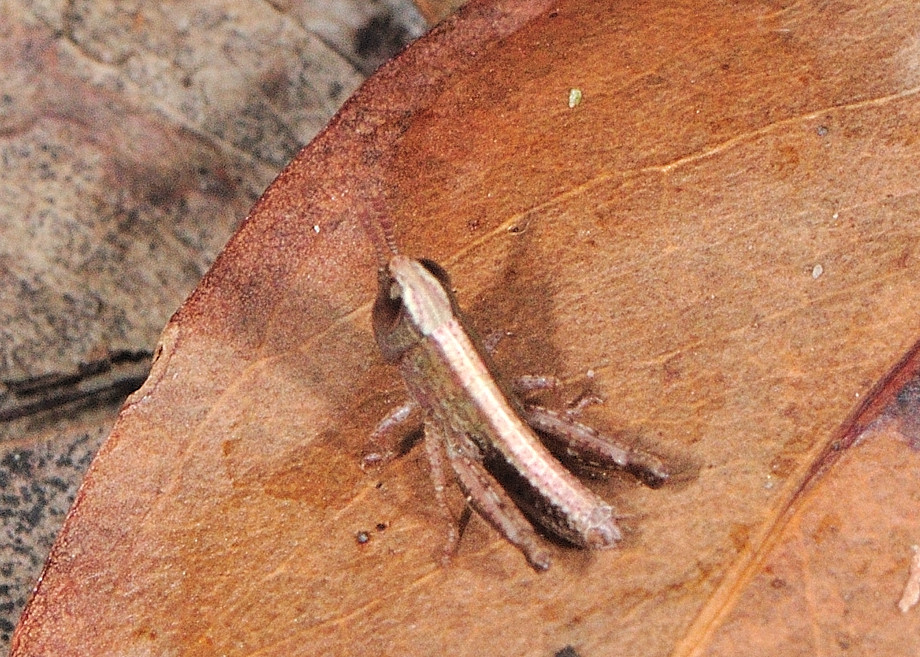
We first found this female grasshopper near Bulimba Creek in Brisbane. We found two of them, one was on the ground and one was one the tree about a meter from ground. They were pale grown in colour, their wings are not developed so we thought they are immature nymphs. We brought one home to see how they develop into adult. 
 
wpe26.jpg (36780 bytes)
 
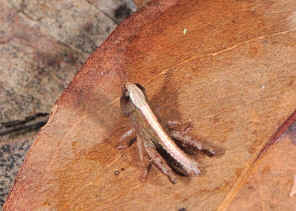
Two days later, we saw the "nymph" laid eggs, as shown in the above picture. We then understood that she was not a nymph but a female adult. This species female is 'wingless' !. When we looked carefully at the close-up picture, we can see that she had the very tiny but fully developed wings. Other grasshopper nymphs have developing wing buds. We were not sure if the male is winged or wingless.

wpe13.jpg (36953 bytes)  Wingle3.jpg (40963 bytes)

Few weeks later, at the same place we found this mating couple. Then we knew that their males are wingless (actually, very tiny developed wings) too.

wpeF.jpg (27647 bytes)
Adult male body length 20mm 
 
After we learnt their males are wingless, we found that they are quite common and easily found on the floor of most bushlands in Brisbane. Before, we might thought they were the small nymph and did not bother to carefully look at them.

Reference:
1. Grasshopper Country - the Abundant Orthopteroid Insects of Australia, D Rentz, UNSW Press, 1996, p182.
2. A Guide to Australian Grasshoppers and Locusts - DCF Rentz, RC Lewis, YN Su and MS Upton, 2003, p112.

Back to top

Up ] Genera Goniaea ] [ Bicoloured Cedarinia ] Epallia Grasshopper ] Queensland White-tips ] Common Pardillana ] Common Adreppus ] Bark-Mmicing Grasshopper ] Handsome Macrotona ] False Perloccia ]


Thank you australian-insects.com for the web hosting. 
See us in our Home page. Download large pictures in our Wallpaper web page. Give us comments in our Blog, or send email to us. A great way to support us is to buy the CD from us.  
Last updated: May 05, 2007.