|
| |
Family ACRIDIDAE
- This page contains pictures and information about Slant-faced and Band-winged Grasshoppers, Locusts
in subfamily Acridinae that we found in the Brisbane area, Queensland,
Australia.
-
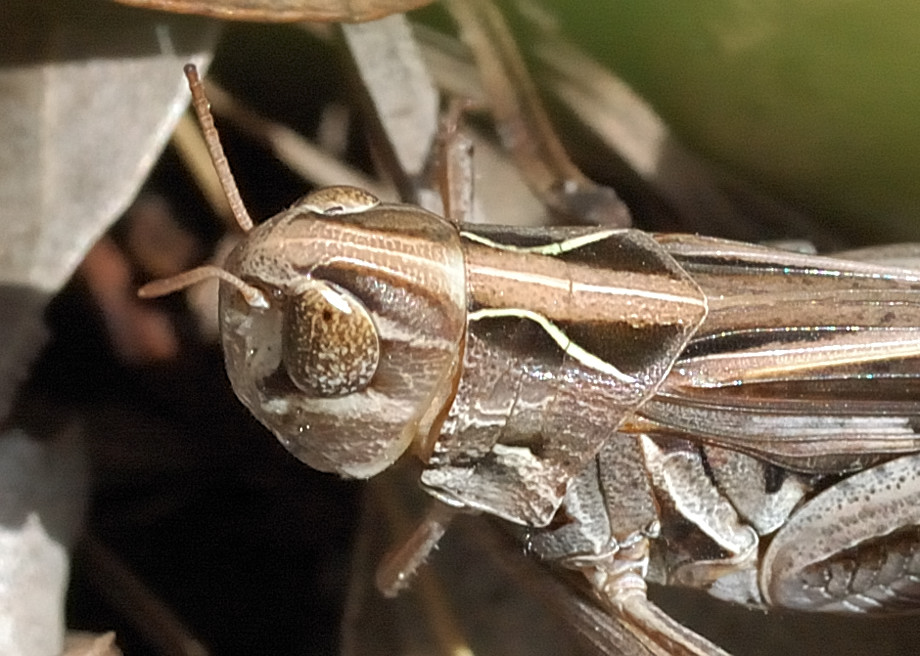 -
- This subfamily is a large group. Several locusts species are included.
Grasshoppers in this subfamily are usually medium in size. Some of them
produce buzzing sound when flight.
-
Tribe Acridini
- Froggatt's Buzzer
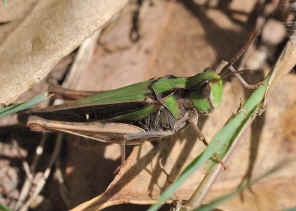
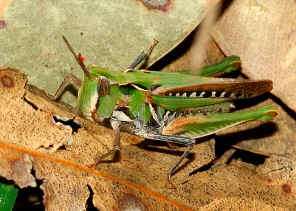 - Froggattina australis, body length 25mm
- When we walk on the bushland with short grass, it is common that every
step we walked, we heard a loud buzzing sound. Then saw some insects jumping and
flying
away. They fly just above the ground surface. It was difficult to see at what was those
creatures. Most
likely they were the Froggatt's Buzzer grasshoppers. Please also visit
this page for more details.
-
-
- Golden Bandwing
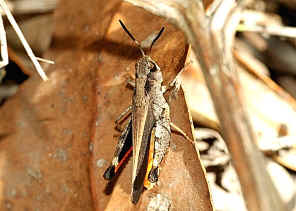 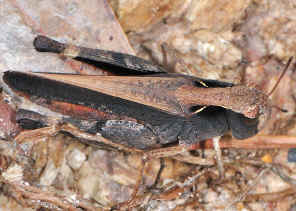
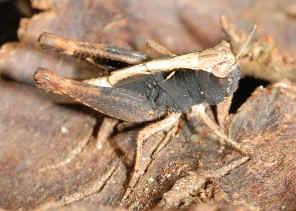 - Cryptobothrus chrysophorus, body length adult 30mm,
nymph 15mm
- The grasshopper is brown to dark
brown, reassemble dry leaves colours on the ground. The abdomen and hind
legs are bright orange in colour. More information and images can be found
on this page.
-
-
- Longheaded Grasshopper, Giant Green Slantface
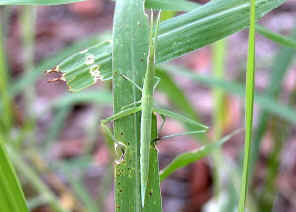 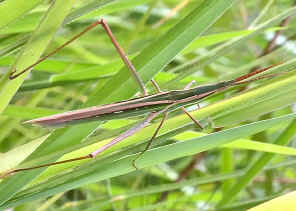 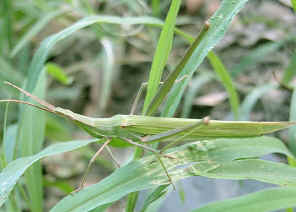 - Acrida conica, tribe Acridini, body length nymph 40,
adult 70mm
- This grasshopper is green in colour with brown strips on it head. Its head
is long and with short and flat antennae. Its pair of hind legs are
long and spindly. When disturbed, it opens its wings to make noise and shows
the pink-red abdomen. Click here for more
information.
-
-
- Caledia
 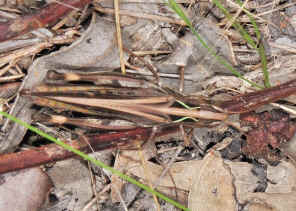 - Caledia captiva, tribe Acridini, body length 25mm
- This
grasshopper is variable in colour and pattern, can be in green, brown to
greyish-brown. They make sound when in flight. They are easy encountered
and sometimes confused with the the locusts species. The major different are
their wings are not patterned and their hind legs tibia are not red as locust.
More information can be found in this page.
Tribe Oedipodini
- Long-legged Bandwing
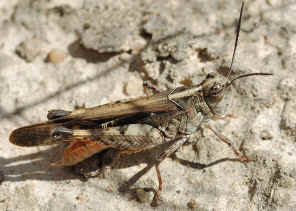
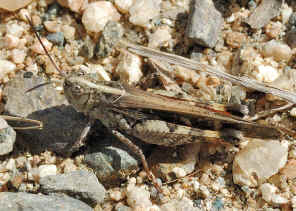 - Heteropternis obscurella, body length 30mm
- This grasshopper has the hind leg pattern on its tegmen. It has the hind
leg pattern on its tegmen. This is a wide spread species but not very common
in Brisbane. Please check this page for
more infromation.
-
-
- Yellow-winged Locust
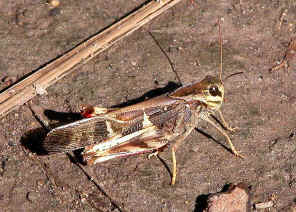 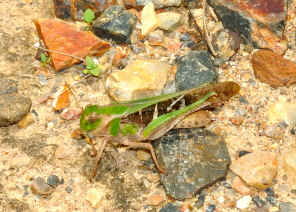 - Gastrimargus musicus, body length 40mm
- Yellow-winged Locusts are sometime found in Brisbane grassland. They prefer
grasses of medium height. When in flight, they show their back-banded yellow hind wings
with loud clicking noise. There are the red marking on their hind legs.
This species has green and brown forms. More pictures and information please
click on here.
-
- Reference:
- 1. Insects
of Australia, CSIRO, Division of Entomology, Melbourne University
Press, 2nd Edition 1991, p391.
- 2. Grasshopper
Country - the Abundant Orthopteroid Insects of Australia, D Rentz,
UNSW Press, 1996, p176.
- 3. Northern
Territory Insects, A Comprehensive Guide CD - Graham Brown, 2009.
Back to top
[ Up ] [ Oxyinae ] [ Catantopinae ] [ Acridinae ] | |
|
