Giant Green Slantface - Acrida conica
Family Acrididae
This page contains pictures and information about the Giant Green Slantfaces that we found in the Brisbane area, Queensland, Australia.
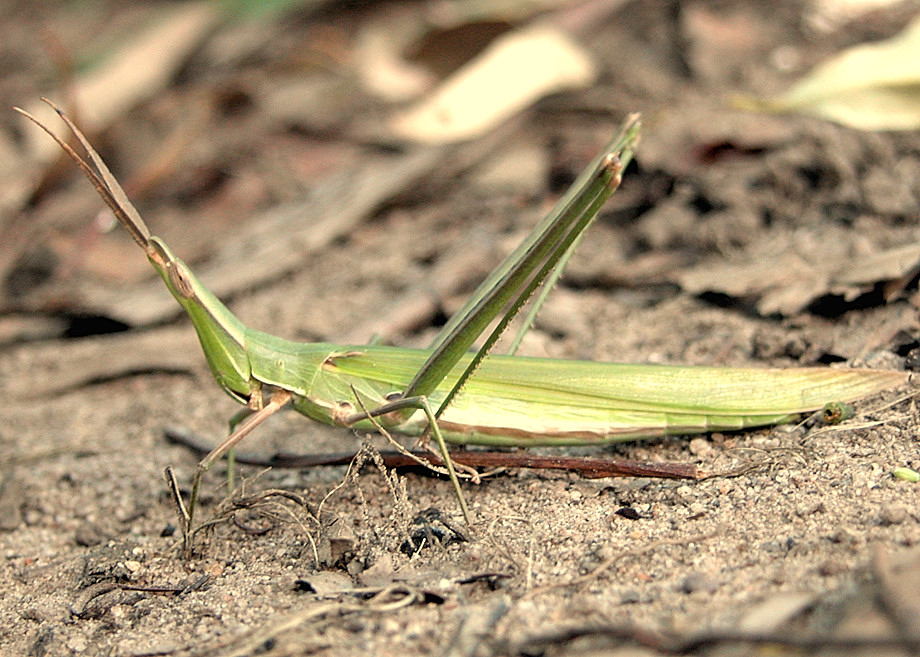
- Adult body length 70mm
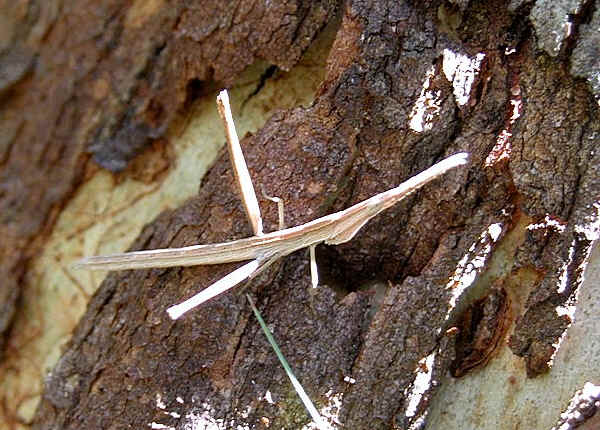
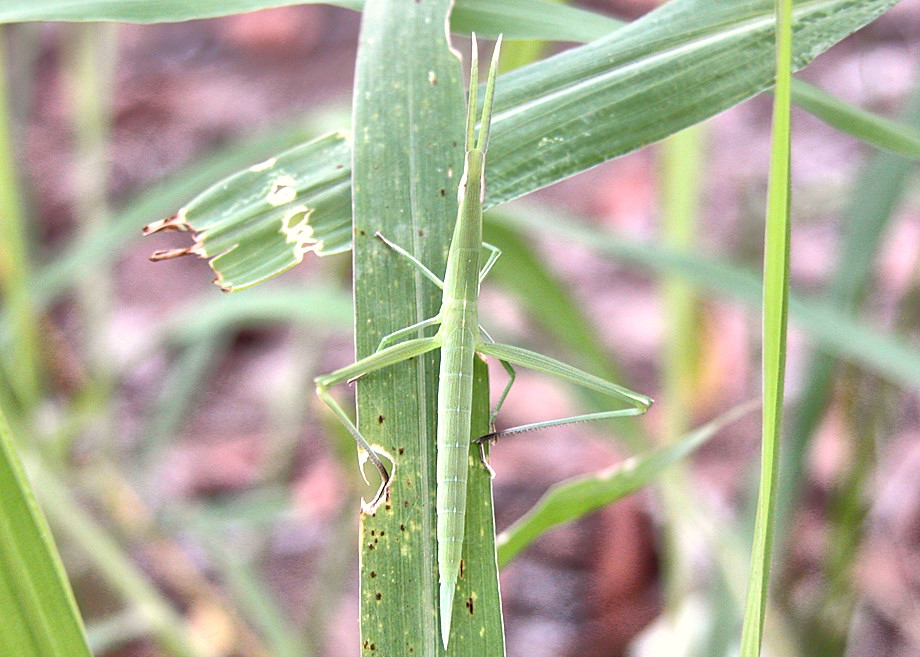
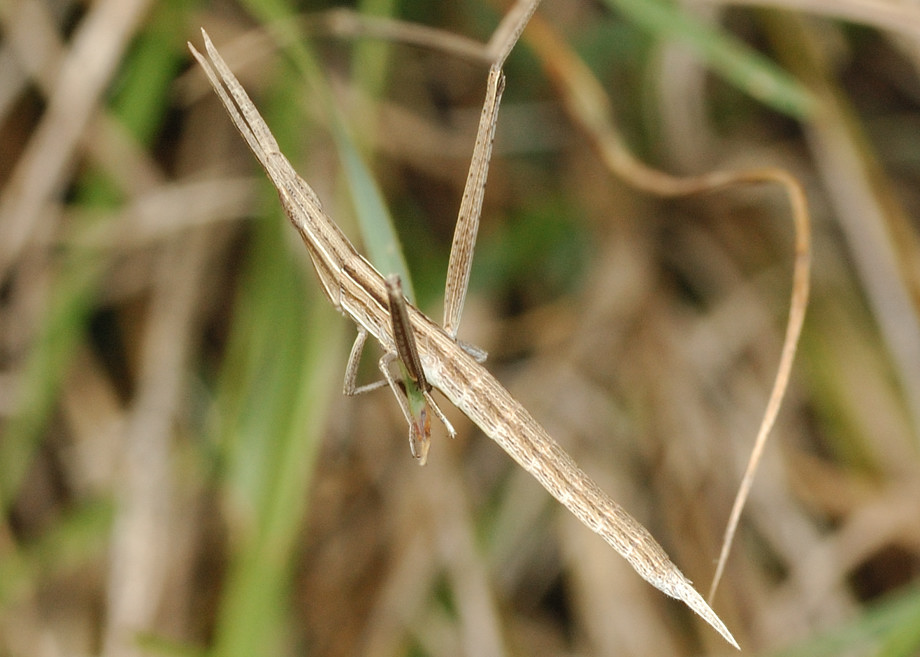
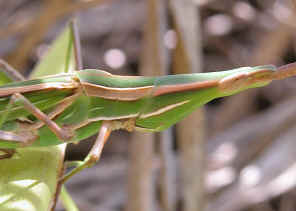
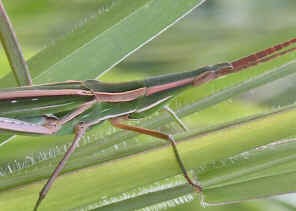
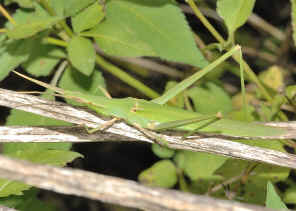
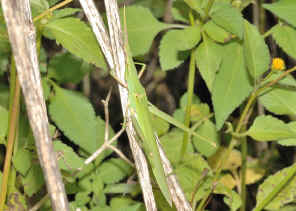
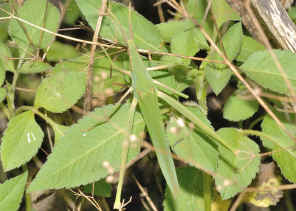
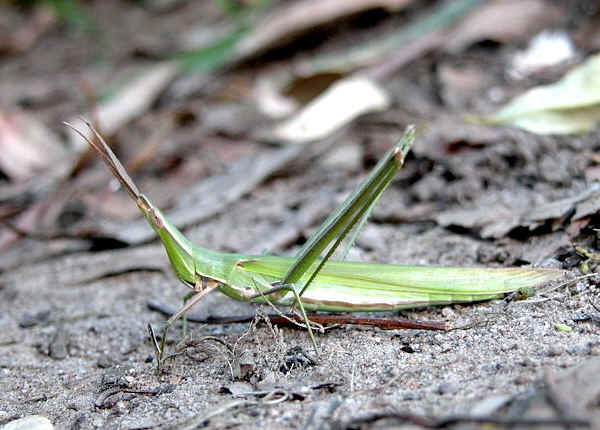
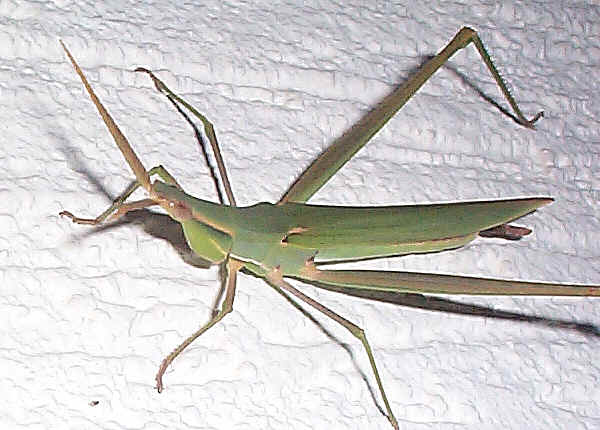
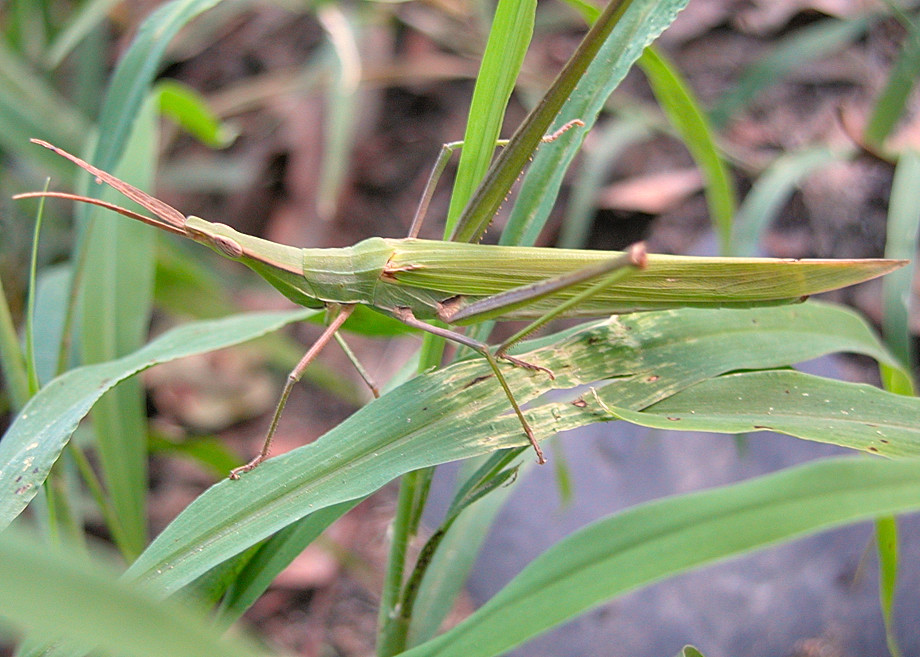
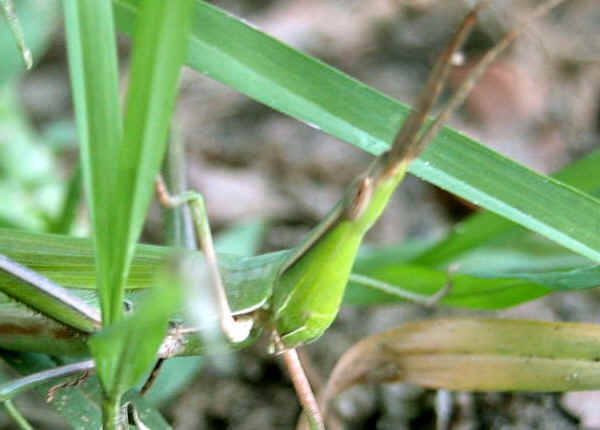
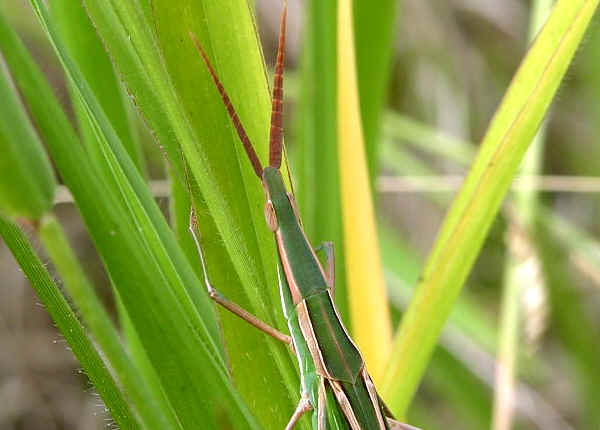
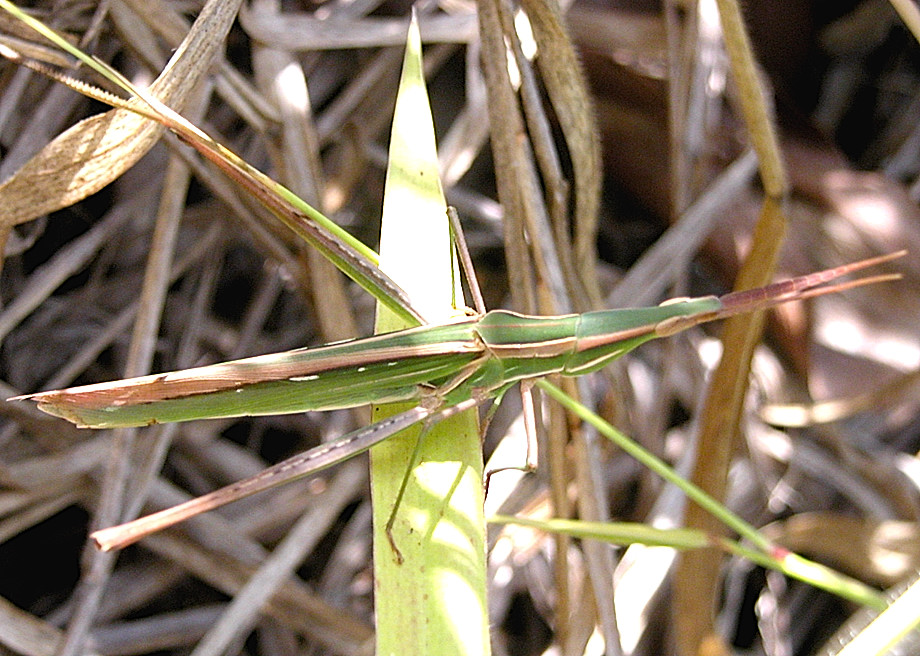
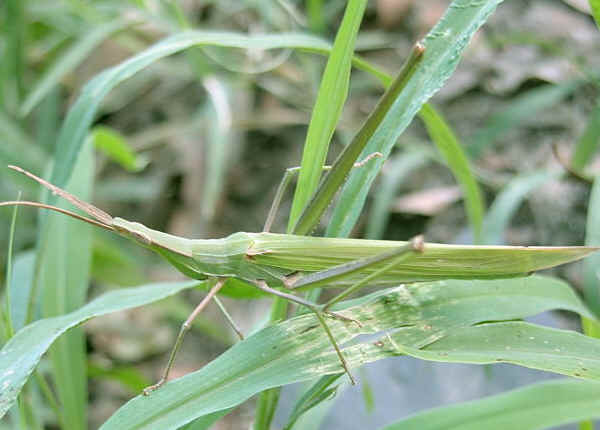
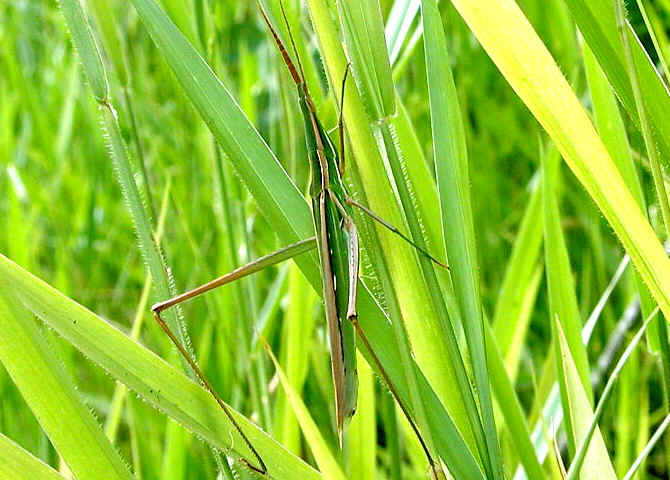
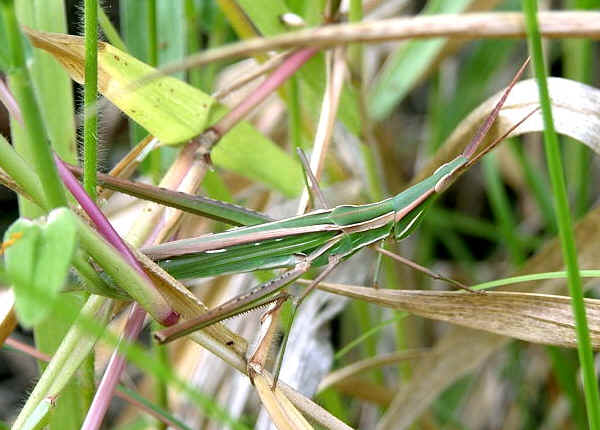
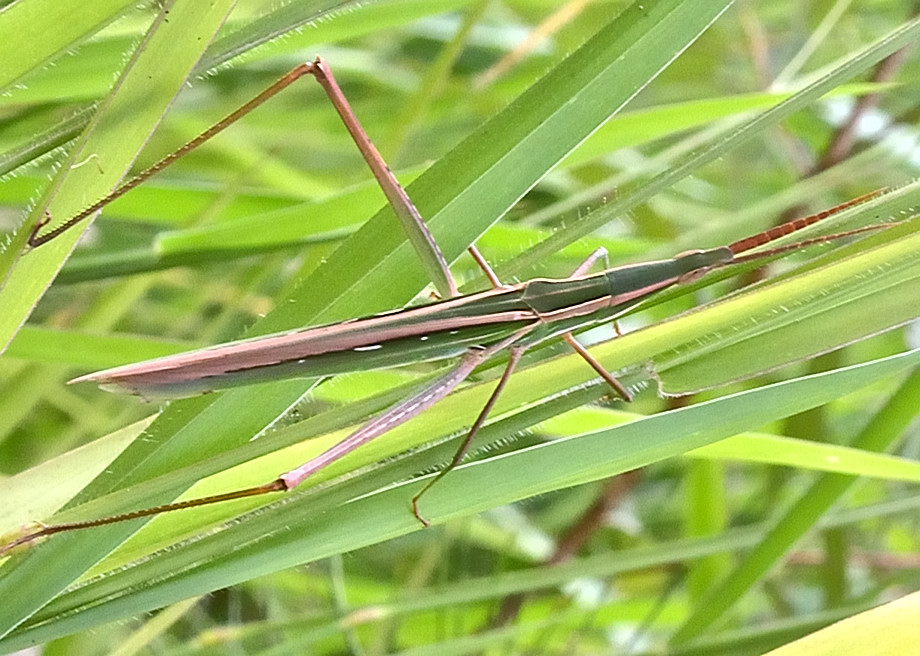
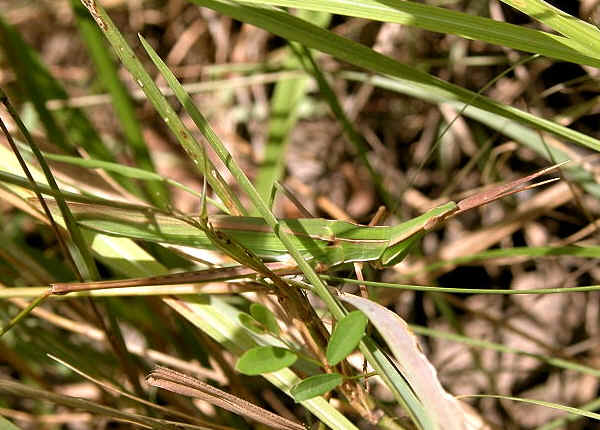
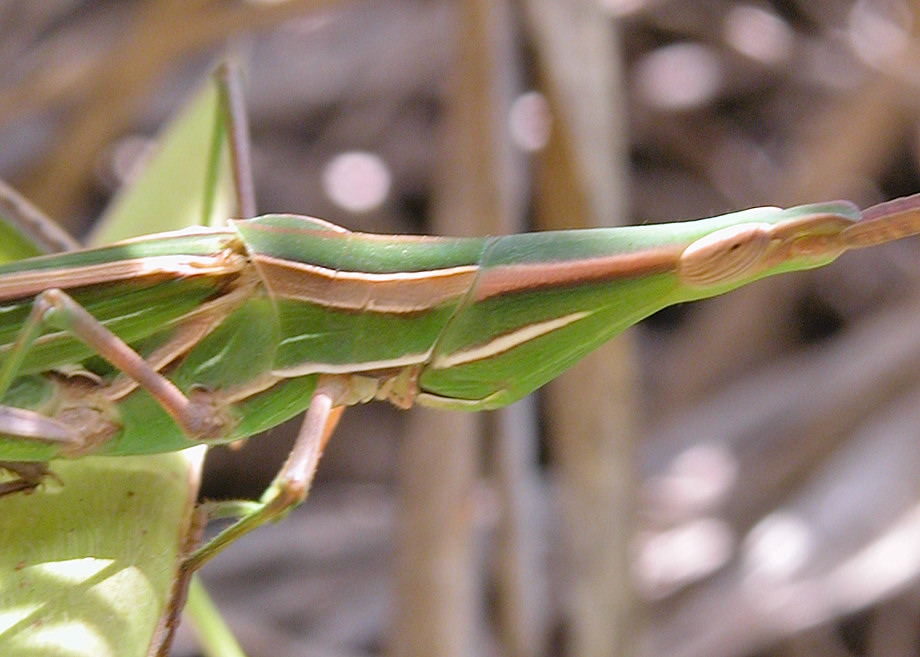
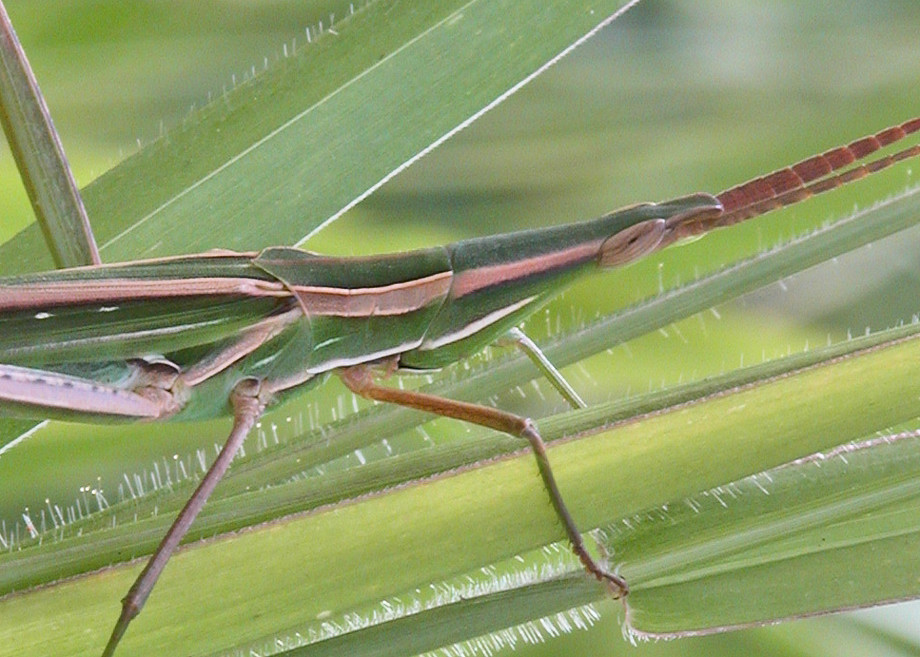
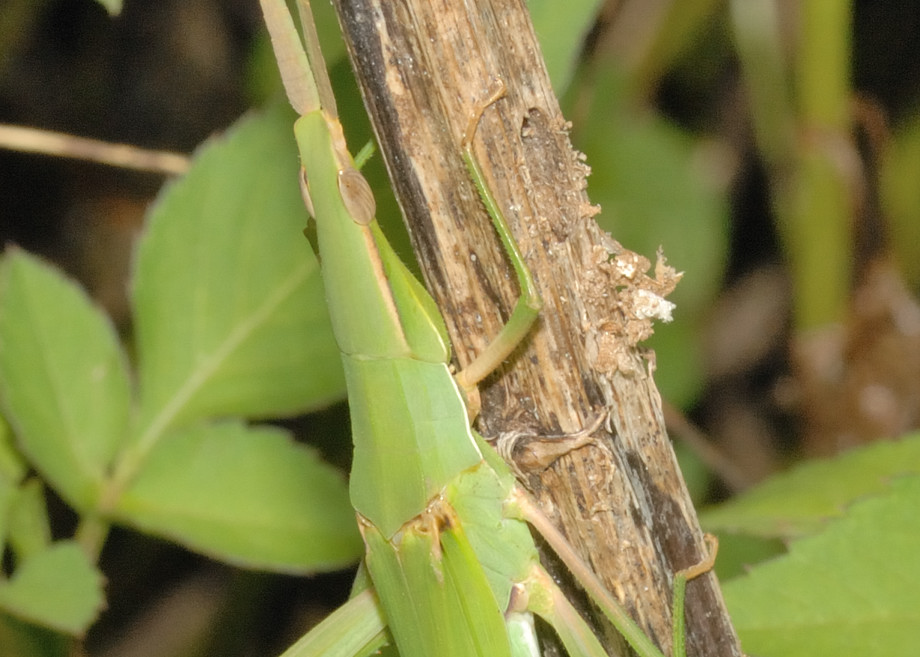
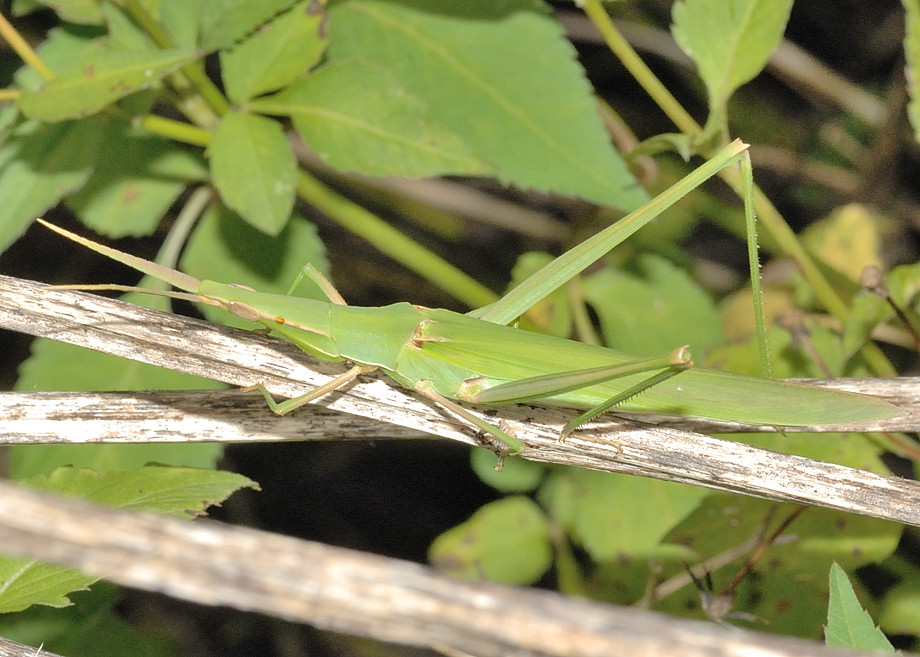
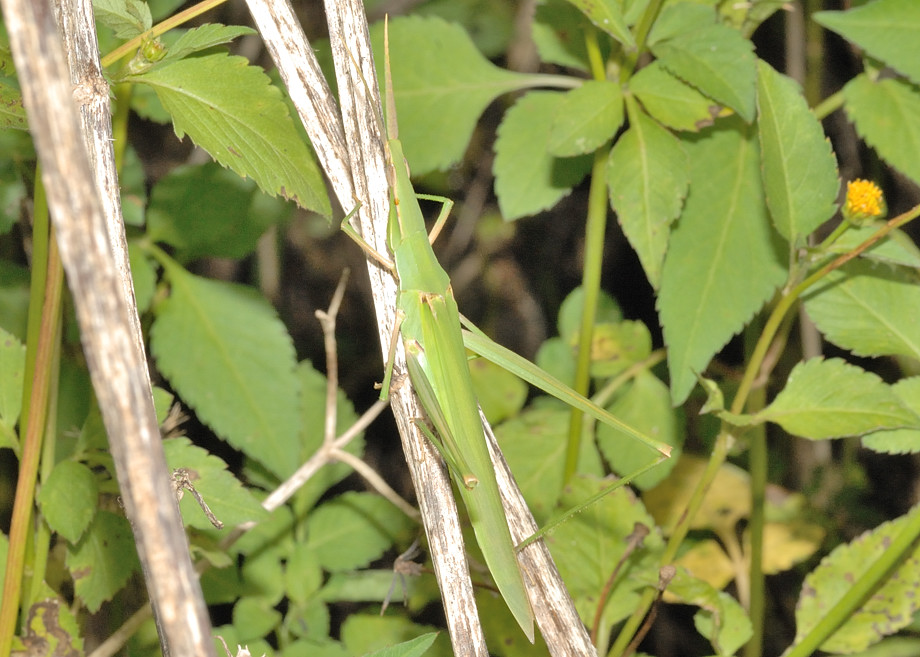
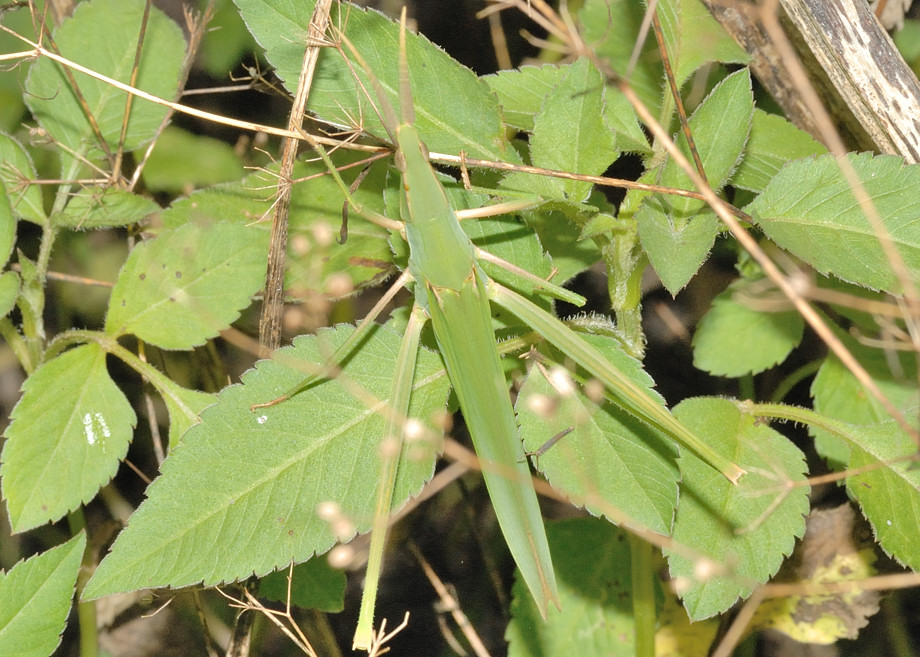
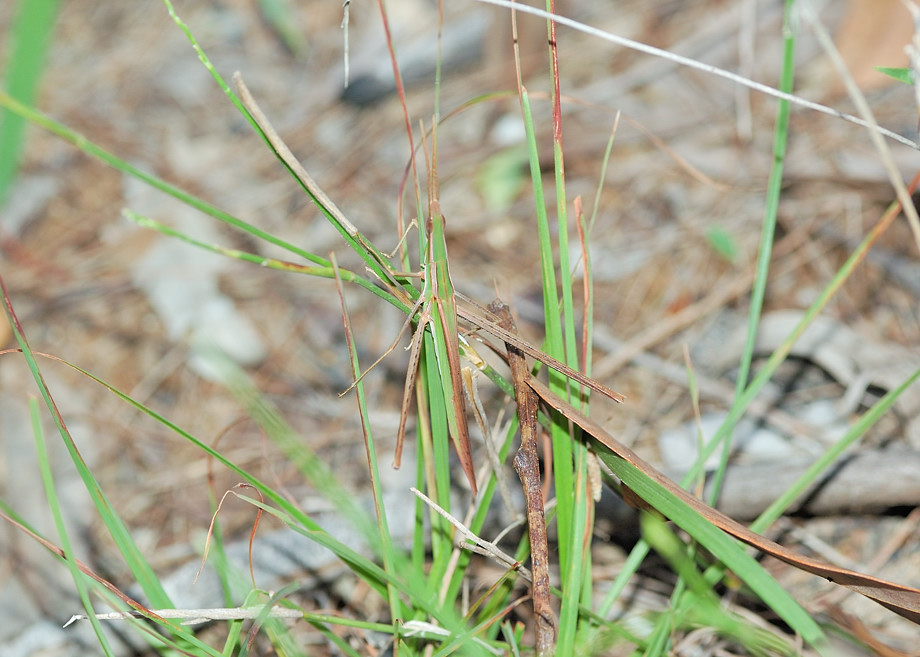
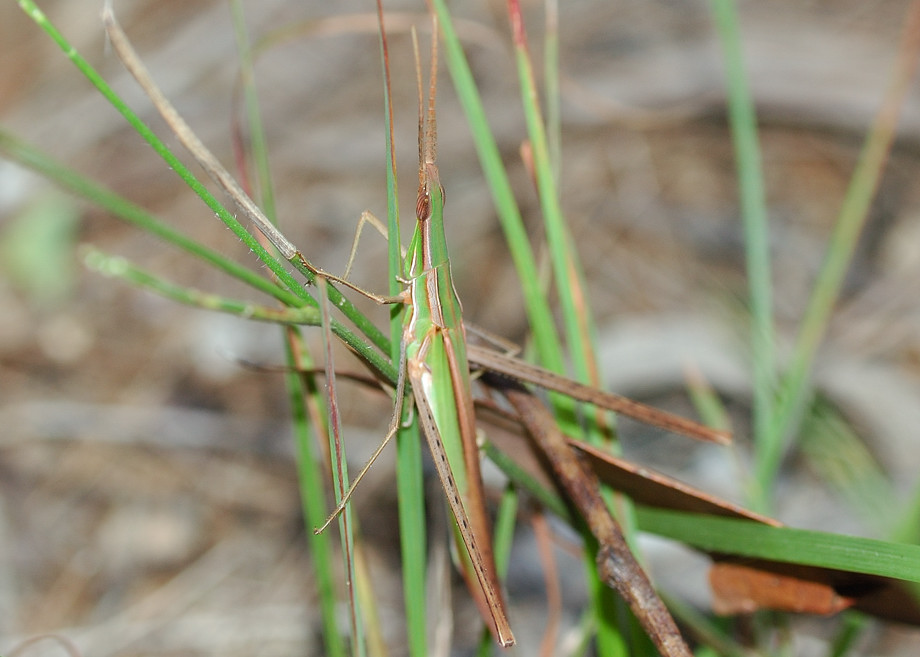
- The grasshopper is also known as Longheaded Grasshopper. The adult grasshopper is green in colour with brown strips on its head. Its head is in cone shape and with short and flat antennae. Its pair of hind legs are long and spindly.
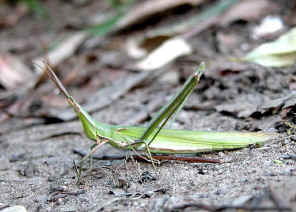
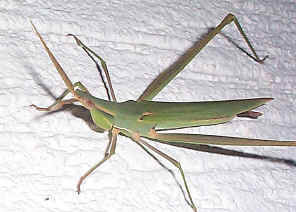
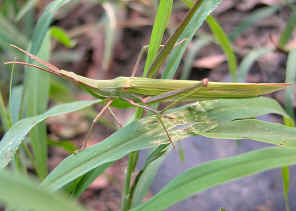
- We usually found this grasshopper in the evening. Sometime they are found attracted to windows light. They usually active after sun set. The grasshopper feed on long blade grass.
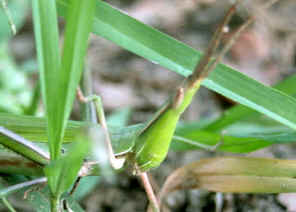
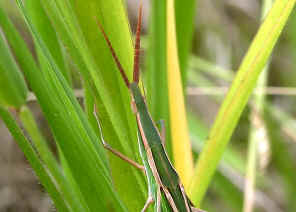
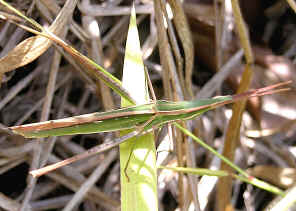
- The grasshopper has the long cone head and slant face, this explained why they are called. Also notice its flat sword-shaped antenna. Some individuals has the brown longitudinal strips on green body.
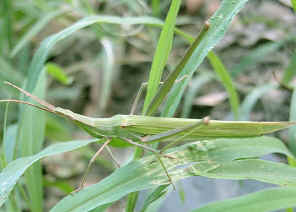
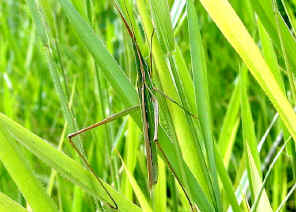
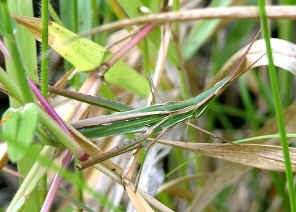
- This grasshopper is a slow moving insect. Although the adult grasshoppers are fully developed wings. They are poor flyers. They fly for short distance, about one to two meters, then drop and hide on floor. They make buzzing sound when in flight.
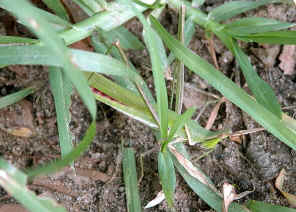
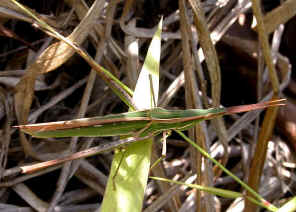
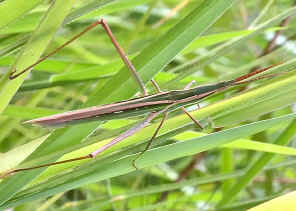
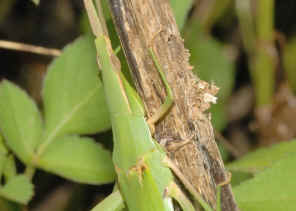
- Their long legs are not very strong as other grasshoppers, merely for walking between tall grasses. They do not jump very well neither. The grasshoppers depend on its camouflage colour to avoid predators. When they hide in grasses, they are hardly be seen.
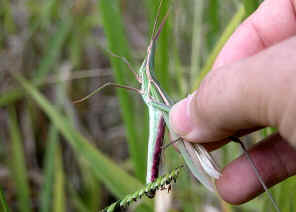
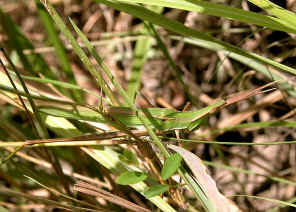
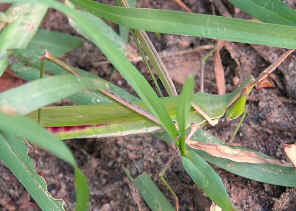
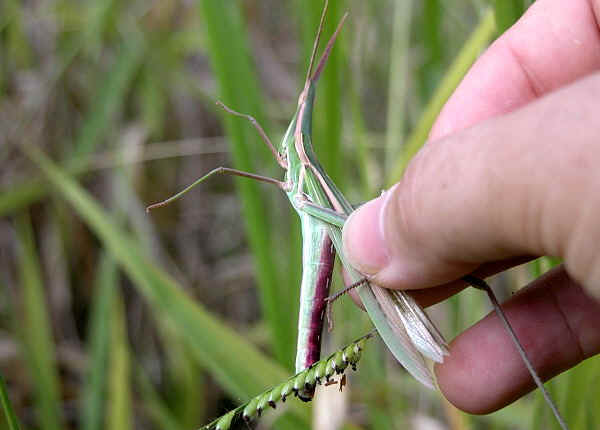
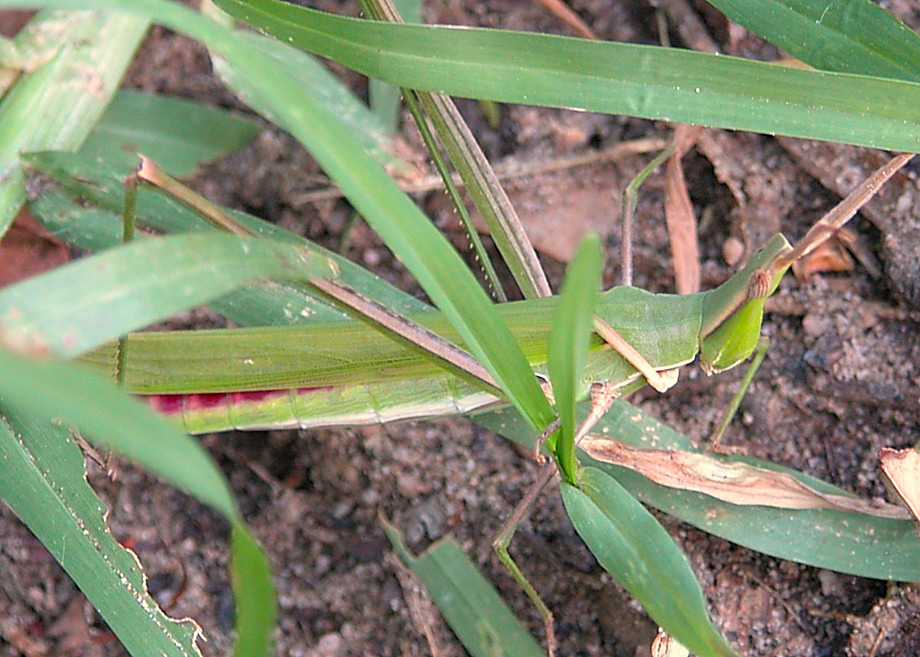
- When closely disturbed, they opens their wings to make noise and shows the pink-red abdomen. This is the secondary defence (the first defence is camouflage). In the above picture we held the grasshopper to show its red abdomen. Of cause the insect would not be too happy about this, so we let it go after taking the picture.
-
-
-

Nymph
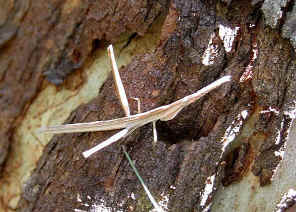
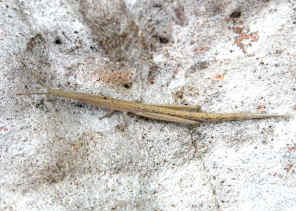
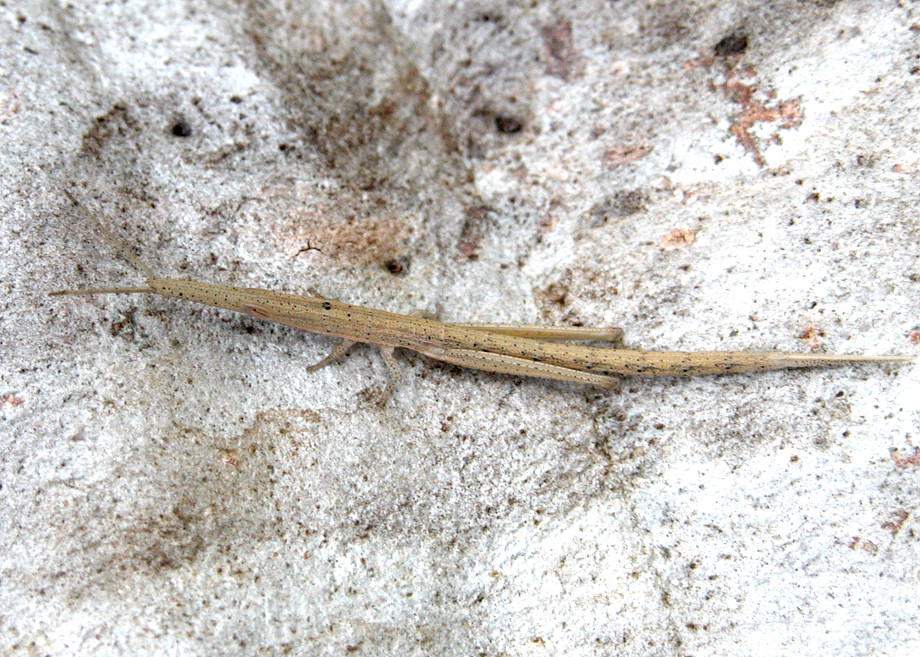
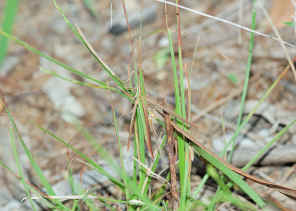
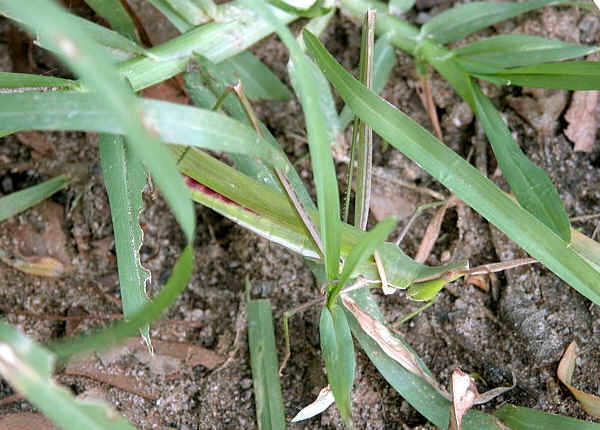
- 3rd instars, body length 40mm.
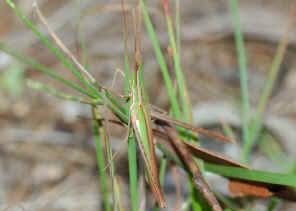
- Nymphs can be found in brown form or in green form.
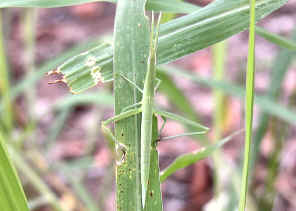

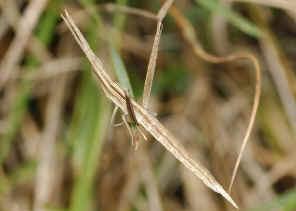
- 4th instars, body length 40mm
- Their nymphs look similar to the adults except smaller and no wings. Because of their wingless and slender body, they may be mistaken as Morabines.
- Reference:
- 1. Grasshopper Country - the Abundant Orthopteroid Insects of Australia, D Rentz, UNSW Press, 1996, p177.
- 2. A Guide to Australian Grasshoppers and Locusts - DCF Rentz, RC Lewis, YN Su and MS Upton, 2003, p348.