|
|
Glossy Shield Bug - Cermatulus nasalis
Family Pentatomidae
This page contains pictures and information about Glossy Shield Bugs that we found in the Brisbane area, Queensland, Australia.
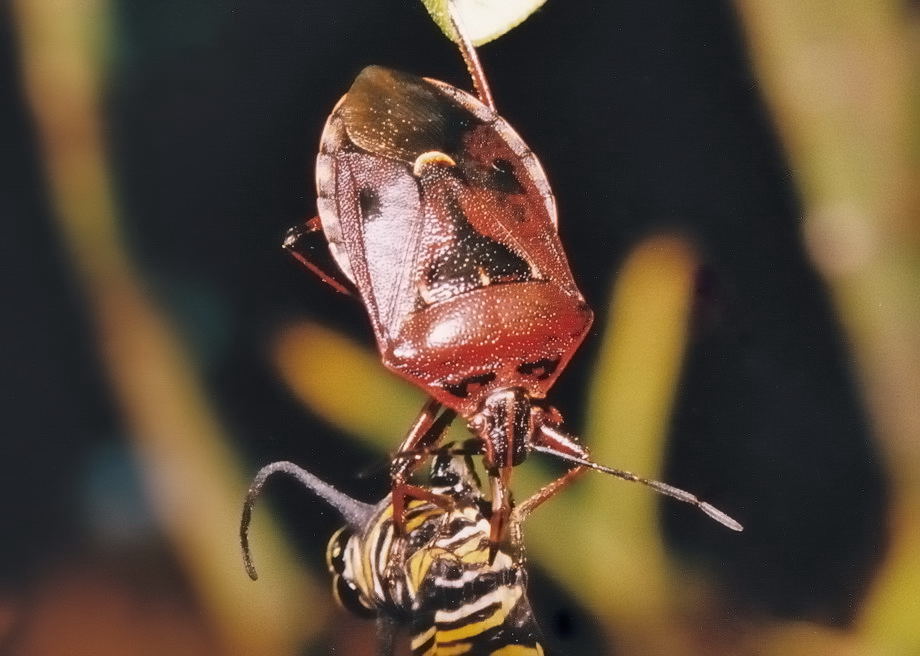
- Body length 20mm
- This bug also known as Predatory Shield Bug. Although most stink bugs are plant feeders, this bugs is predator of soft- body insects, including caterpillars. It is considered the important predator of agricultural pests.
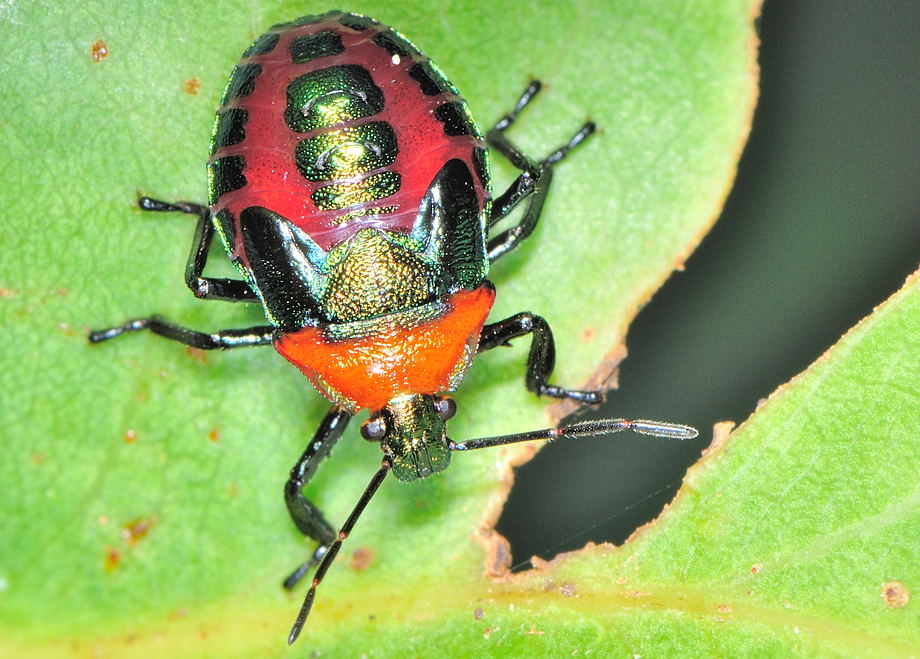
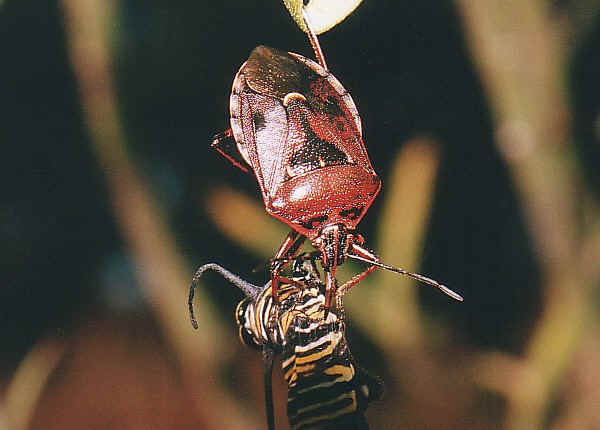
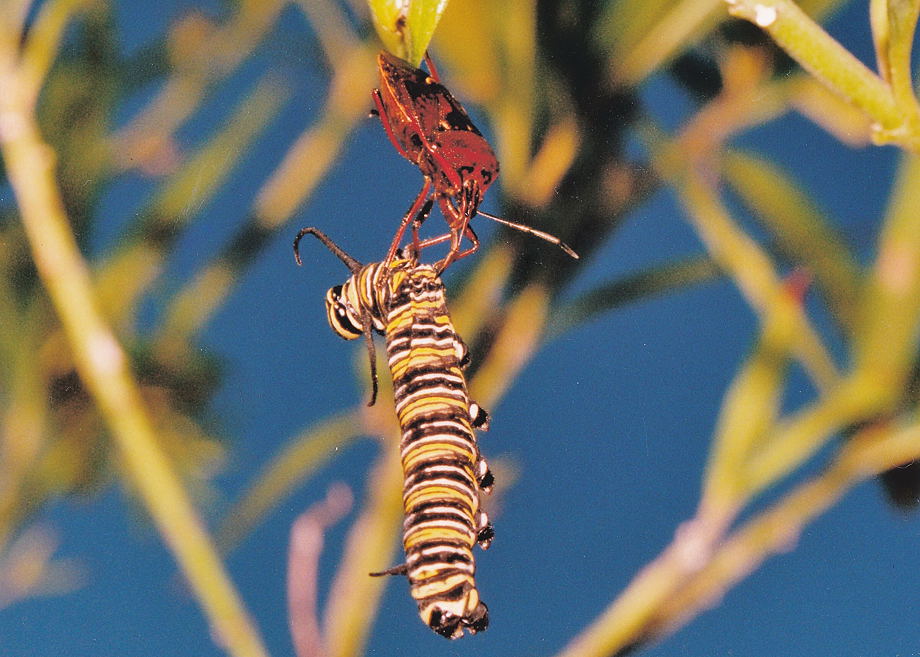
- The bug is ovoid in shape, the typical shield bug body shape. It has the thick and strong rostrum for attacking prey. Its body is redish-brown in colour with numerous dark punctations.
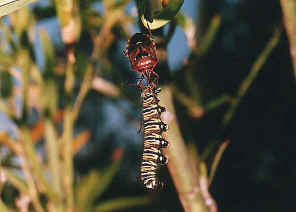
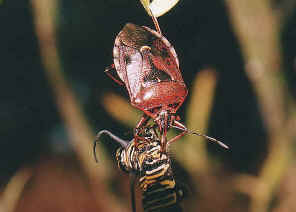
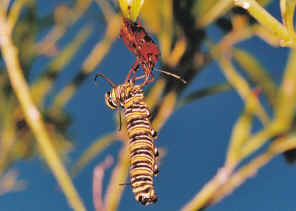
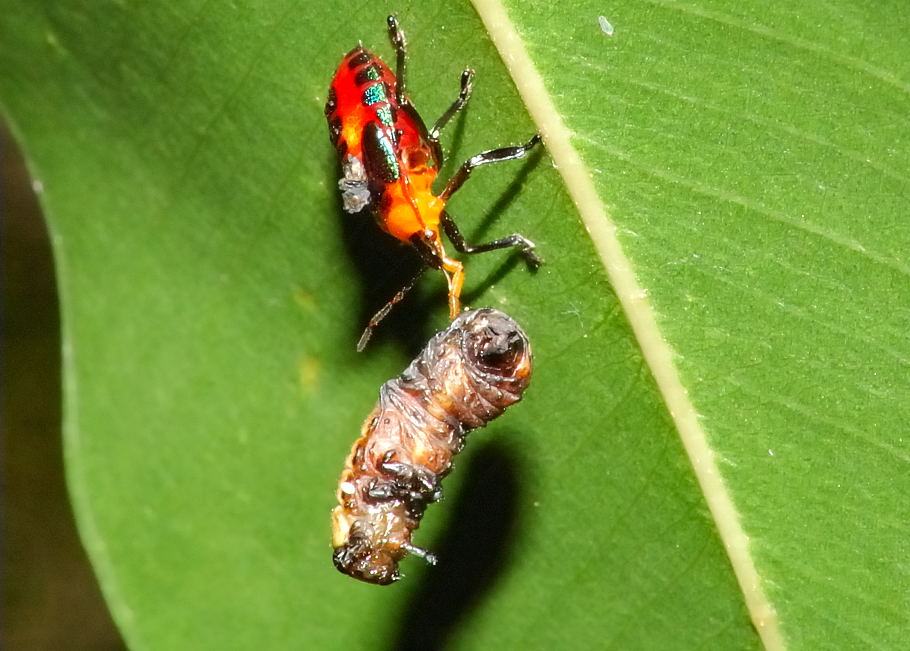
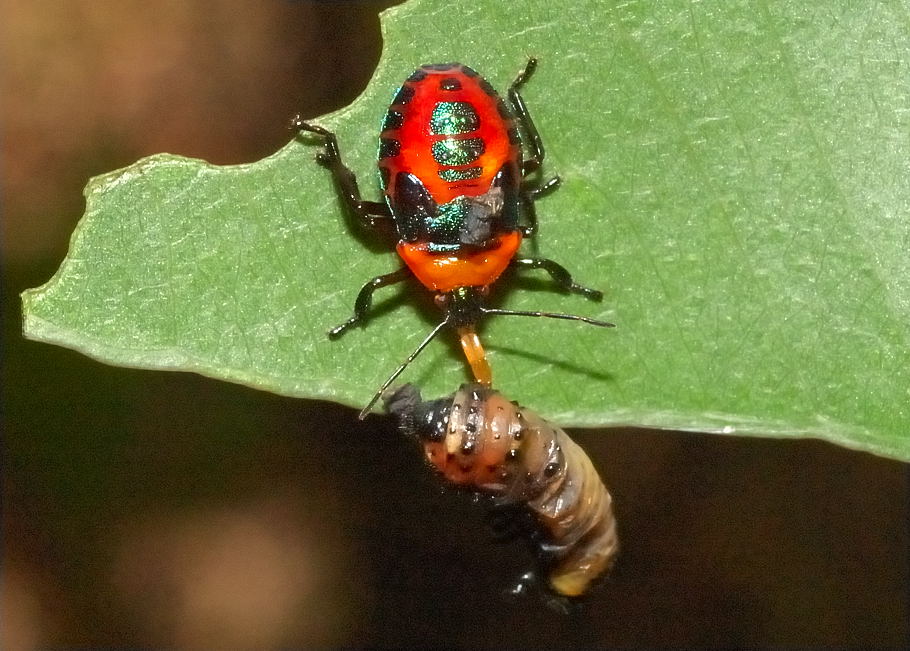
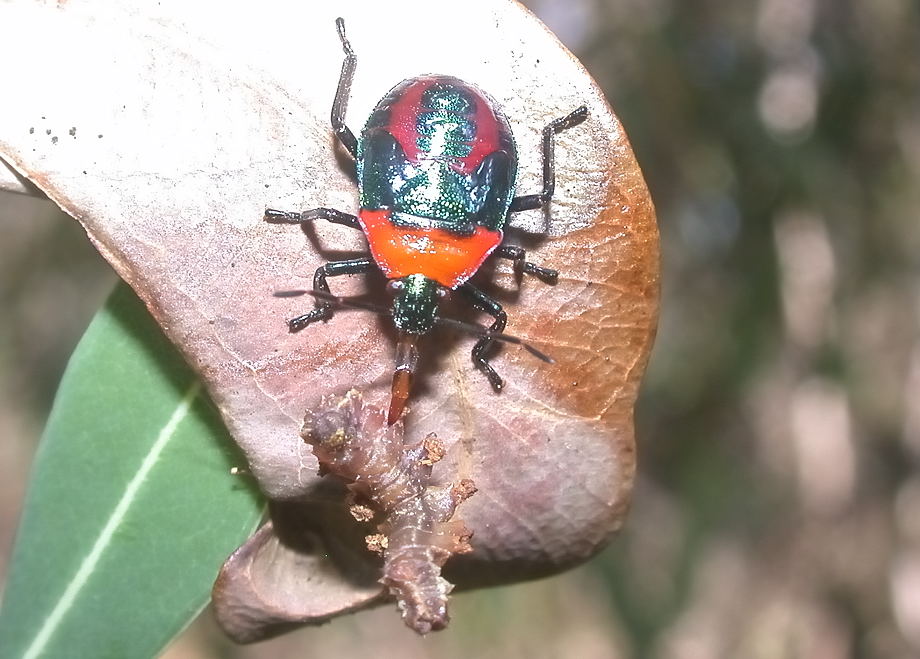
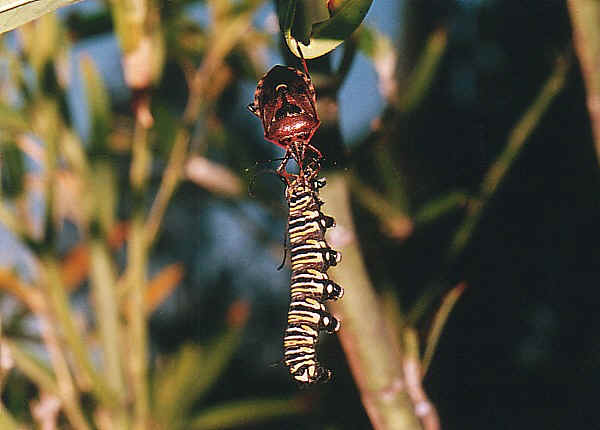
- The pictures showing the the bug feeding on a Wanderer Butterfly caterpillar. Notice its rostrum (the mouth parts), which is directed away from the head and has the first segment robust and thick, an adaptation to their predatory habit.
Eggs
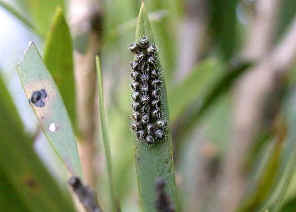
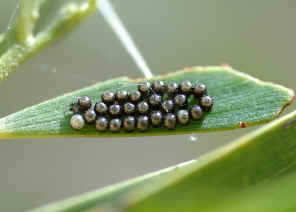
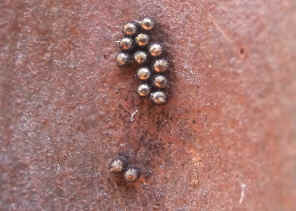
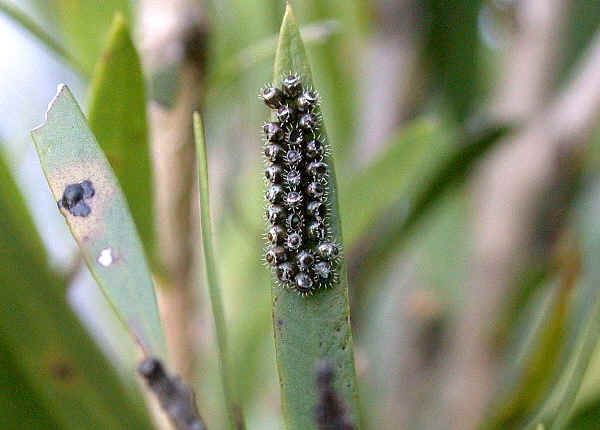
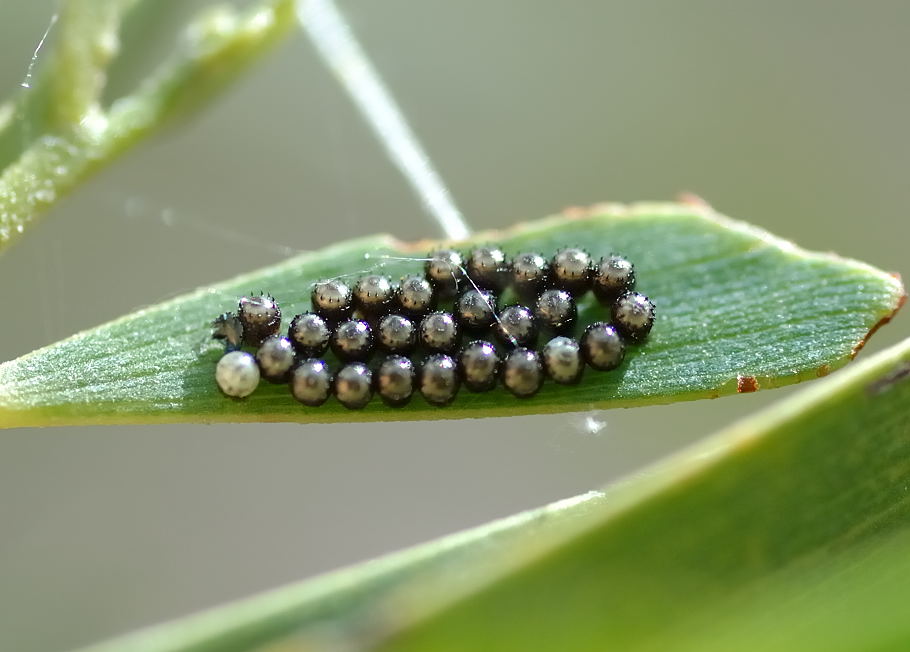
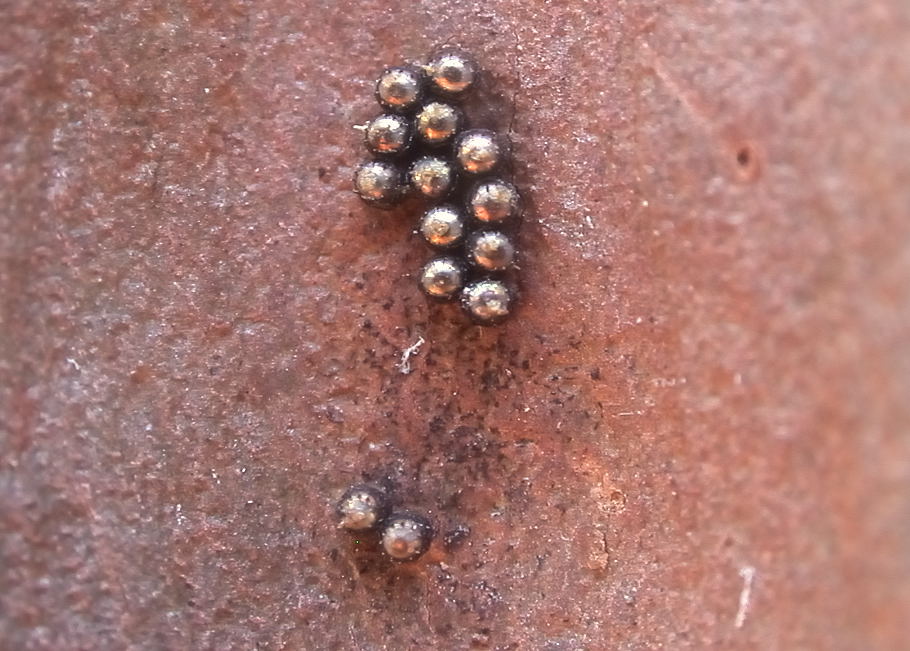
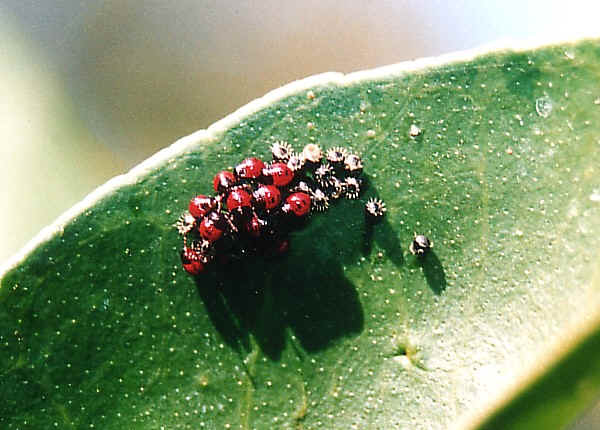
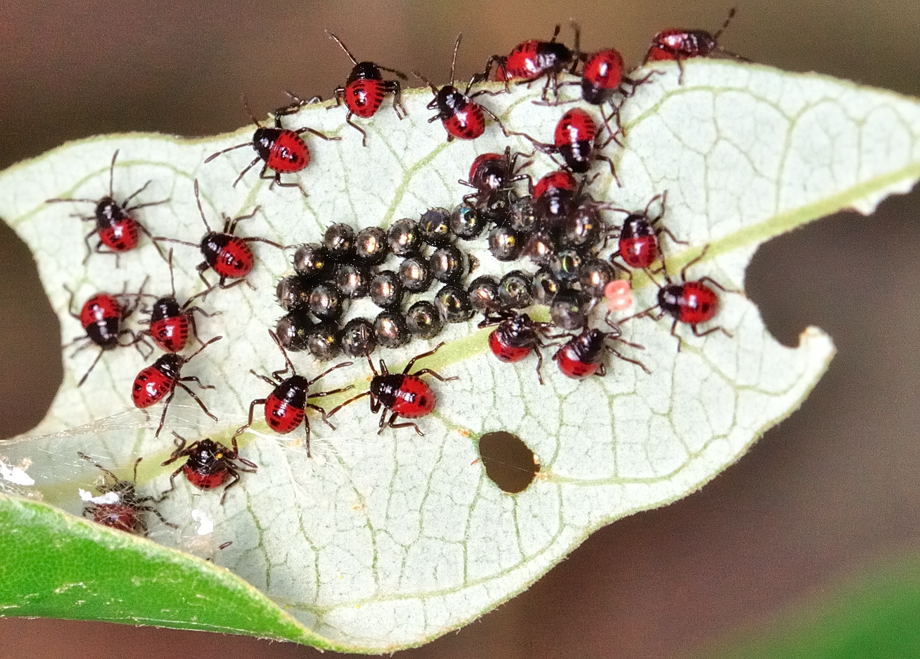
- Females lay eggs in a batch of 28 on leaves or tree trunks. Those eggs are black in colour with short white spines around the rim. The females lay a line of seven eggs and then turn around and continuous lay eggs surround the line of eggs.
1st instars
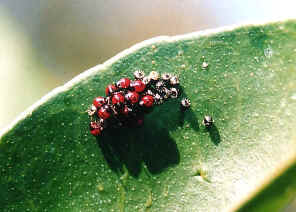
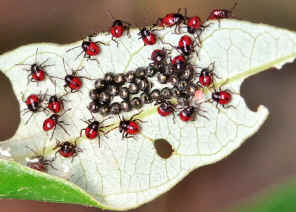
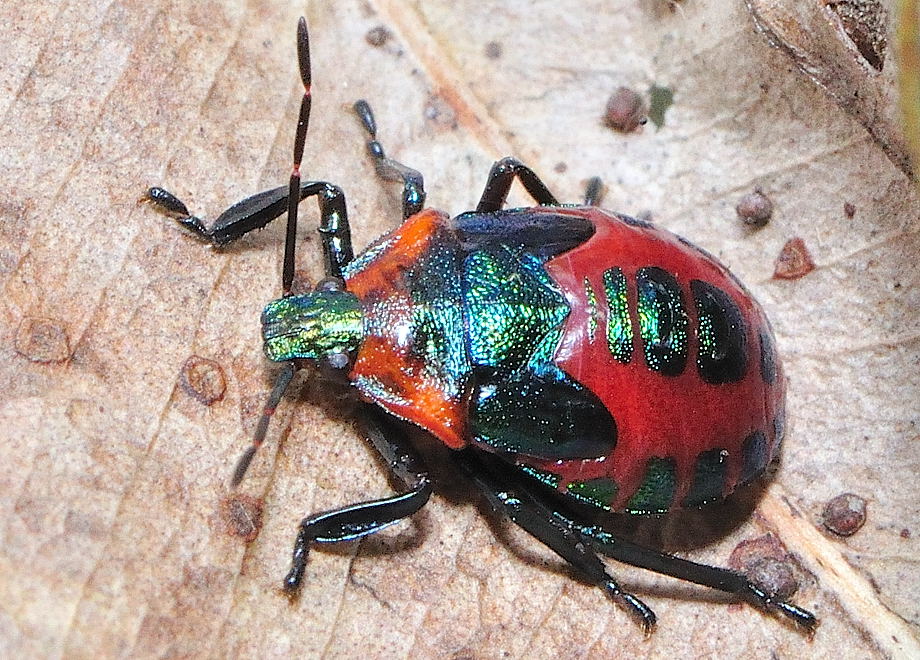
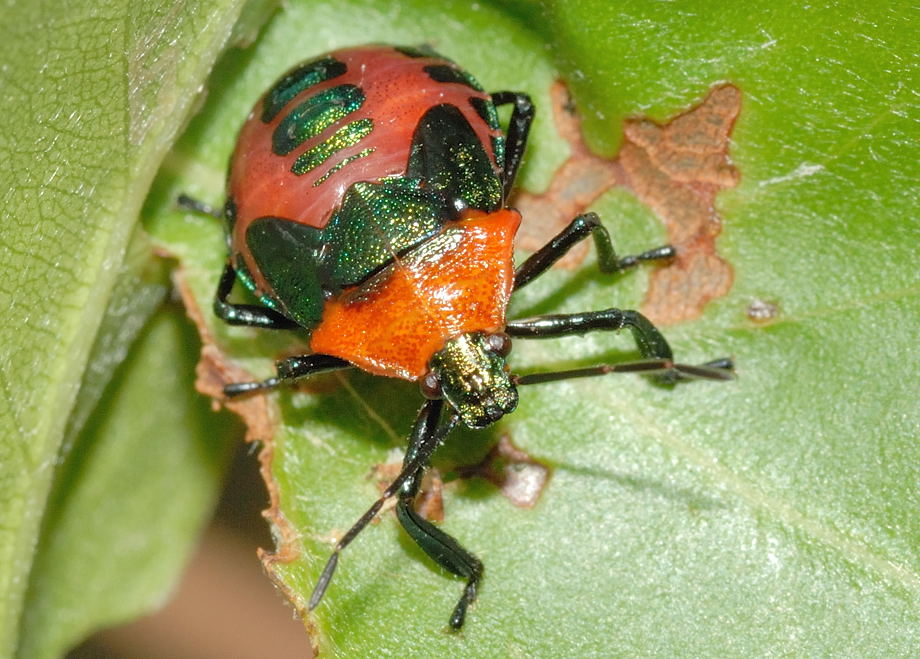
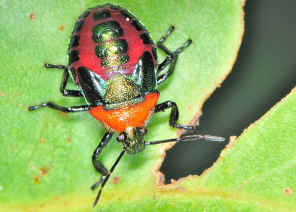
- Young instars are bright red body in colour and black head. When bugs just hatched. They stay around their eggs cases. The1st instars nymph bugs feed on bacteria which the female deposited on the eggs when she laid them. The bugs have to liquefy the food with saliva first before they can feed on it. Although adults are essentially predaceous, first-instars nymphs also feed on plant juices.
2nd instars
-
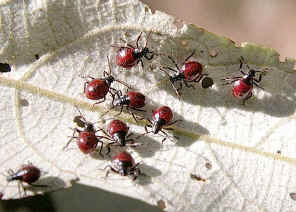
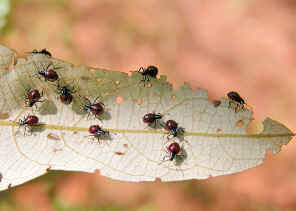
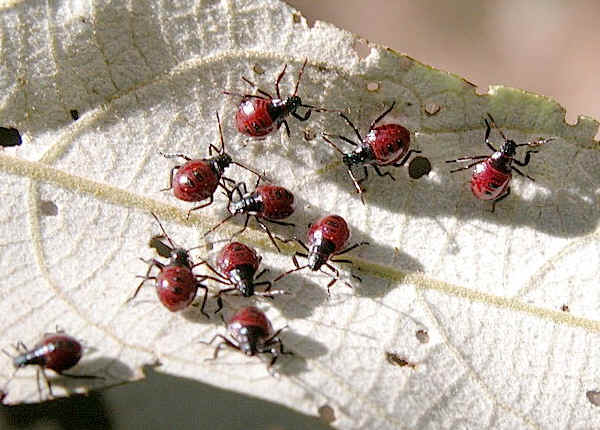
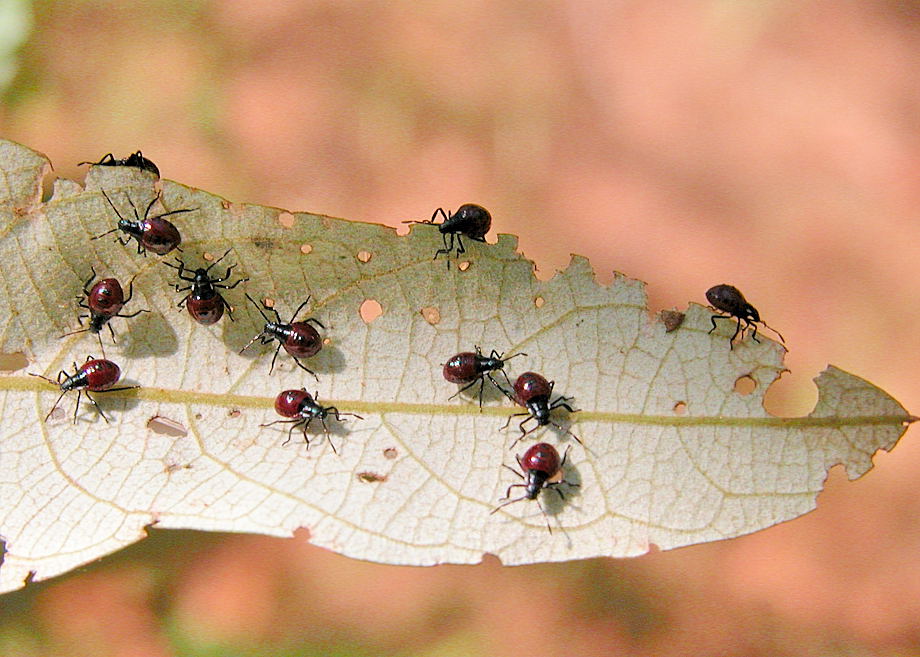
- 2nd instars start feeding on soft body insects.
3rd instars
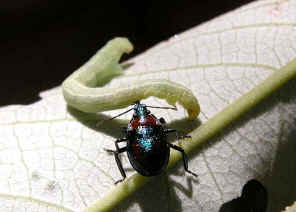
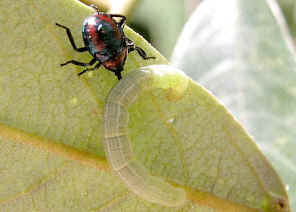
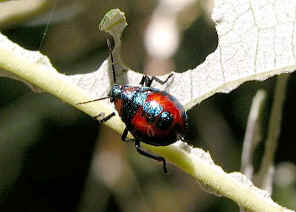
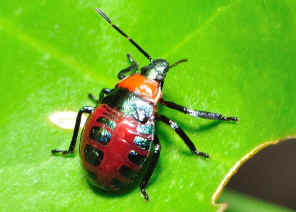
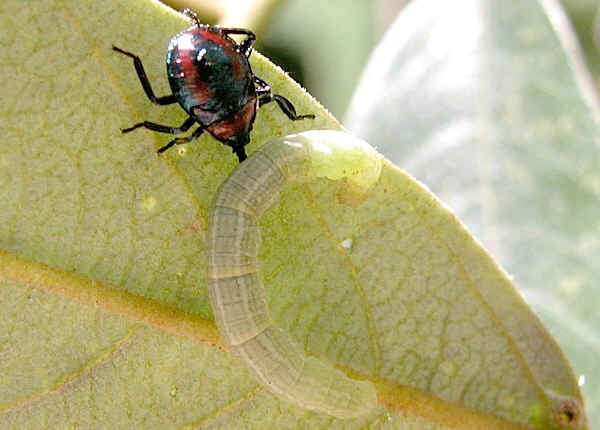
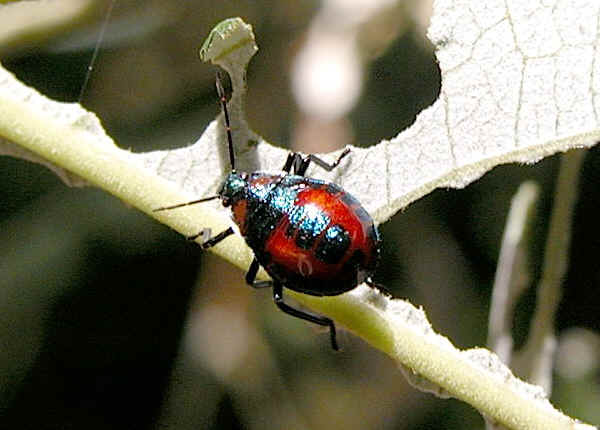
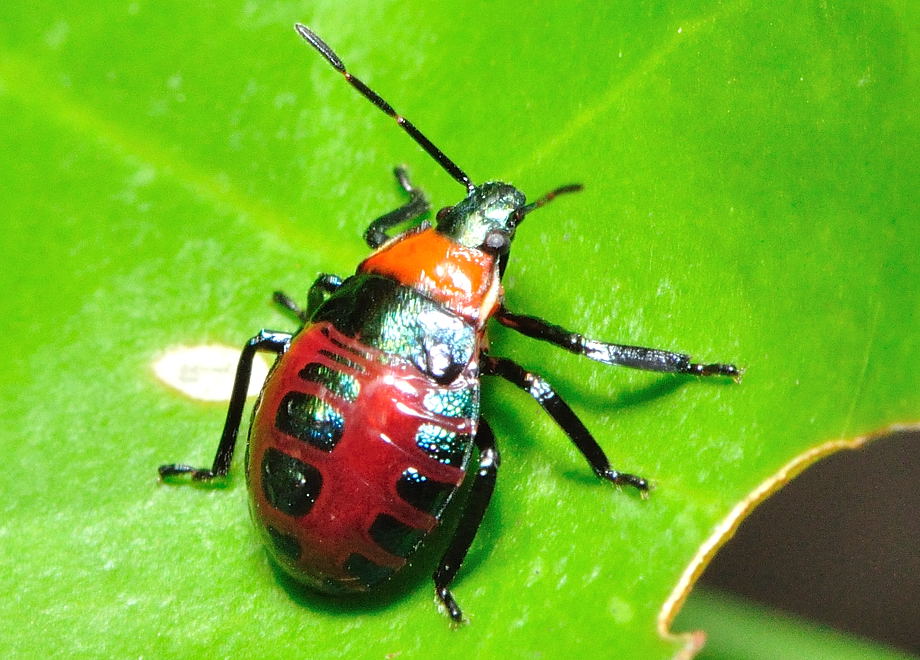
- As their adults, the 3rd instars are predators. The feed on other soft body insects, such as the caterpillars. Above pictures show the young bug feeding on the looper caterpillars.
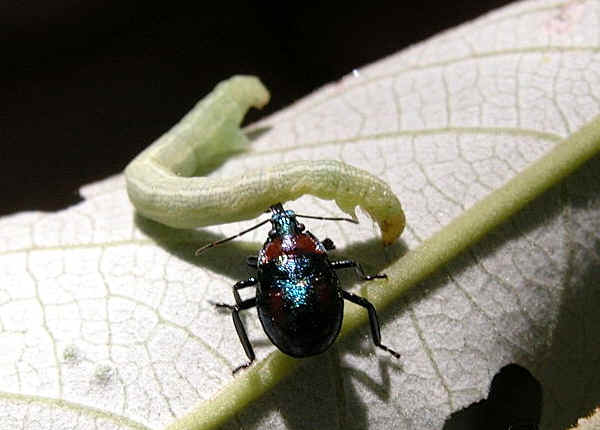
4th instars
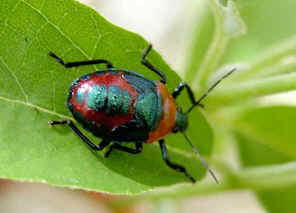
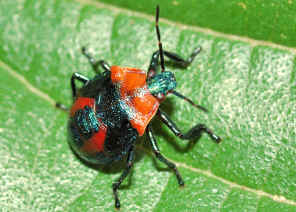
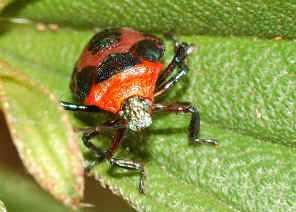
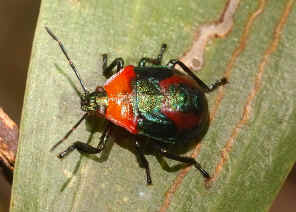
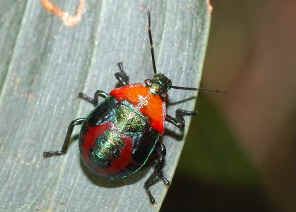
-
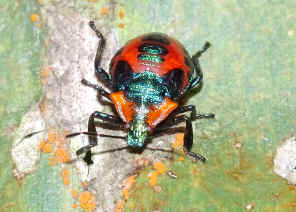
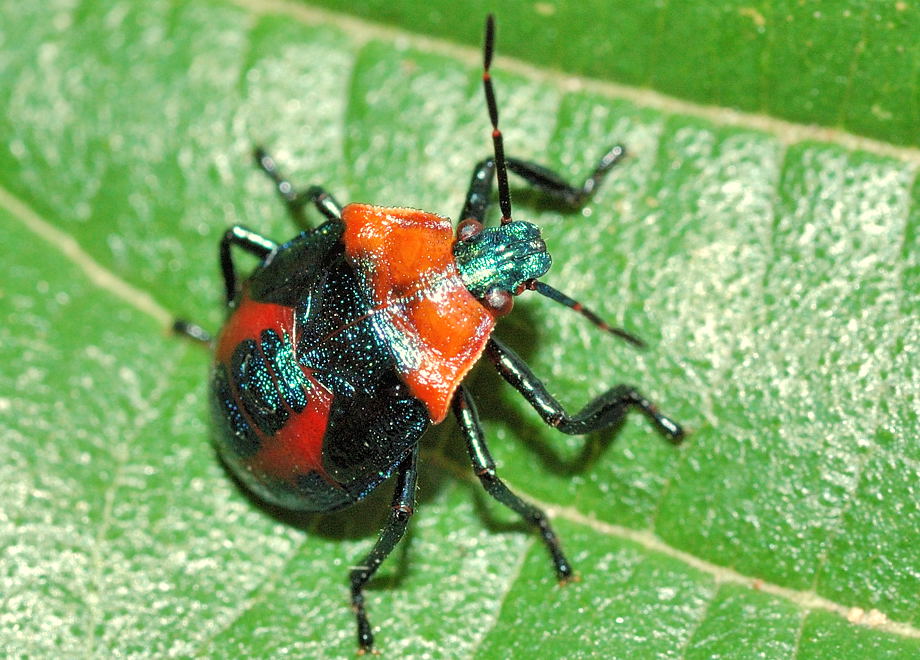
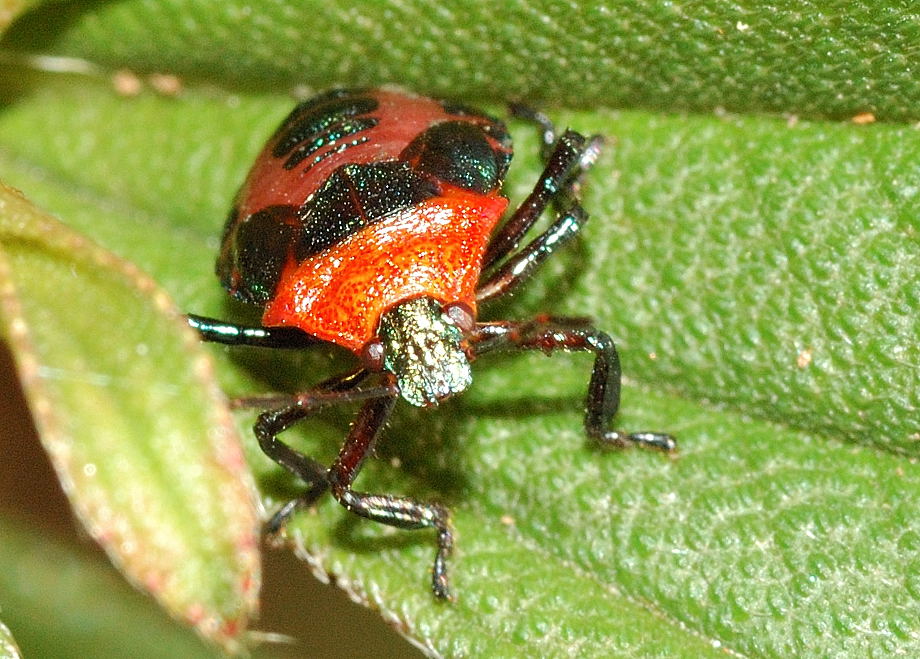
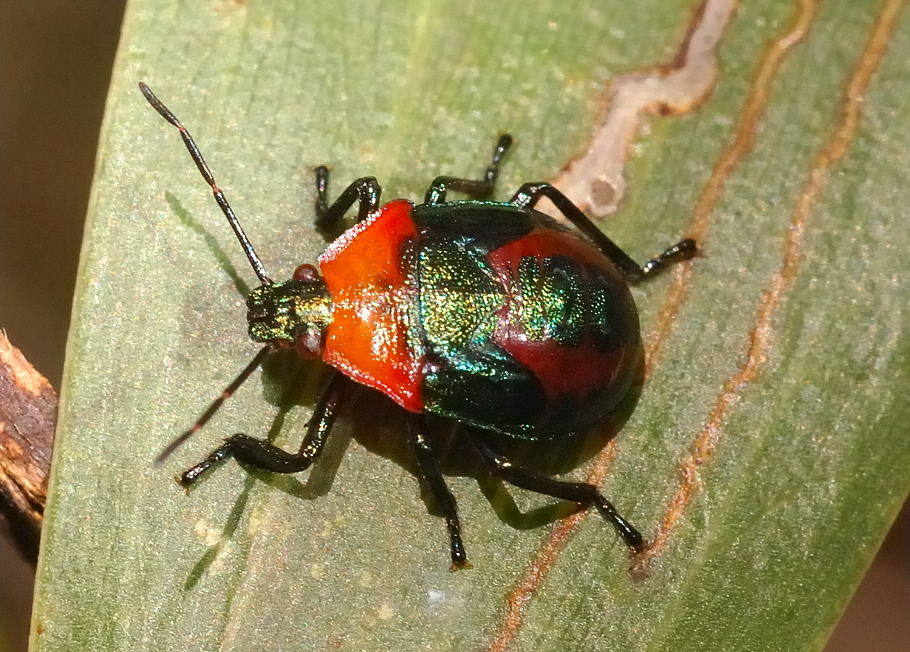
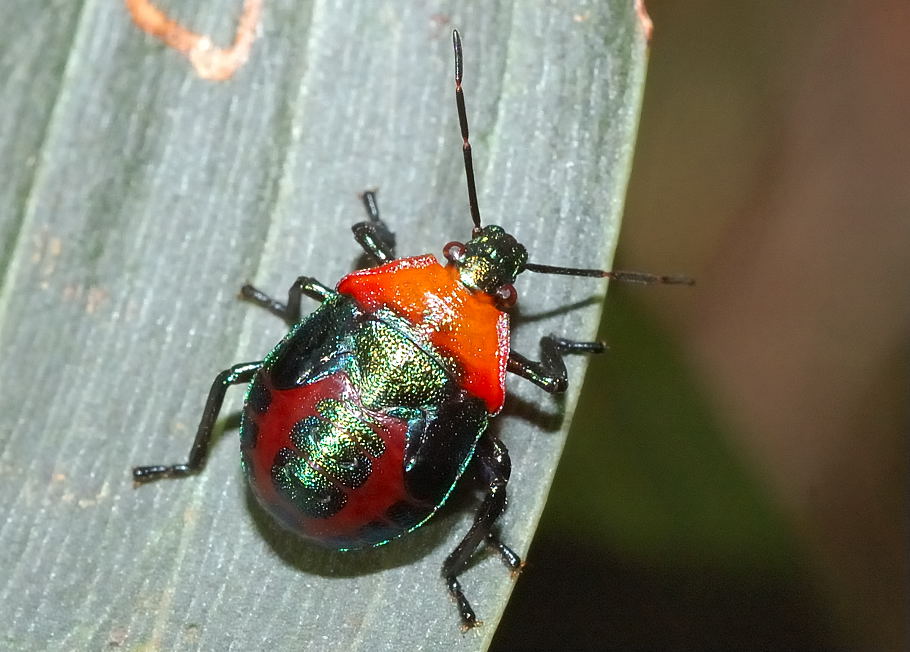
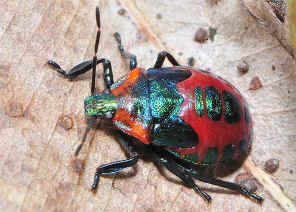
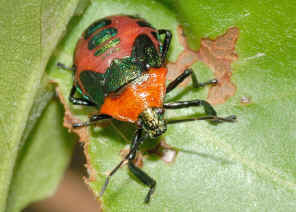
- The 4th instars look similar to their adults. Like most other true bugs, totally they have five instars stages.
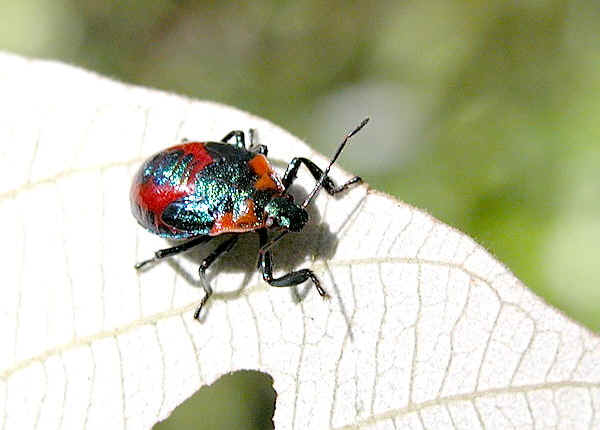
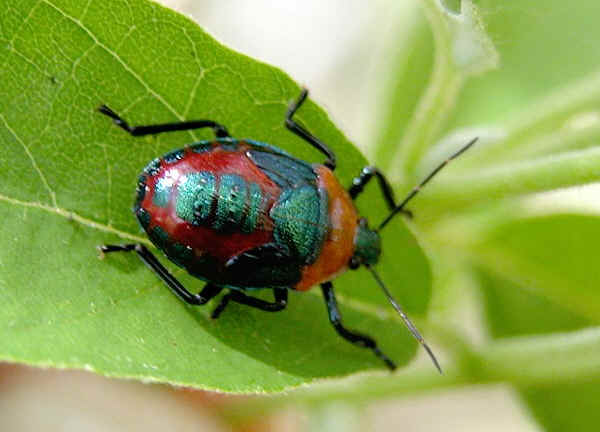
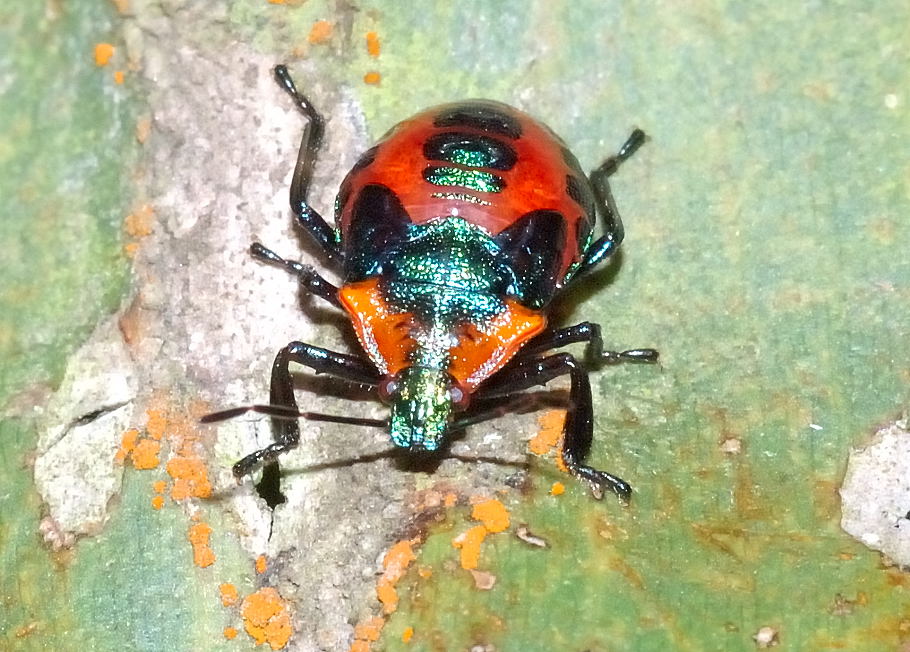
5th instars
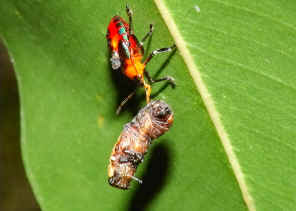
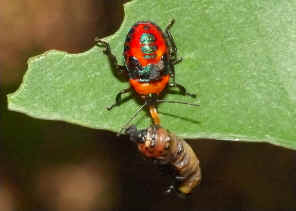
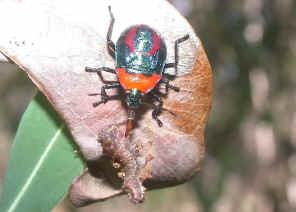
- The above pictures show the nymphs feeding on leaf beetle larvae, sawfly larvae and on moth caterpillars.
-
- Reference:
- 1. Insects of Australia, CSIRO, Division of Entomology, Melbourne University Press, 2nd Edition 1991, pp 509.
- 2. Stink Bugs of Australia - FaunaKeys, Australian Museum online 2003.
- 3. Cermatulus Dallas, 1851 - by Gerry Cassis, Emma Betts and Michael Elliott, Stink Bugs, Fauna Net, Australian Museum 2002.
- 4. Plant-feeding and Other Bugs (Hemiptera) of South Australia. Heteroptera-Part I - Gross, G.F. (1975). Adelaide: A.B. James, p228.
- 5. Cermatulus nasalis (Westwood, 1837) - Australian Biological Resources Study, Department of the Environment and Heritage, Australia 2005.
- 6. Plant-feeding and Other Bugs (Hemiptera) of South Australia. Heteroptera – Part I - by Gordon F. Gross, South Australian Government Printer, Adelaide, 1975, p228.
- 7. Glossy shield bug - Primary Industries & Fisheries, Queensland.