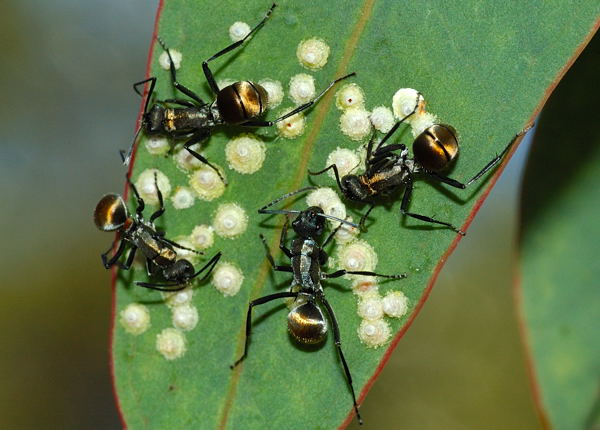
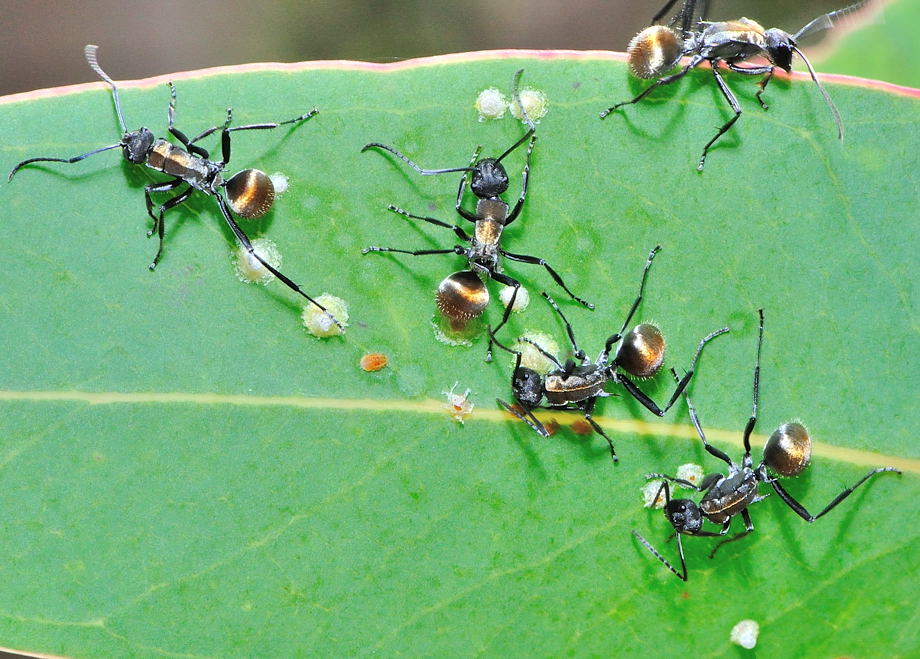
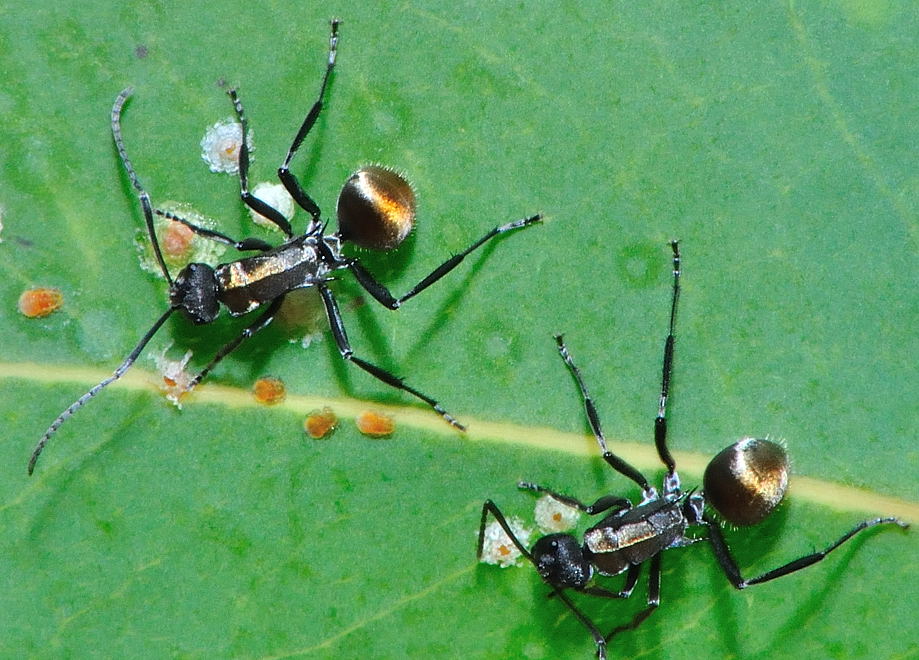
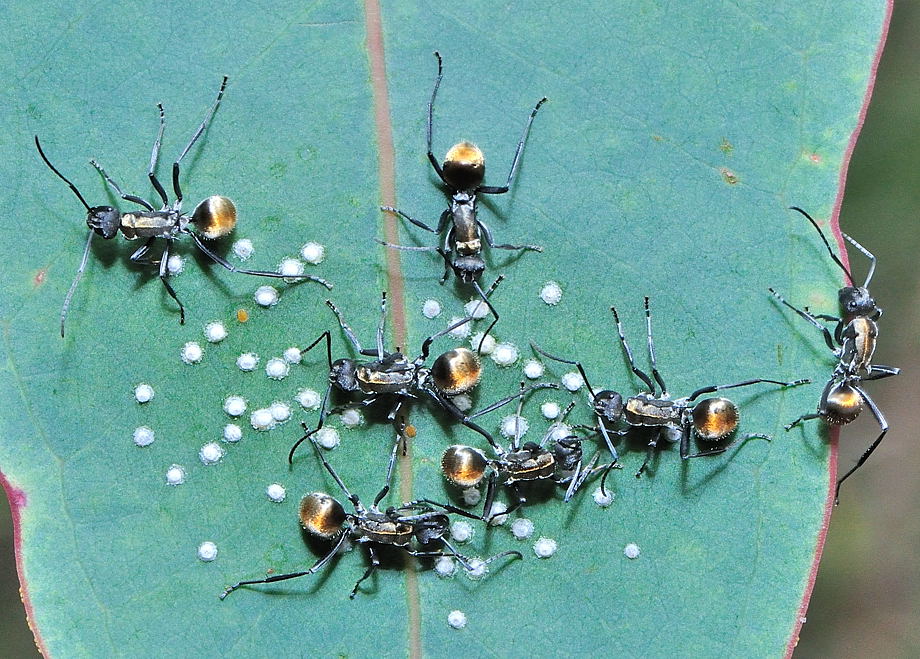
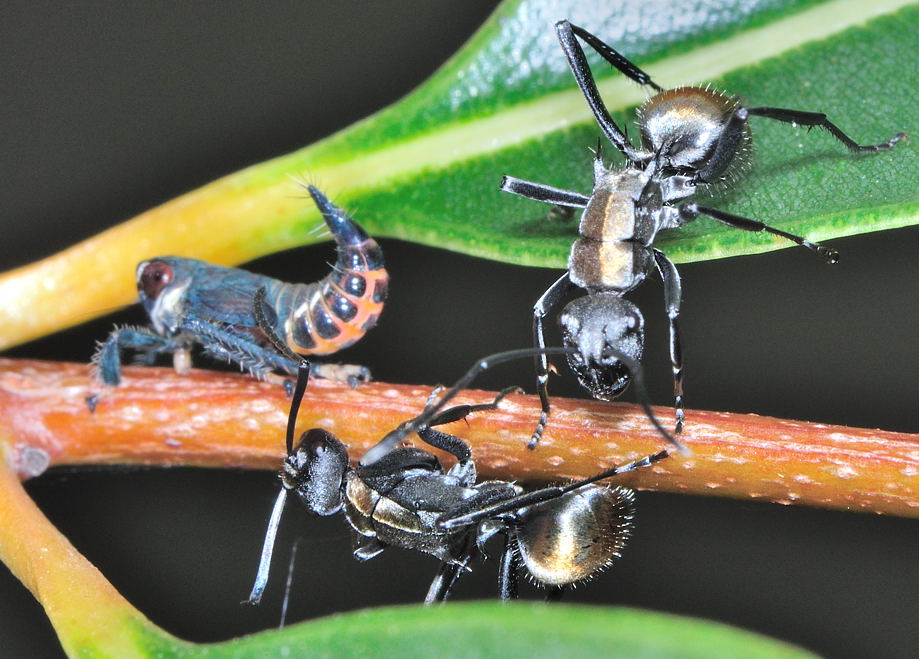
Golden-tailed Spiny Ant - Polyrhachis (Hagiomyrma) sp., Polyrhachis ammon
Subfamily Formicinae
This page contains pictures and information about Golden Spiny Ants that we found in the Brisbane area, Queensland, Australia.
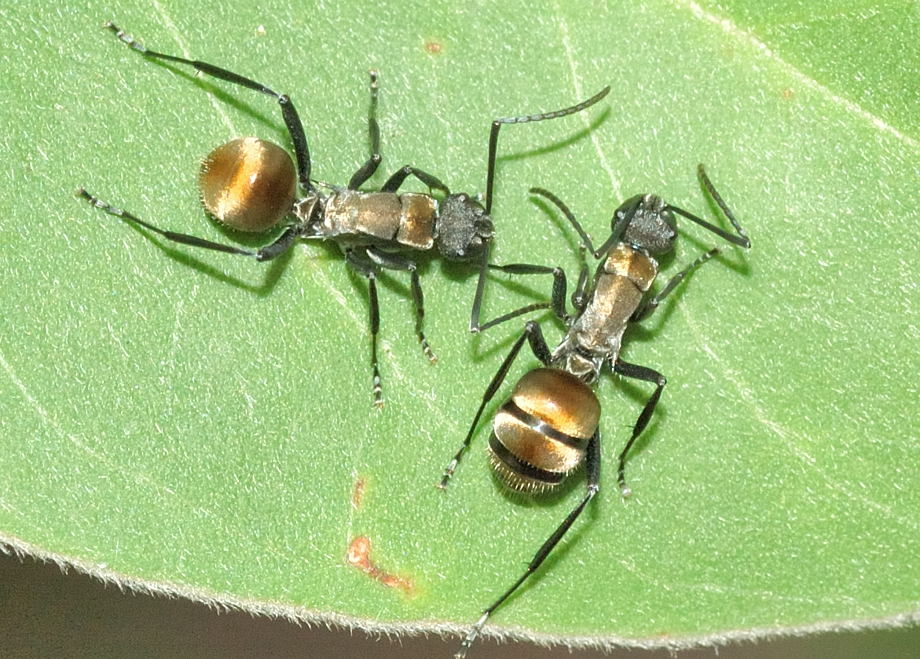
- Body length 10mm
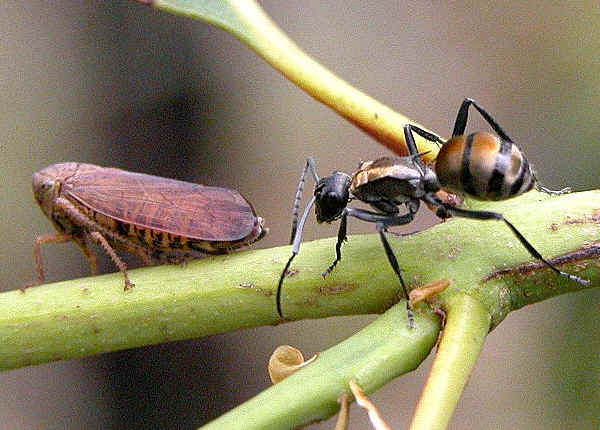
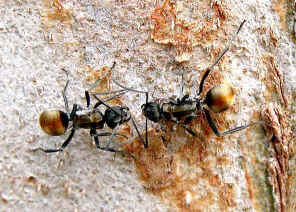
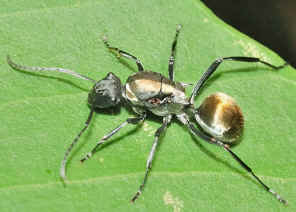
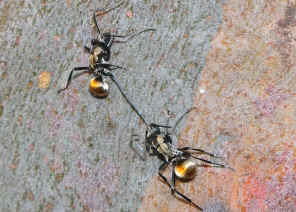
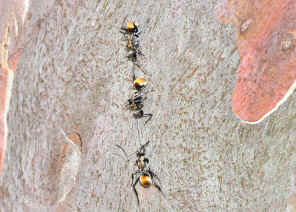
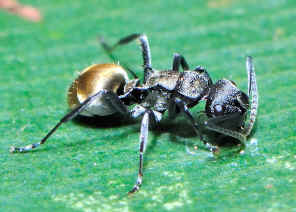
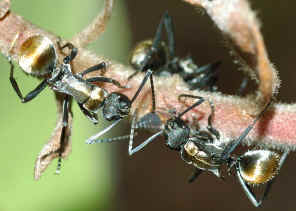
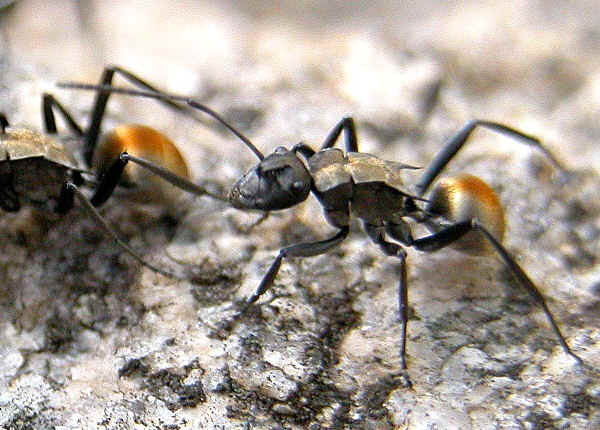
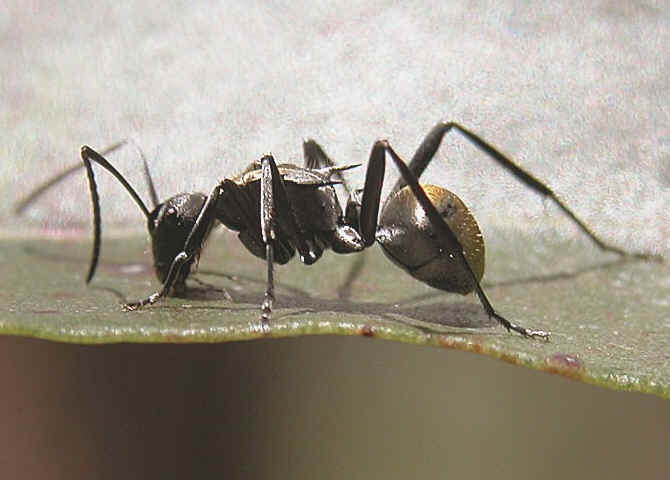
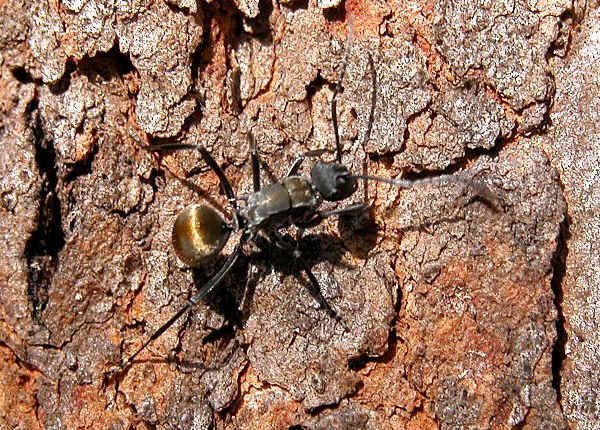
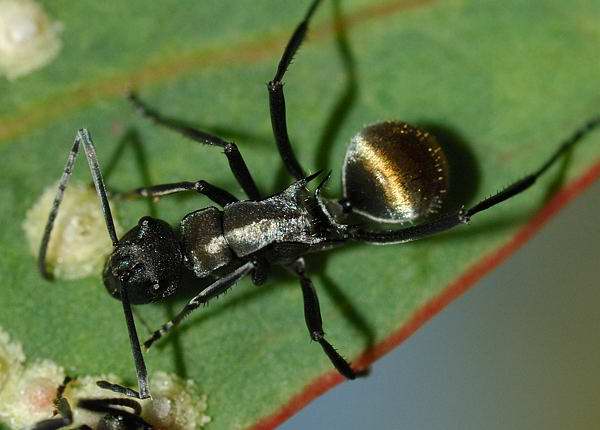
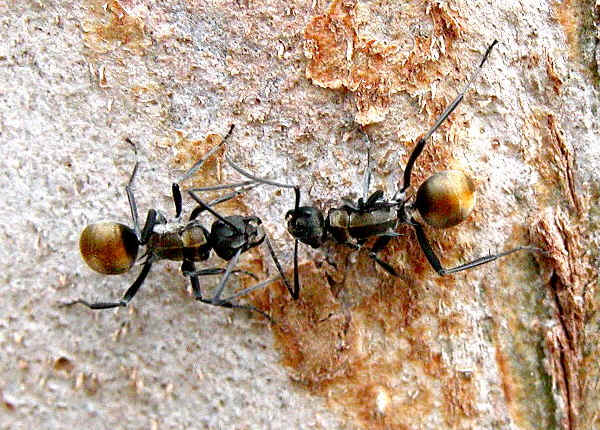
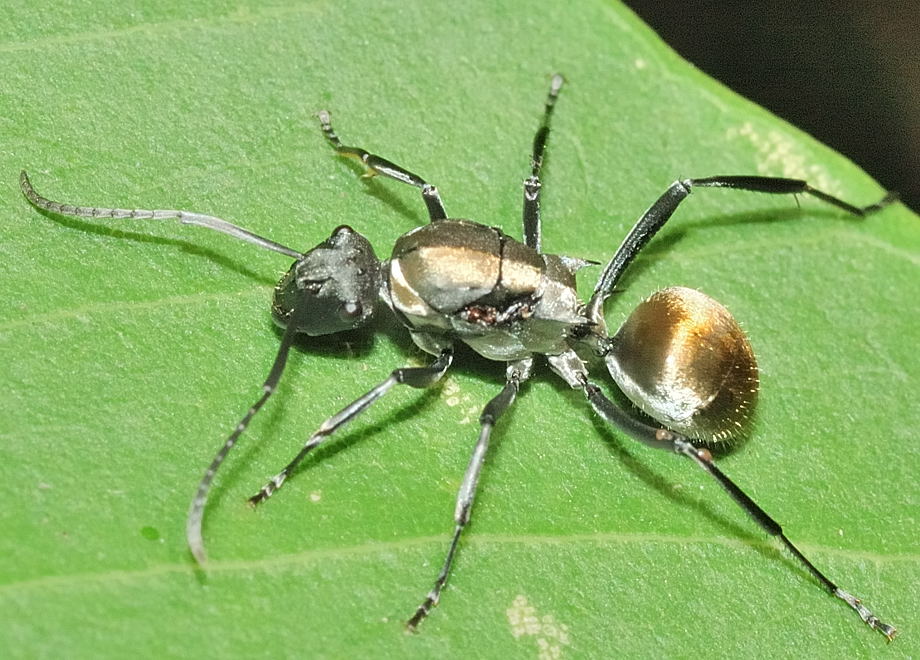
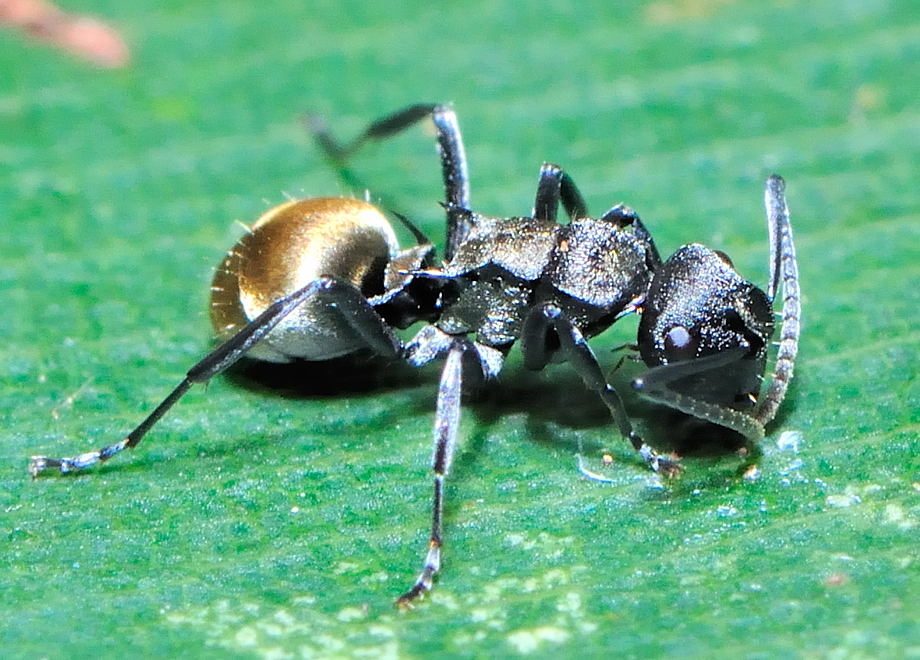
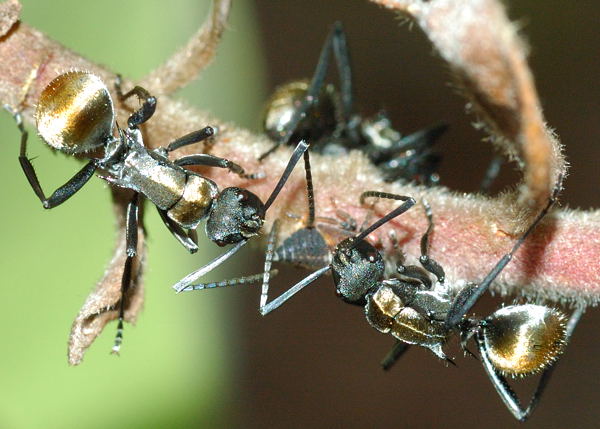
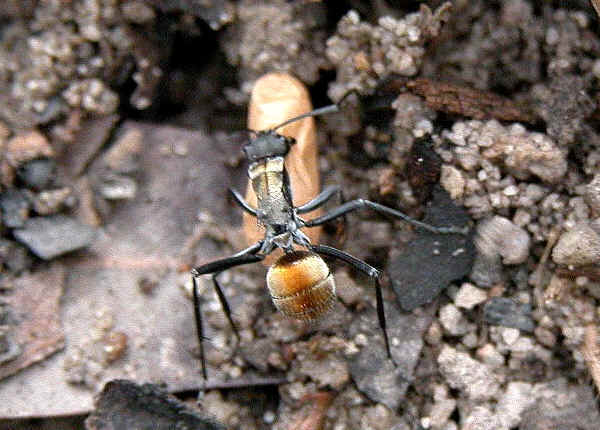
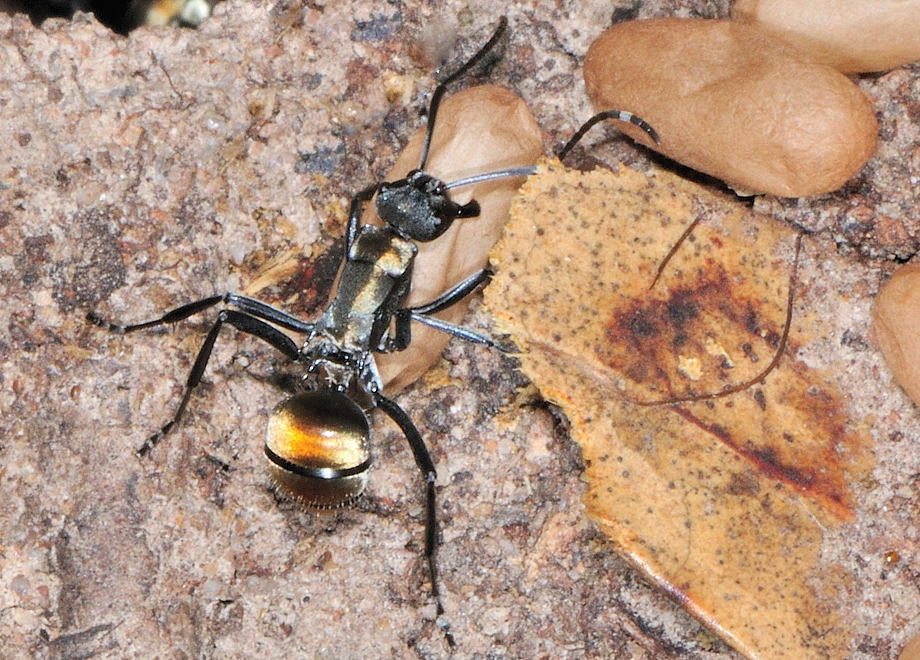
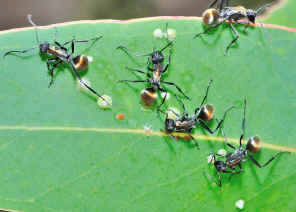
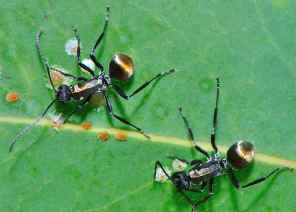
- Golden Spiny Ant is also known as Elegant spiny ant because of their elegant appearance. Golden Spiny Ant is one of the most common ants found in Brisbane bushes. They are black in colour with golden gaster (ant abdomen), moderately large (10 mm in body length), and have spines on mesosoma and petiole.
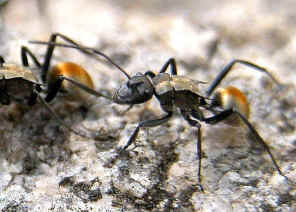

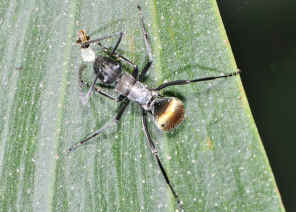
- They have long antenna. The first upper plate of the gaster elongate and comprising more than one-half the total length of the gaster.
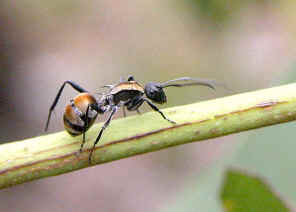
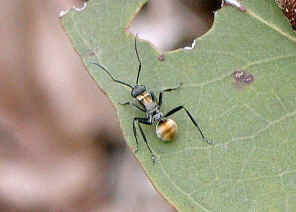
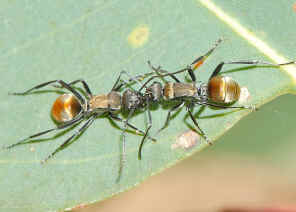
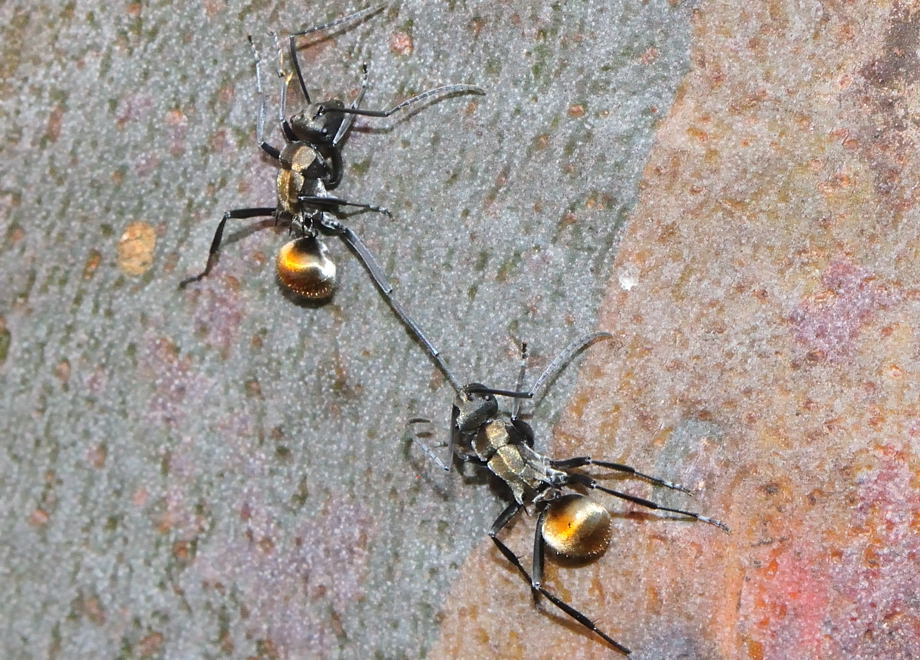
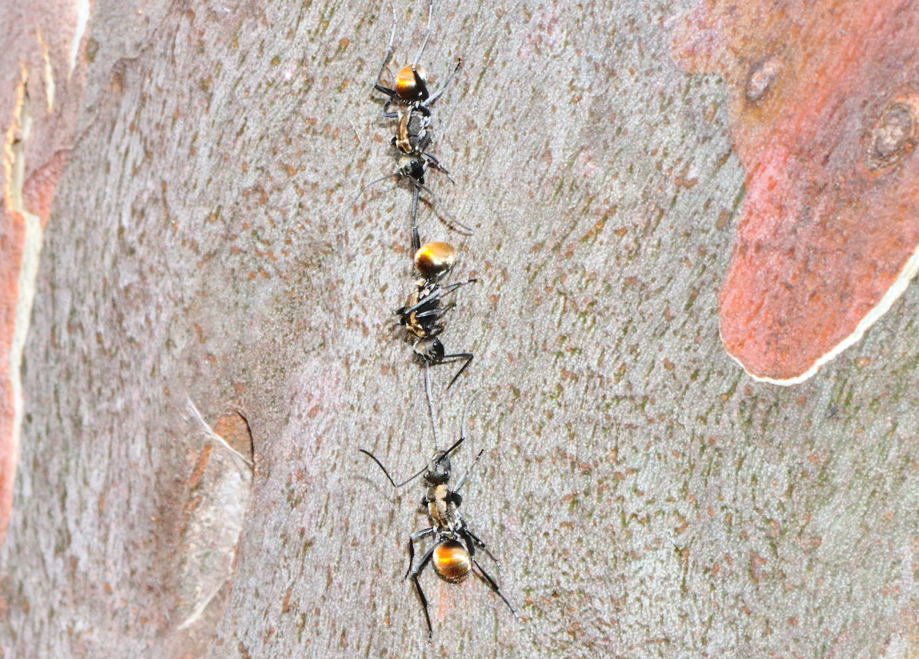
- The ants usually found searching individually on plants leaves and tree trunk. They are omnivorous and will collect nectar. They are very alert but not aggressive. If disturbed, they will usually retreat. They will fall onto the ground if they are on leaves or tree trunks..

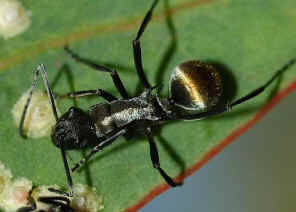
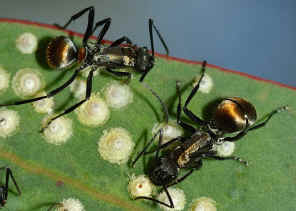
- There are many species of Golden Spiny Ants ( Polyrhachis subgenus Hagiomyrma). They look similar. Ants shown in this page may belong to few different species.
-
-
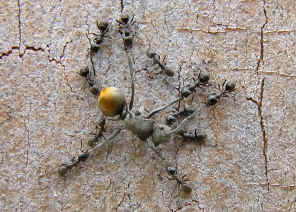
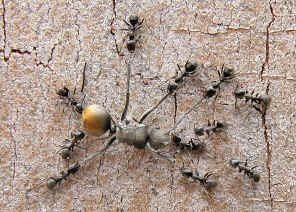
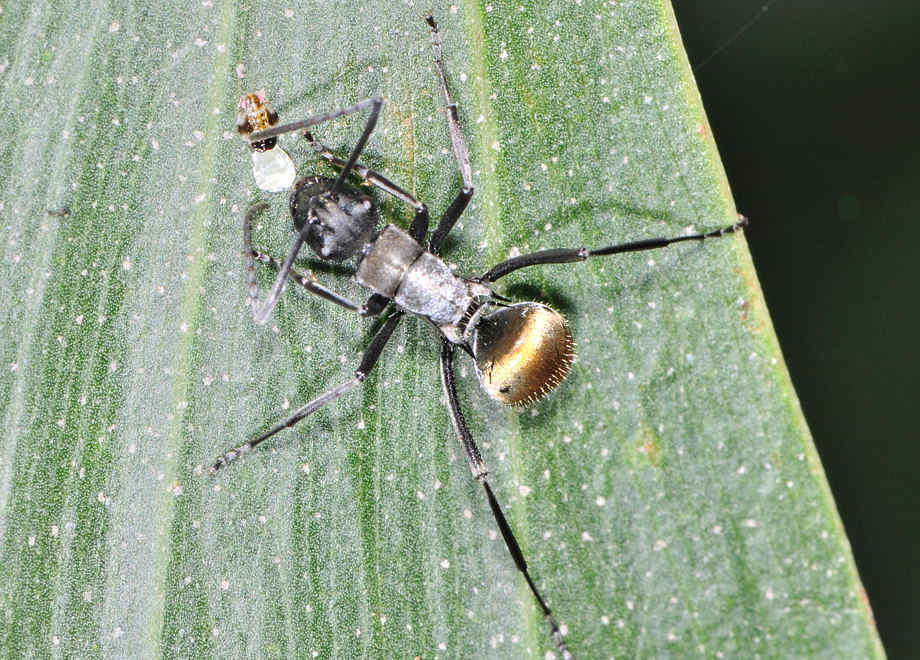
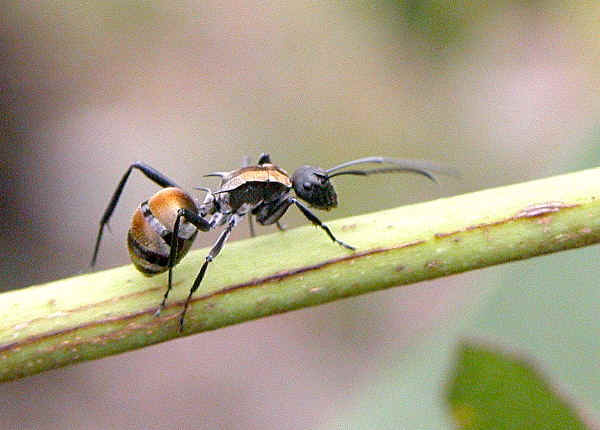
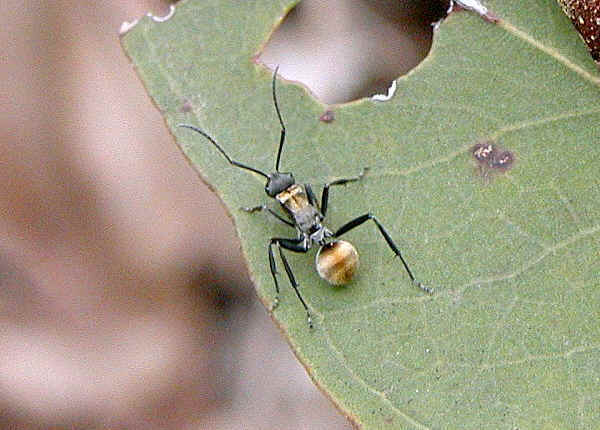
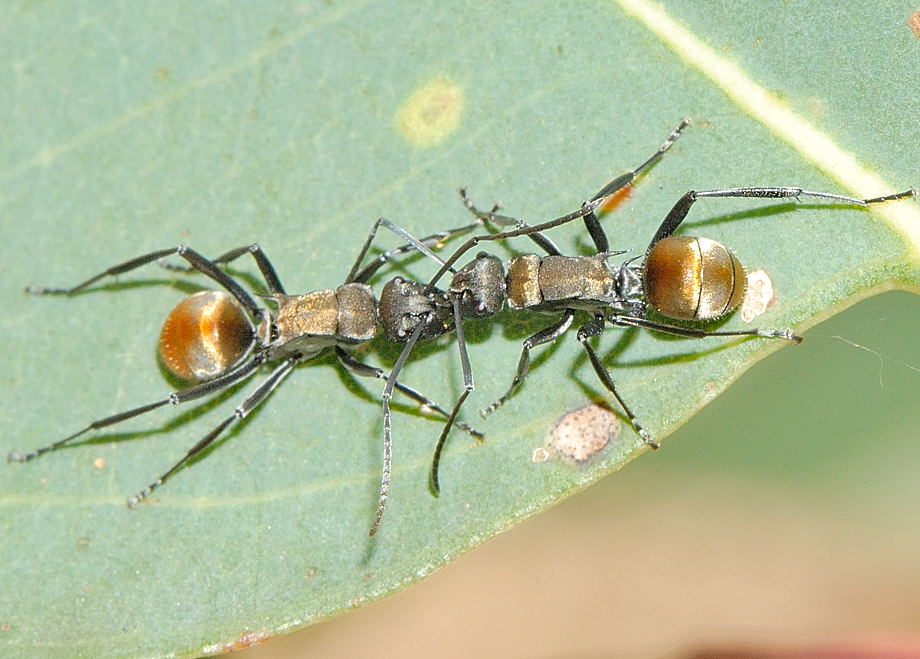
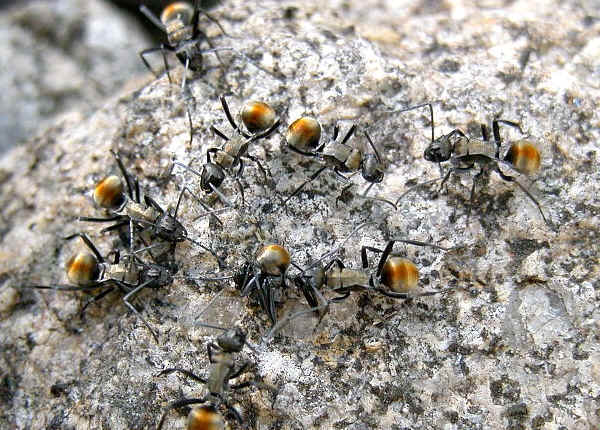
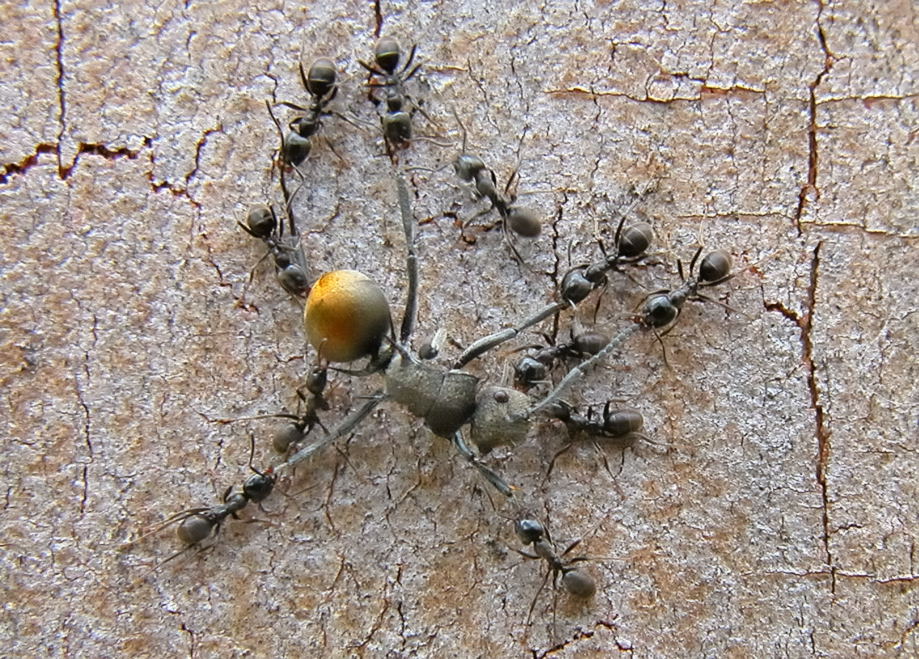
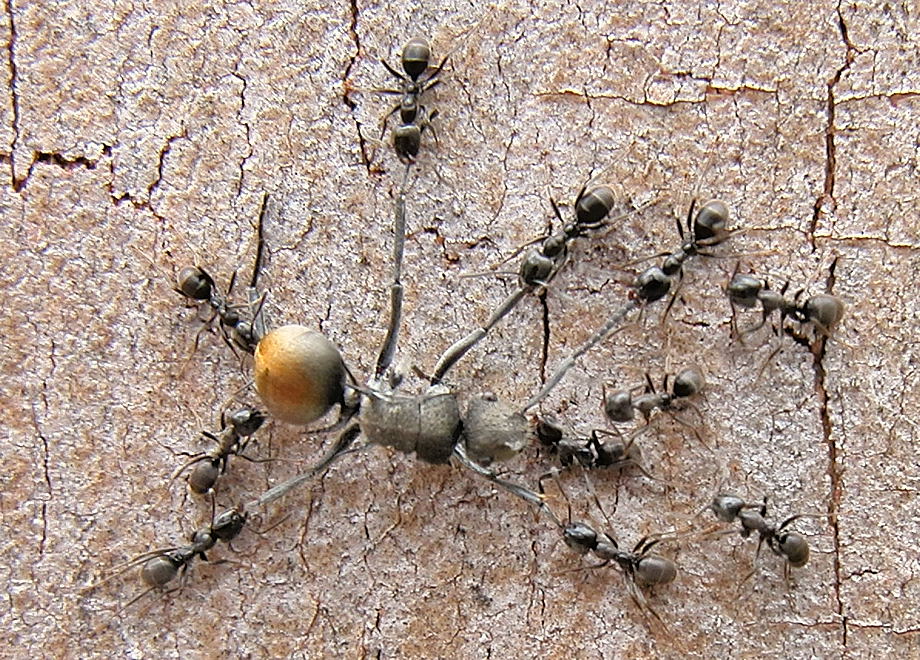
Nest on Ground under rock or log
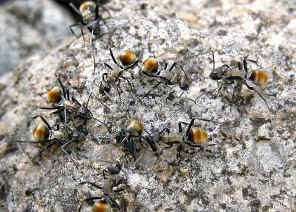
- Golden Spiny Ants nest in open soil or in soil under rocks and logs. Along the Toohey Forest bush walking track, we noticed a lot of their colonies built under rocks.
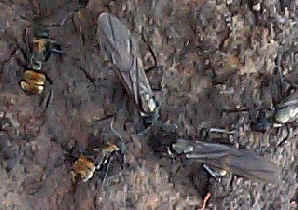
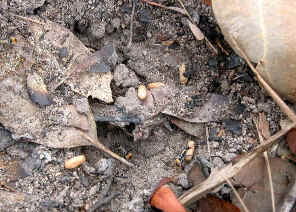
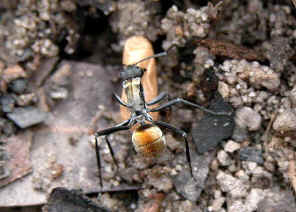
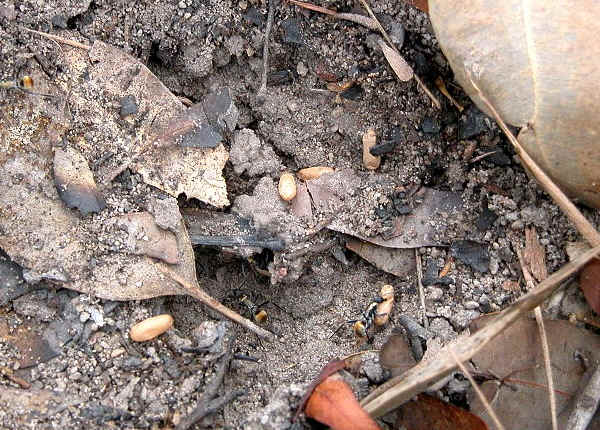
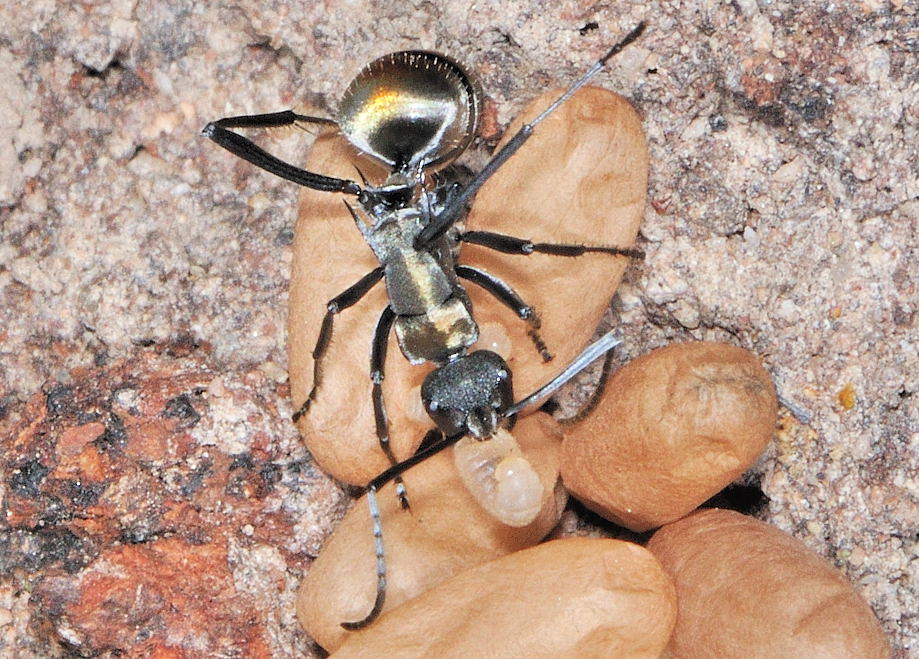
- Above pictures were taken when we opened a rock cover of a Golden Spiny Ant colony. The ants were protecting their eggs. The first photo show the winged caste of the species. They could be the male of female ready for the mating flight on the top layer of their nest.
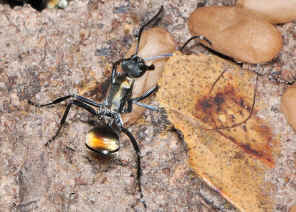
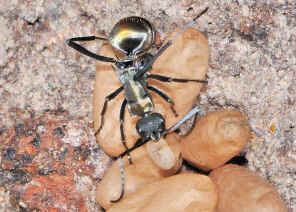
- To minimize our disturbances, we carefully put back the rock after we quickly took a few photos.
Attending leafhopper and scale-insects
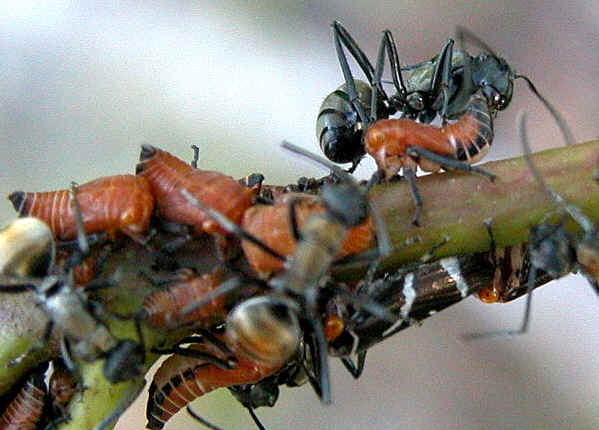
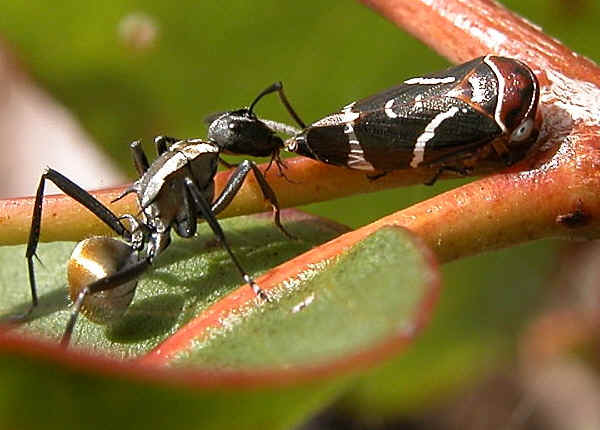
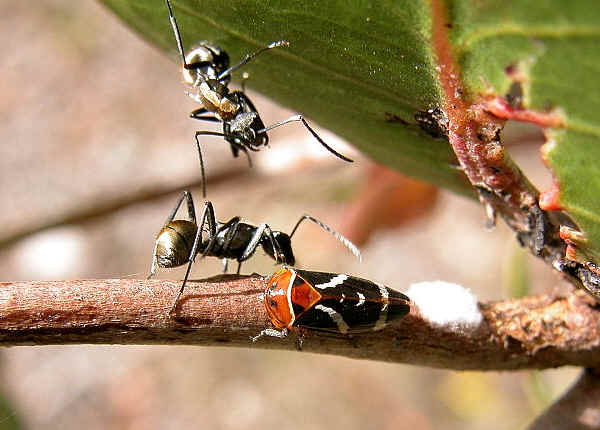
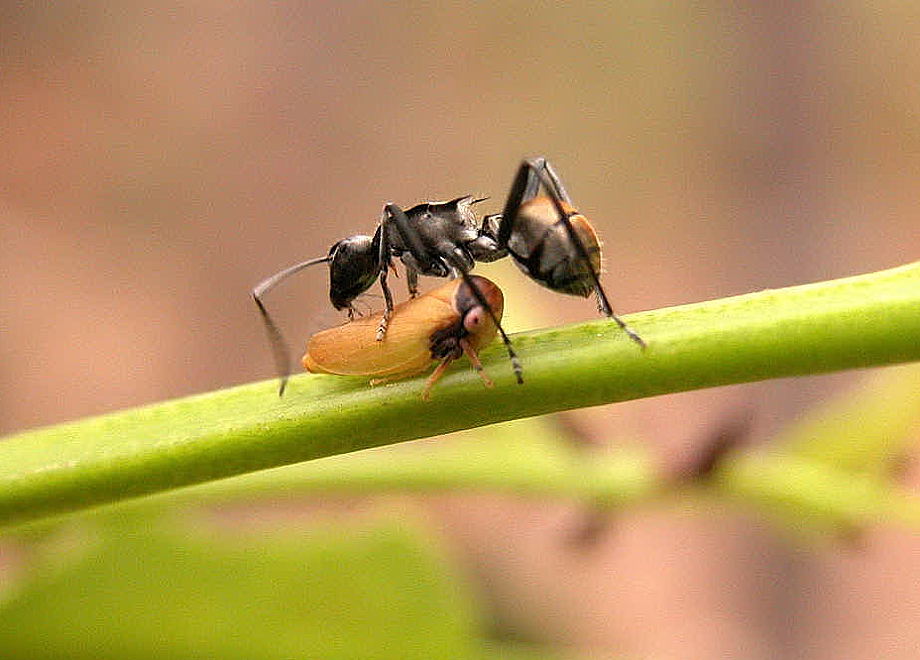
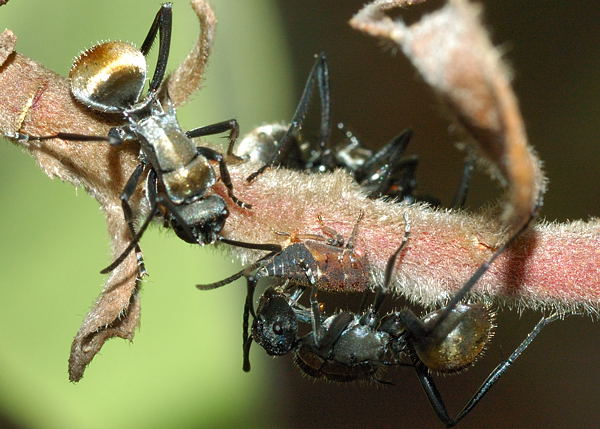
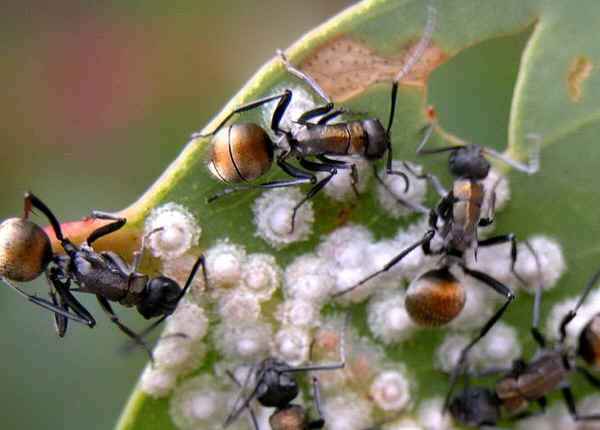
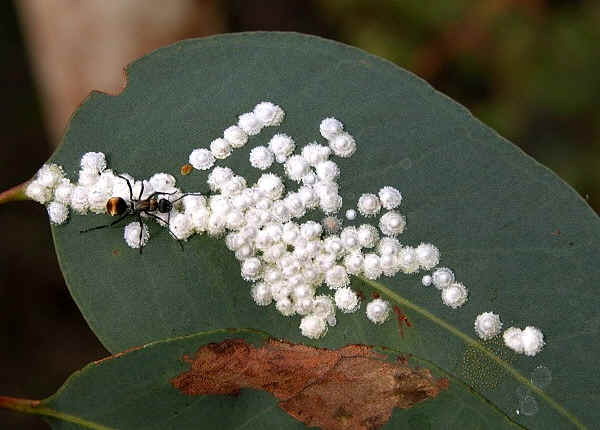
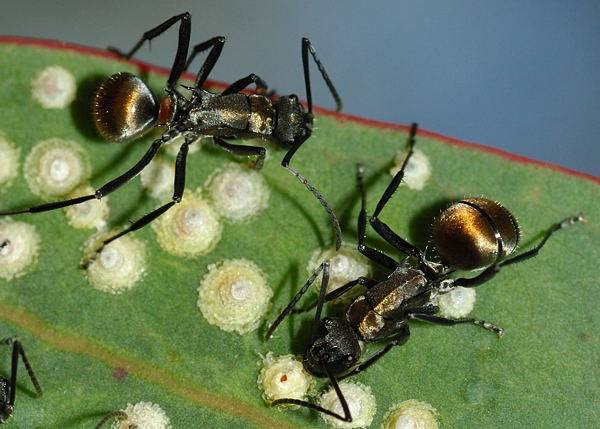
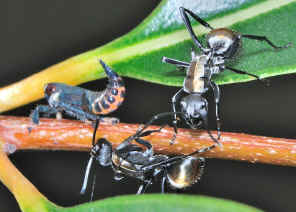
- The ants are omnivorous and often found collect 'honey dew' from leafhopper and scale-insects.
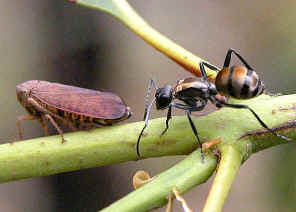
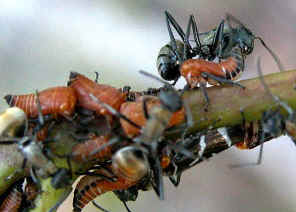

- Those ants attend a leafhopper just like we milk a cow. The ants tap the leafhopper with their antenna, the hopper answers by extract a tiny drop of sugar.
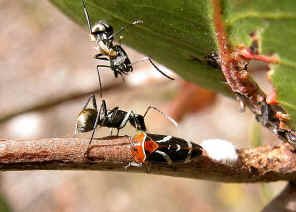
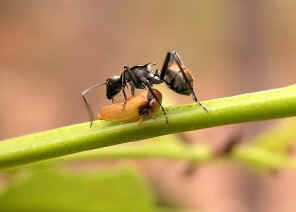
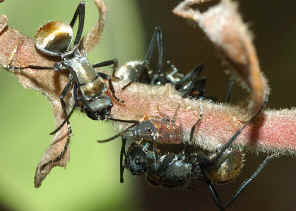
- Those leafhoppers and scale-insects feed by sucking juice from plants. They extract excessive sugar liquid from their body as 'honey dew'. Ants just like those 'honey dew'. Many ants gather around those leafhoppers and scale-insects, provide them as a kind of protection.
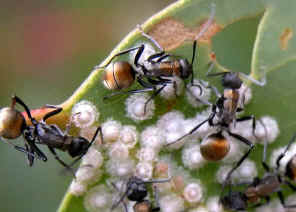
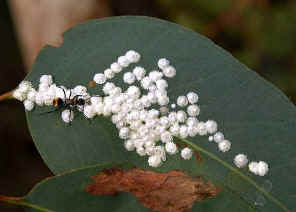
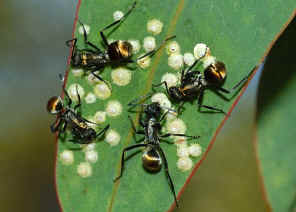
- We observed that many ants spend a lot of time around those leafhoppers and scale-insects. The time wasted may not be justified for the sugar. Need more observation and study for this issue. Chris Freebairn sent us email advised that the white scale in the photos "are actually psyllid nymphs, known as lerps. They look like Diaspidid scales (known as hard scales), but this family does not secrete honeydew. Soft scales (Family Coccidae) secrete honeydew and are tended by ants, but look quite different."

- Reference:
- 1. Insects of Australia and New Zealand - R. J. Tillyard, Angus & Robertson, Ltd, Sydney, 1926, p290.
- 2. Polyrhachis (spiny ants) - myrmecos.net, 2005.
- 3. Wildlife of Greater Brisbane - New edition, Published by Queensland Museum 2007, p1170.
- 4. What wasp is that? - An interactive identification guide to the Australasian families of Hymenoptera, 2007.