|
| |
Bee Flies - Family Bombyliidae
Order
Diptera
- This page contains pictures and information about Bee Flies in family Bombyliidae
that we found in
the Brisbane area, Queensland, Australia.
-
-
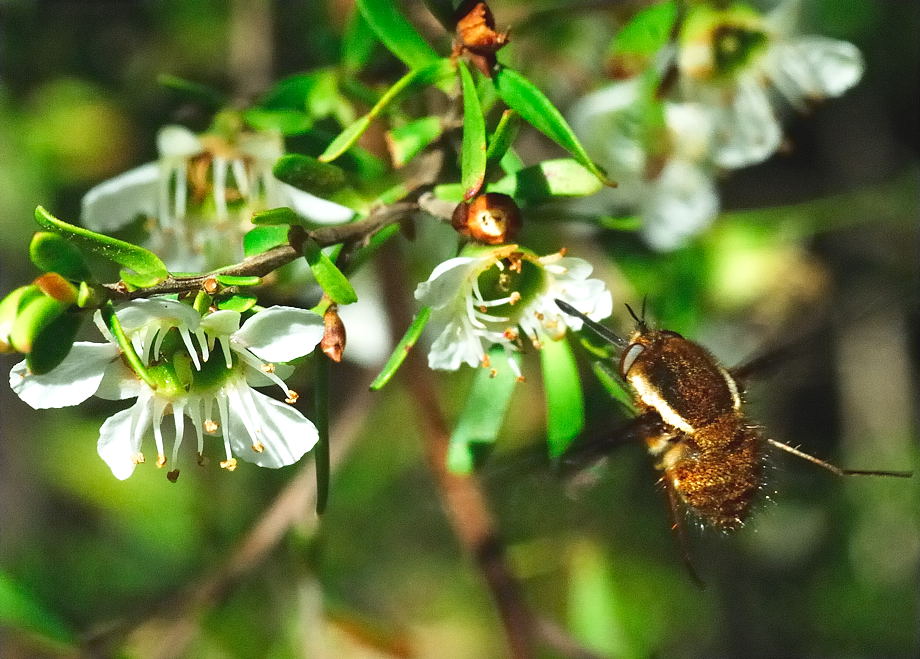
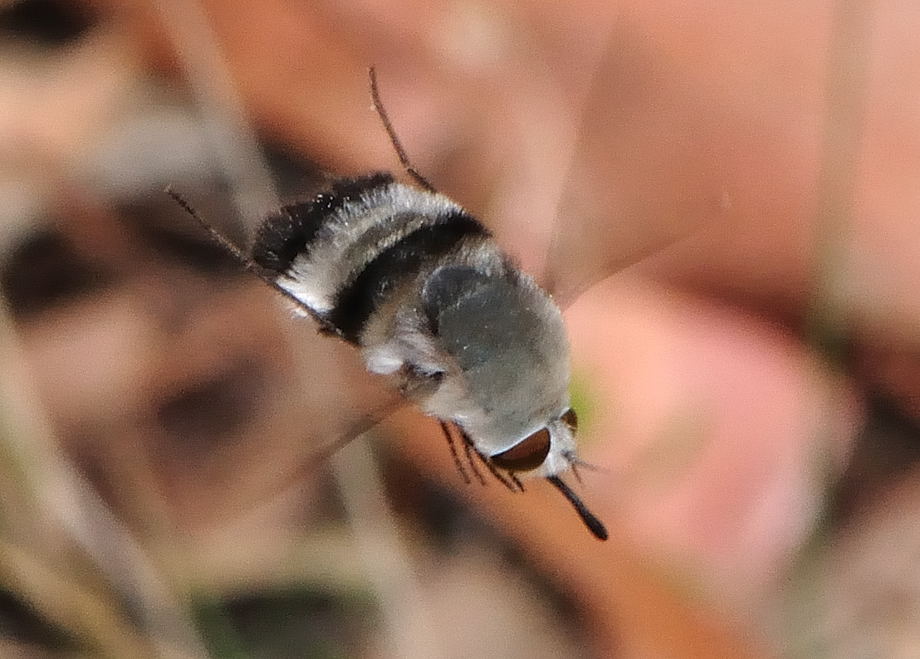
- Bee Flies are from medium to large in size. They are usually stout and
hairy. Bee Flies have long proboscis. They feed on nectar and pollen. Bee Flies
are strong flier. On a sunny
day, they are
often seen feeding on flowers, hovering over vegetation or resting on bare ground.
They are import pollinators, some even are the primary pollinators of
some of flower plant species.
-
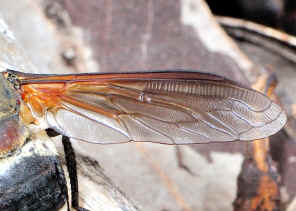
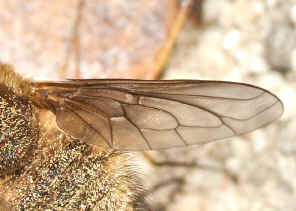
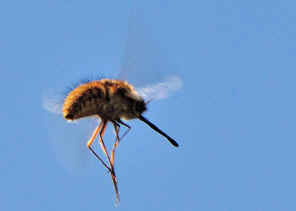
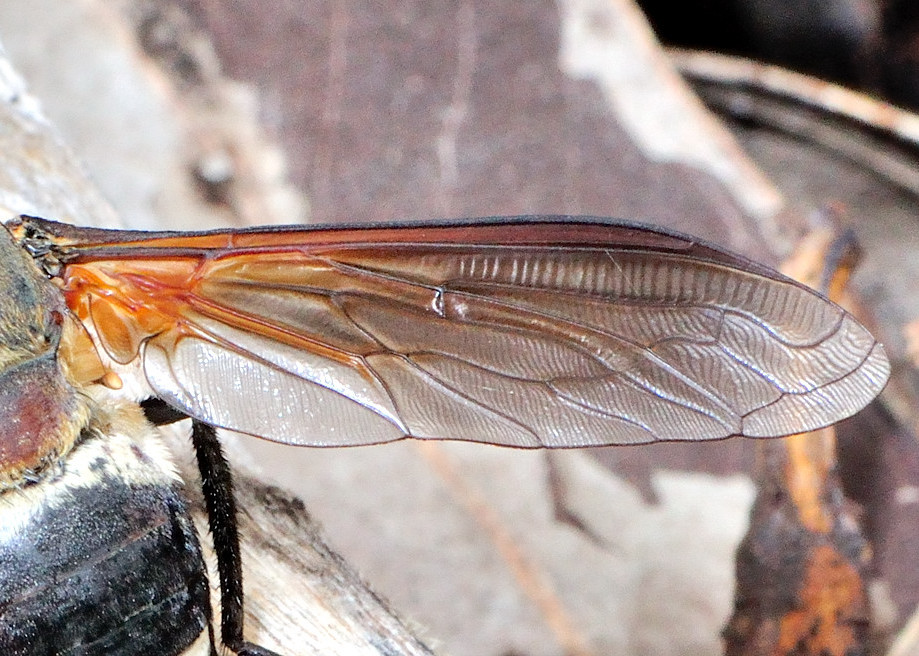
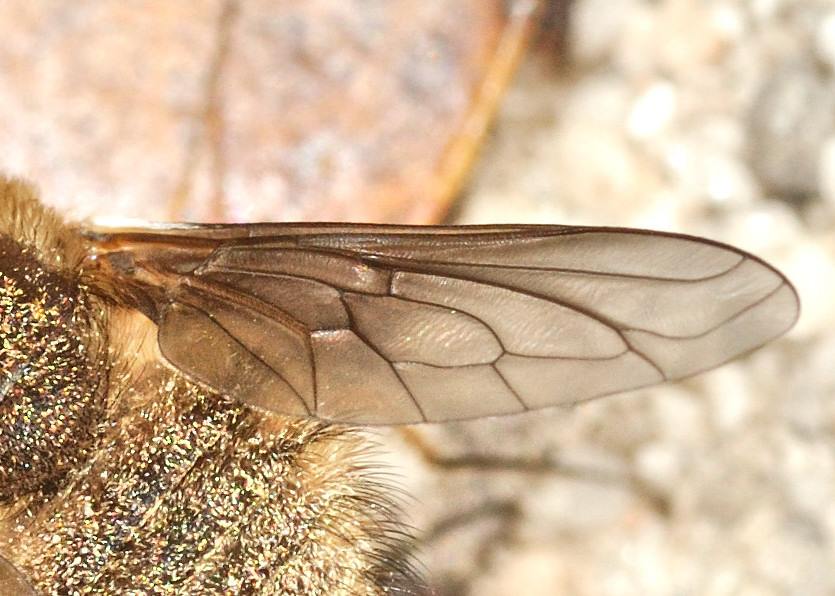
- Bee Fly's
wing
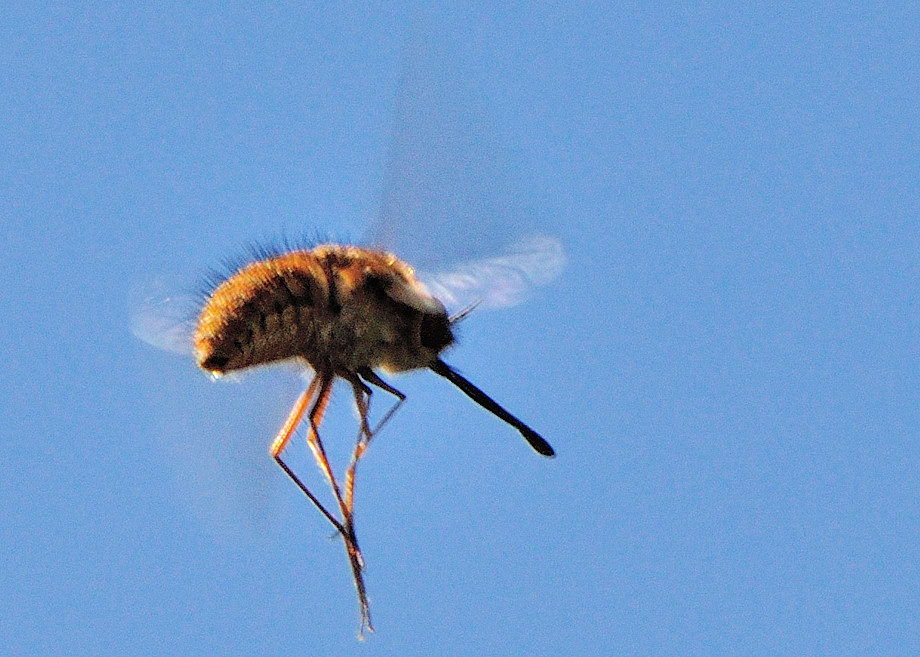
Long Proboscis
-
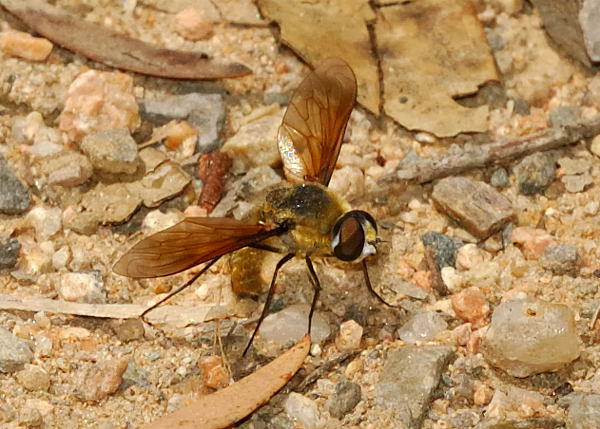
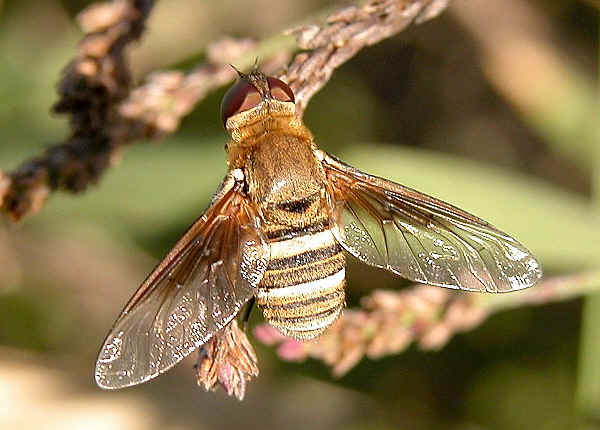
- Bee Flies are hairy, most of them mimic wasps or bees (Batesian
mimics of Hymenoptera). They have stout and woolly body
but they do not have the narrowed waist. Their wings are easily recognized with
distinct vein pattern, usually dark in colour,
some with patterns or spots. When at rest, their wings are flat in outspread
position. Their head is occupied by their large eyes, more or less in
hemispherical shape. Their legs are slender and without bristles. Their claws
are small.
-
- Bee Flies favours warm and sunny localities. Most have the strong, hovering
flight and are usually found hovering on blossom. They are also found patching of bare soil.
-
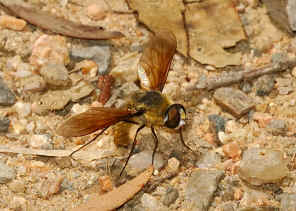 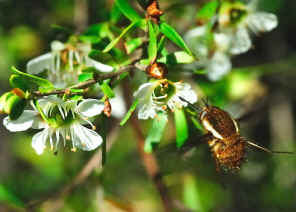
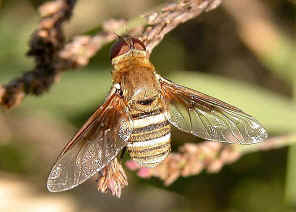
- Bee Fly laying eggs in sandy soil
With long proboscis and feed on
flowers
Mimic wasp
-
- Bee Fly females lay eggs in sandy soils. Most of their larvae are parasitic on other insects' eggs or larvae. Very
few others are predaceous, free living in soil. As you might imagine, their larvae
are hard to be found.
-
- Both flies in Bee Flies family and Hover
flies (Syrphidae) family mimic
bees and wasps. The main
character to recognize between them is Bee Flies have longer wings with
different vein patterns. Hover Flies
have shorter wings with a series of closed cell on the wings hind
margins.
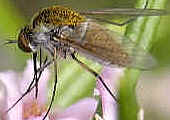
- Subfamily Toxophorinae - Slender
Bee Flies
- Bee Flies in the subfamily usually have the slender body covered with
short hairs. They also have long and slender proboscis to feed on
flowers.
-
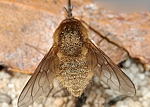
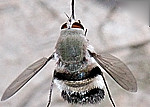
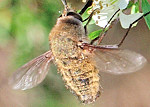
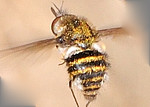
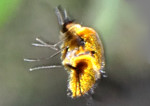
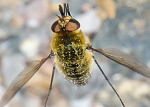
- Subfamily Bombyliinae
- True Bee Flies
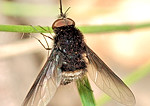
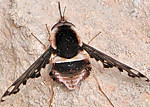
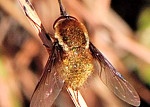
- Bee Flies in the subfamily
Bombyliinae usually have the stout and hairy body. They have long and slender proboscis. The wing vein M1 meets R5 before the wing
margin. Sometimes this subfamily is called True Bee Flies because their
hairy body resembles bee.
 -
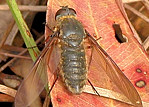
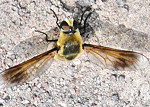
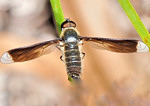
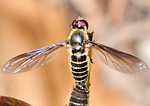
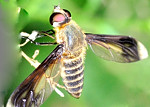
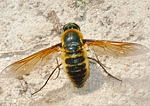
- Subfamily Lomatiinae - Brown
Bee Flies
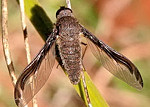
- In this subfamily, the Bee flies have relatively long wings and slender body. Their wing vein Rs forks well before r-m, with R4 and R5 strongly
looped. They usually have the narrower and flattened abdomen. They are brown
to dark brown in colours.
-
-
Subfamily Anthracinae - Subfamily Anthracinae - Black Bee Flies and Stout Bee Flies
- Anthracinae is a very large subfamily. We found quite a number of
species in this subfamily and listed in different tribes as below;
-
-
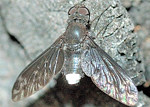
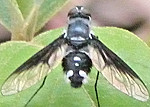
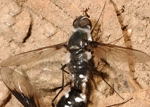
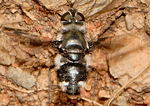
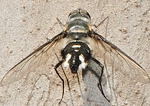
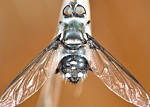
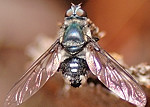
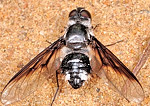
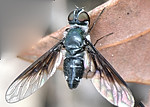
Tribe Anthracini - Black Bee Flies
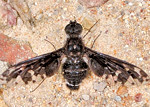
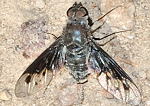
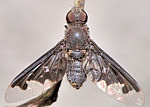
- Bee Flies in this tribe have their wing vein Rs forks very close
to cross vein r-m. They are close to the Exoprosopini except
they have a pencil of hairs at the tip of antenna. They are from small to
medium in size. Most of them are dark brown to black in colour, with
patterned wings.
 -
-
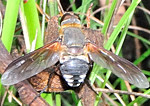
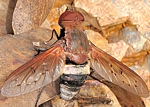
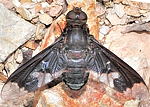
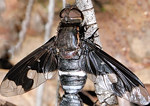
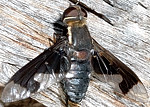
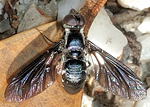
Tribe Exoprosopini - Stout Bee Flies
- In this tribe, the Bee flies also have their wing vein Rs forks very close
to cross vein r-m. They have stout body comparing with Bee Flies in
other groups.
 -
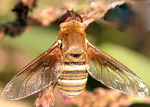
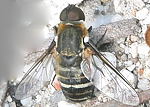
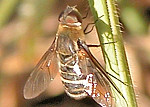
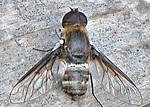
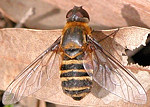
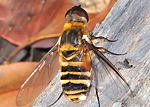
- Tribe Villini - Banded Bee Flies
 -
- Other subfamilies
Self Mimicry
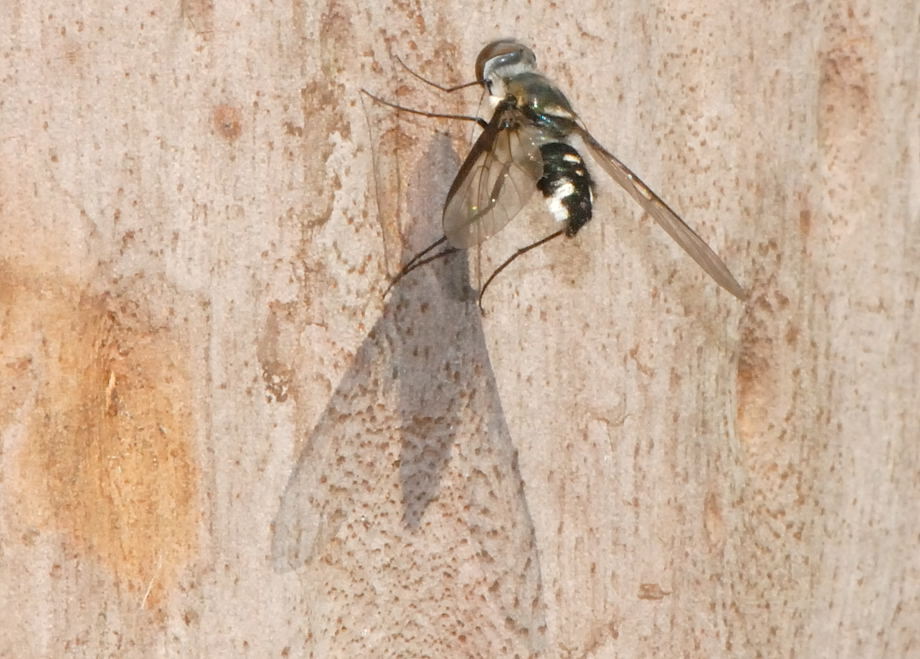
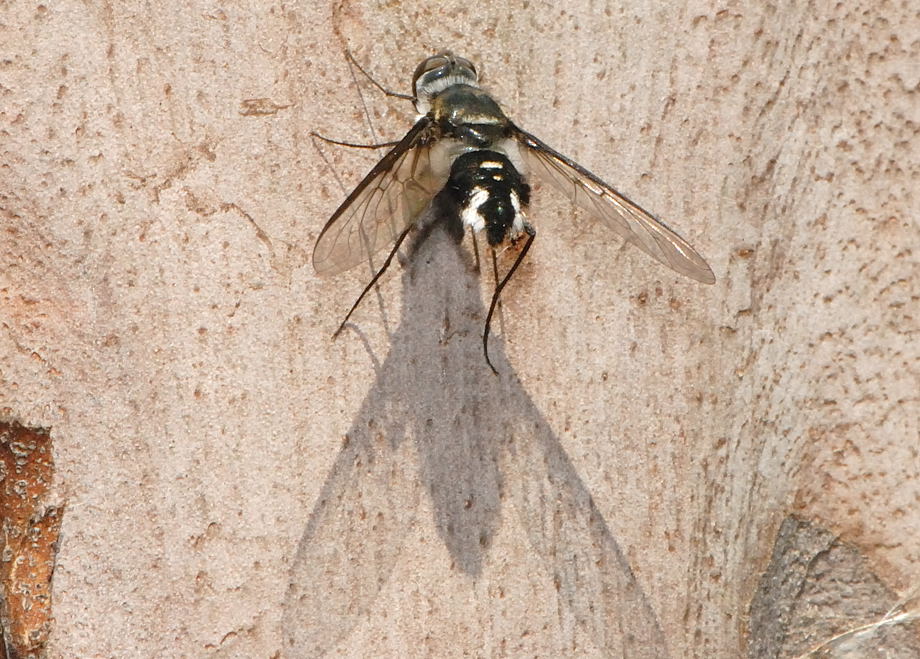
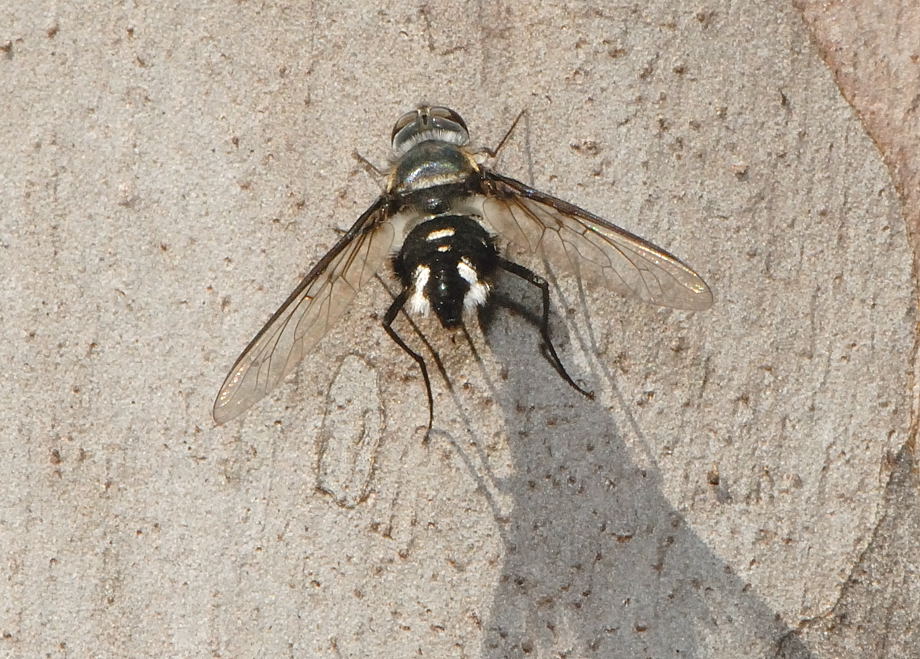
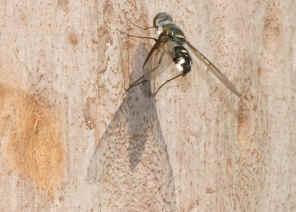
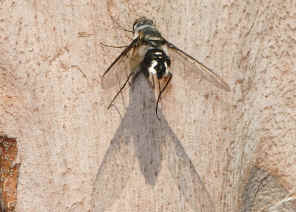
- On Apr 2009 in Anstead Forest neat the hill top, we found this male Thraxan Bee
Fly and noticed its interesting behaviour. The fly was hovering and resting on
a large smooth bark gum tree trunk. When rested, it face upwards with abdomen
tip raised. With the black and white patterns on abdomen, it looked exactly
like a Tachinid Fly resting on tree trunk facing downwards.
We do not sure what is the advantage of mimicking a Tachinid
Fly resting on tree trunk.
-
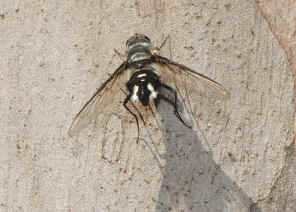 -
- Besides mimicking a Tachinid Fly, this is also the Self
mimicry (a term for animals that have one body part that mimics another to
increase survival during an attack or helps predators appear innocuous to
allow the prey extra seconds to escape). In this case, the fly's abdomen
mimics its head. Because the patterns are black and white in colour, we may
deduce that its target audience are with colour-blindness.
-
- Reference:
- 1. Insects
of Australia, CSIRO, Division of Entomology, Melbourne University
Press, 2nd Edition 1991, p 758.
- 2. Insects of Australia and New Zealand - R. J. Tillyard, Angus
& Robertson, Ltd, Sydney, 1926, p363.
- 3. Bee Flies (Bombyliidae) -
by Giff Beaton, 2005.
- 4. Family
BOMBYLIIDAE - Australasian/Oceanian Diptera Catalog - Web Version, by
Greg Daniels.
- 5. The
cladistics and classification of the Bombyliidae (Diptera: Asiloidea)
- by David K.Yeates, 1994.
- 6. An evolutionary radiation of beeflies in semi-arid Australia: systematics of the Exoprosopini (Diptera: Bombyliidae) - Lambkin CL, Yeates DK & Greathead DJ, Invertebrate Systematics, 2003.
- 7. Bombyliidae - Tree of Life, by David K. Yeates and Christine L. Lambkin, 1994.
- 8. Northern
Territory Insects, A Comprehensive Guide CD - Graham Brown, 2009.
- 9. Family BOMBYLIIDAE Bee Flies
- Australian Biological Resources Study, Australian Faunal Directory.
- 10. Bee Flies of the World. The genera of the family Bombyliidae - Hull, F.M. 1973, Bulletin of the United States National Museum 286: 1-687 [104].
[ Up ] [ Toxophorinae ] [ Bombyliinae ] [ Lomatiinae ] [ Anthracinae ] [ Other subfamilies ]
| |
|