|
| |
FAMILY COCCINELLIDAE
- This page contains information and pictures about Ladybird Beetles in Tribe Epilachnini
that we found in the Brisbane area, Queensland, Australia.
-
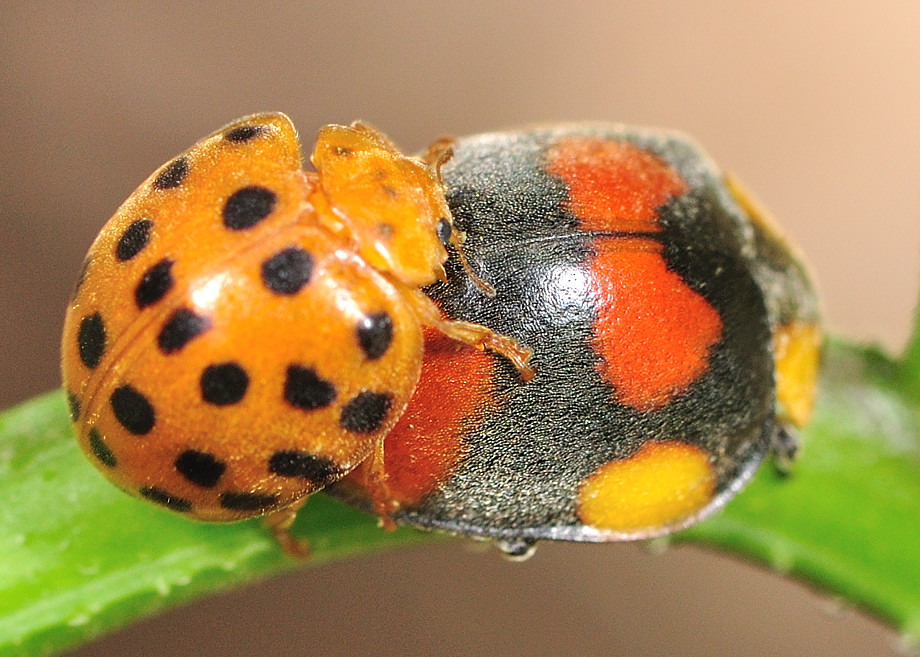 - Two plant-feeding Ladybird Beetles in different species
-
- Unlike other ladybird beetles, all species in this tribe Epilachnini
are phytophagous, i.e., both larvae and adults feed on plants. Both larvae and adults feed on the foliage of Cucurbitaceae
(e.g. cucumber, pumpkin and all types of melon) and Solanaceae (egg plant, potato and tomato).
Usually the adults
feed on the upper surface of leaves, while the larvae feeds on the lower
surface. Some are pests on agricultural crops such as potatoes, pumpkin,
turnips, radishes, beans and spinach.
-
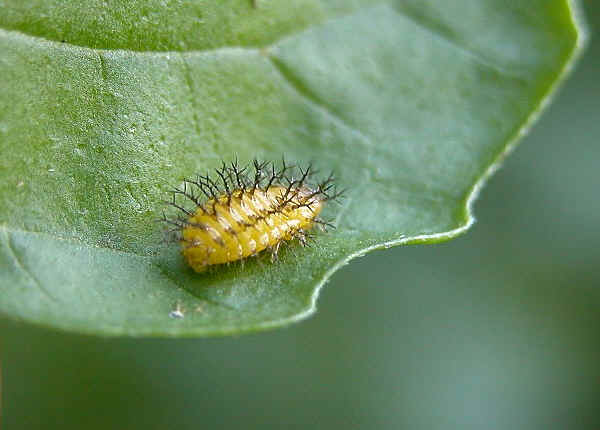
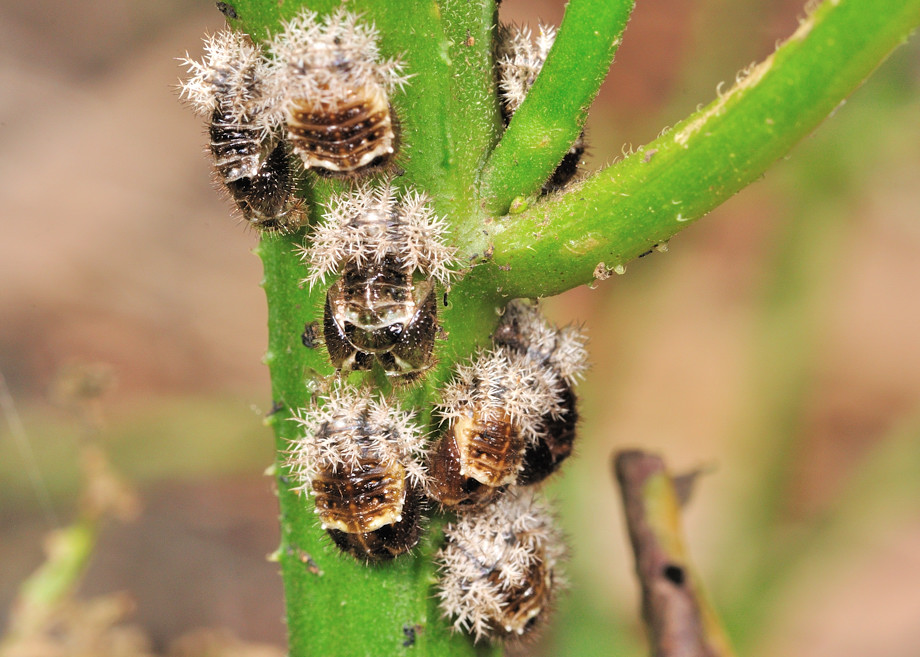
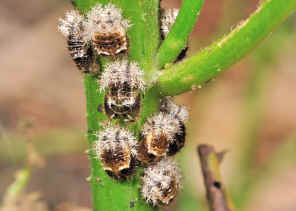 - Larvae
Pupa
-
- The larvae and pupa of Epilachnini can be distinguished from other
ladybird species by
their long branched spines on the back and sides.
-
- In Brisbane we found three species in Tribe Epilachnini. They are all in
genus Epilachna. In some reference they are considered as genus Henosepilachna
instead of Epilachna.
-
-
- 28-spotted Potato
Ladybird
 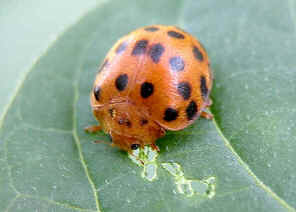 - Epilachna vigintioctopunctata (synonym Henosepilachna
vigintioctopunctata), larva body length 7mm, adult body length 7mm
- This ladybird is mostly found on potato leaves. They are relatively
larger than other ladybird species. The adults are orange in colour. Carefully
counted, there are 13 black spots on each wing cover and two spots on thorax,
i.e. 28-spotted in total. There were the dense short hairs on its body. More
information and pictures can be found on this page.
-
-
- 26-spotted Potato
Ladybird
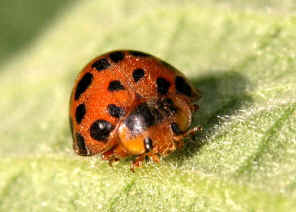 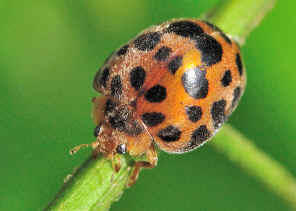 - Epilachna vigintisexpunctata (synonym Henosepilachna
vigintisexpunctata), body length 7mm
- This 26-spotted Potato
Ladybird looks very similar to the 28-spotted Potato
Ladybird, can only be distinguished by counting the black spots on their
body. Please check this page for more
infromation.
-
-
- Large Leafeating Ladybird
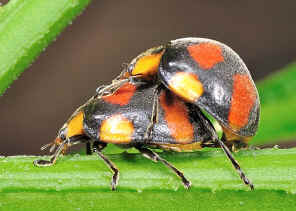
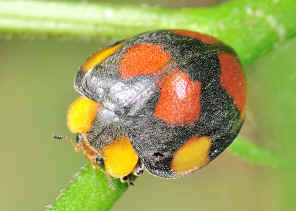 - Epilachna guttatopustulata, body length 10mm
- This is a large Ladybird Beetle. There are four large orange-red and four
yellow square spots on dark brown body colour. The bright yellow abdomen is
covered by wings. Please check this page
for more information.
-
- Reference:
- 1. Insects
of Australia, CSIRO, Division of Entomology, Melbourne University
Press, 2nd Edition 1991, pp 658.
- 2. Genera
of Coccinellidae - The University of Queensland Insect Collection,
2004.
- 3. Australian Ladybird Beetles
(Coleoptera: Coccinellidae) Their biology and
classification - A.Ślipiński, Australian Biological Resources,
2007, p182.
- 4. REVIEW OF THE AUSTRALIAN EPILACHNINAE (COLEOPTERA: COCCINELLIDAE)
- C.S. LI, J.Aust.ent.Soc., 1993. Department of Primary Industry and
Fisheries.
[ Up ] [ Ladybirds Field Guide ] [ Tribe Chilocorini ] [ Tribe Diomini ] [ Tribe Coccidulini ] [ Tribe Coccinellini ] [ Tribe Epilachnini ] [ Other Ladybirds ]
| |
|