|
| |
- This page contains information and pictures about 28-spotted Potato
Ladybird Beetles that we found in the Brisbane area, Queensland, Australia
-
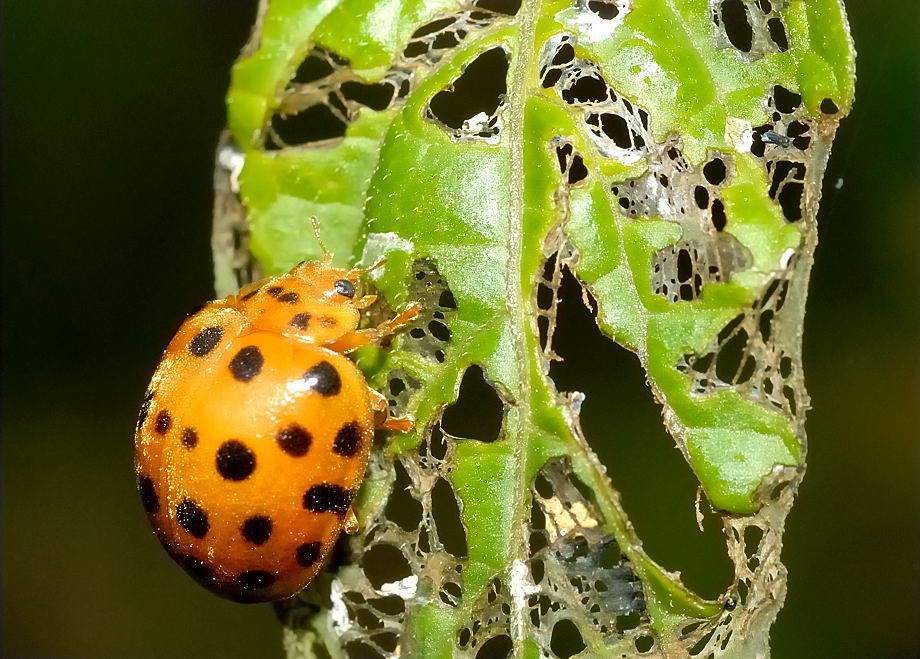 - Body length 7-10mm
-
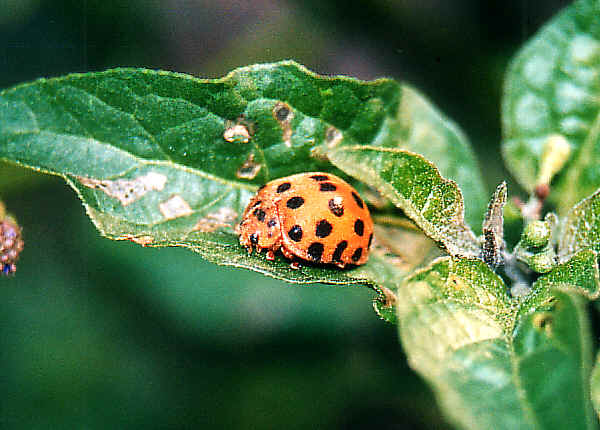
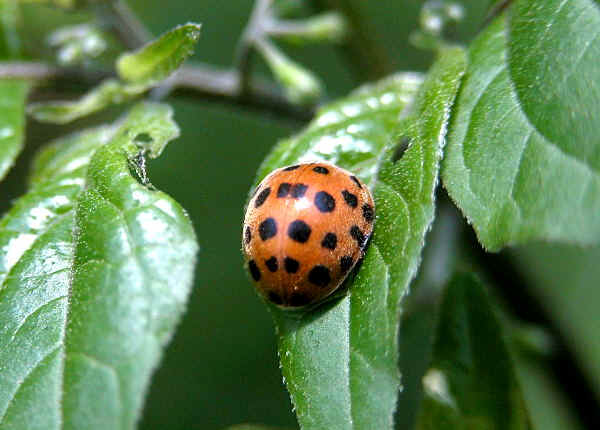
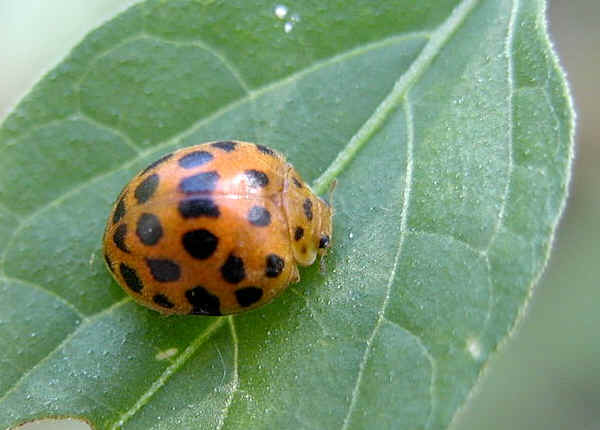
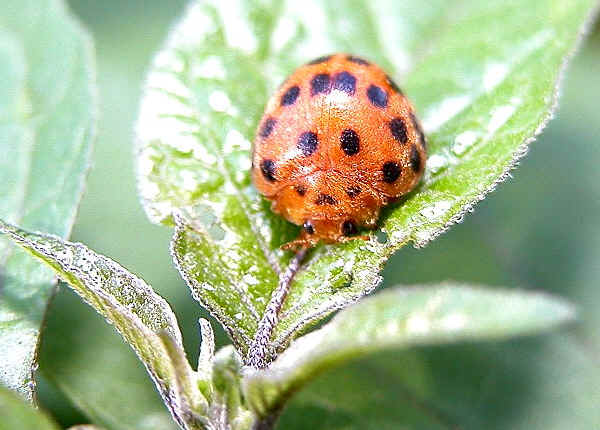
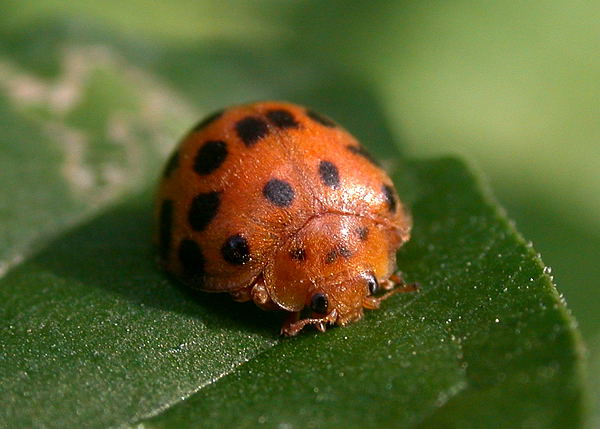
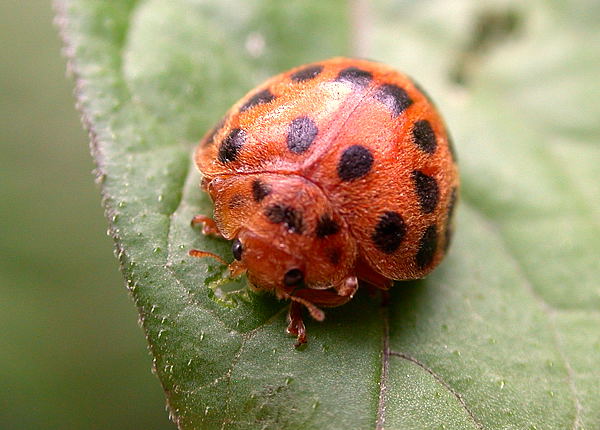
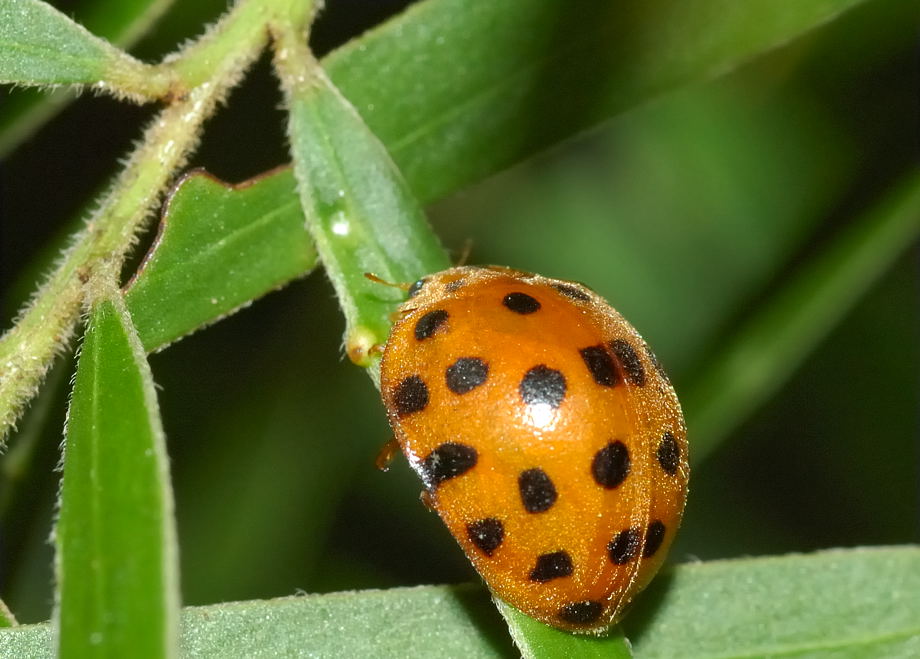
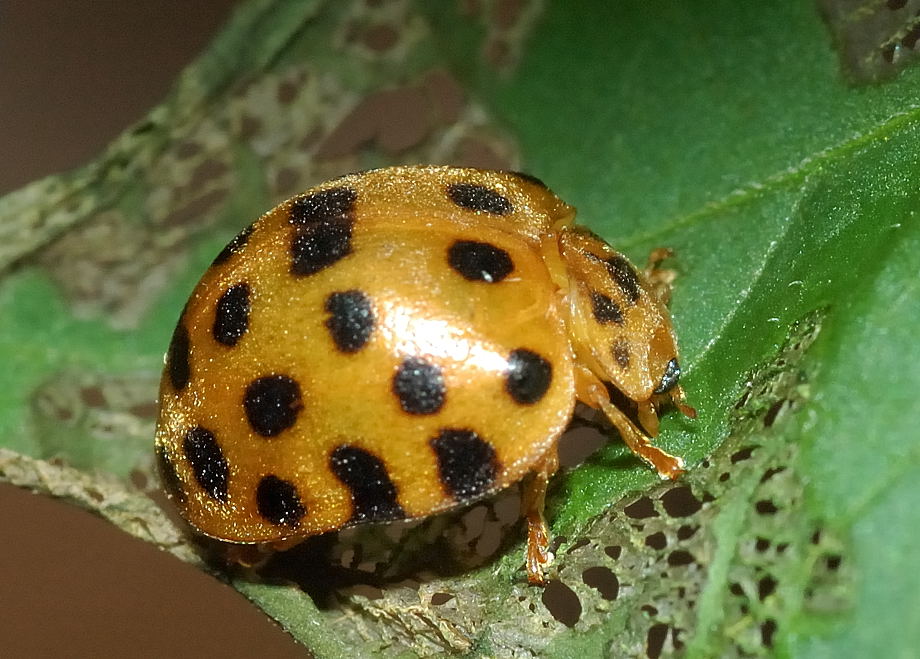
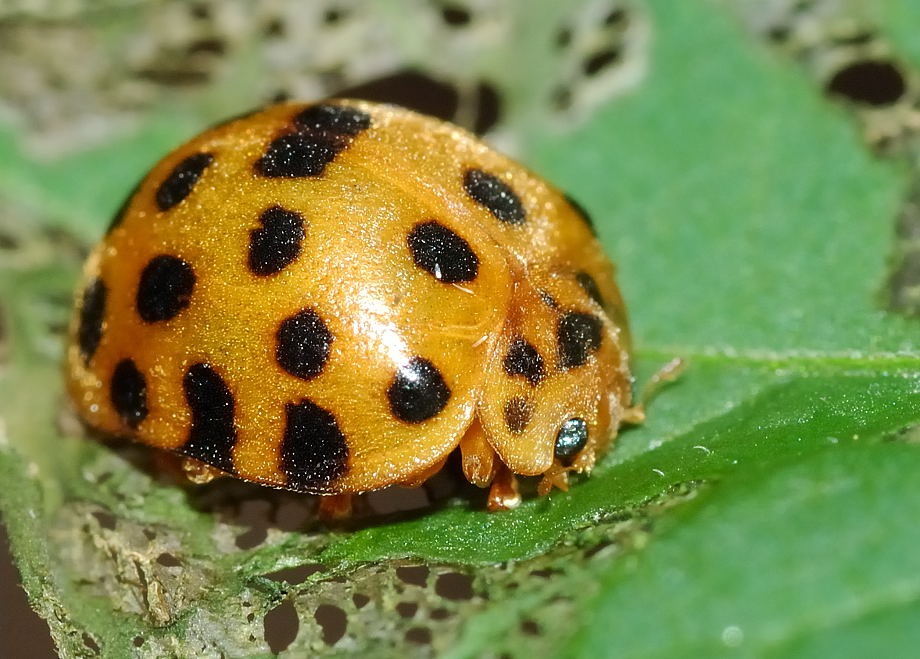
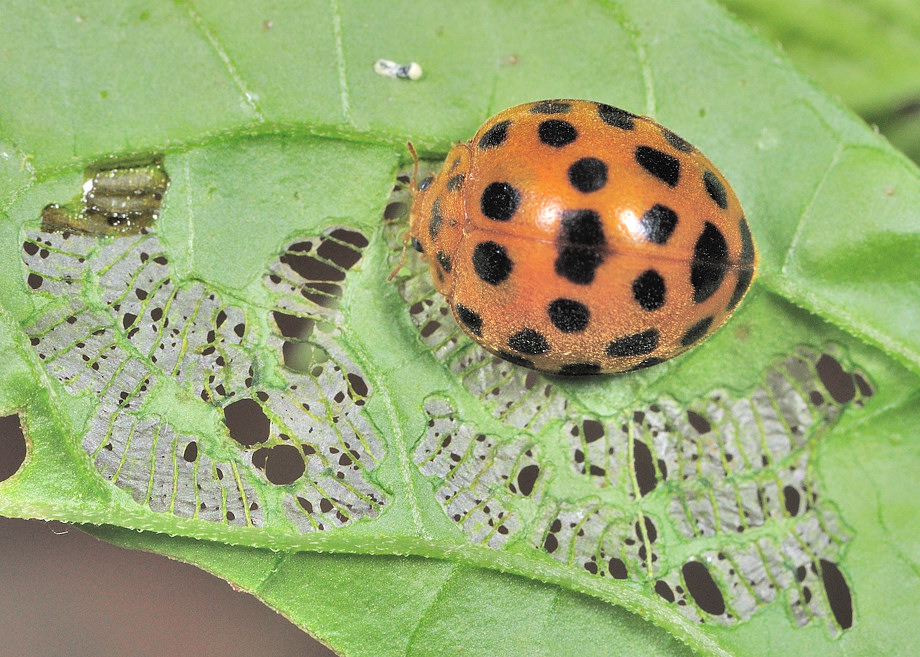
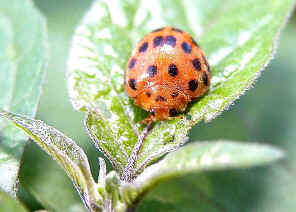
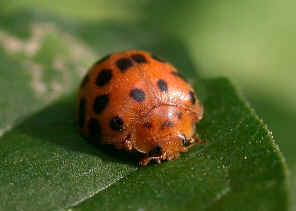
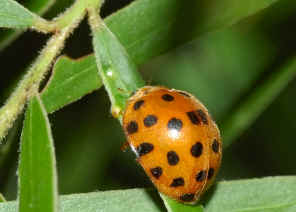
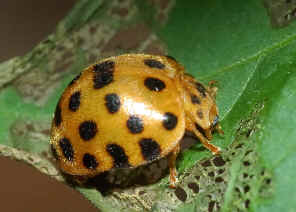
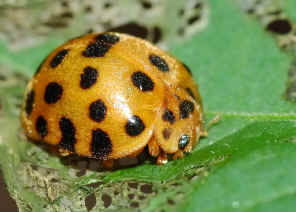
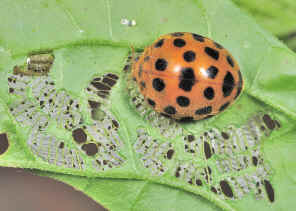
- This ladybirds are larger than other ladybird species. They are orange
in colour. Carefully counted, there were 13 black spots on each wing cover,
two spots on thorax, i.e. 28-spotted in total. There were the dense short
hairs on its body.
-
 -
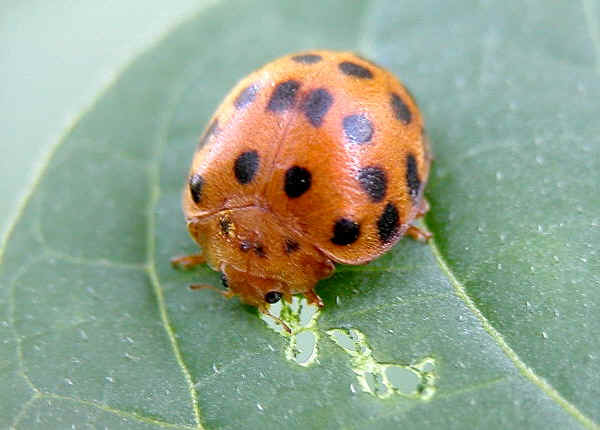
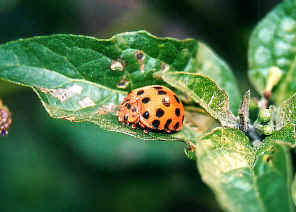
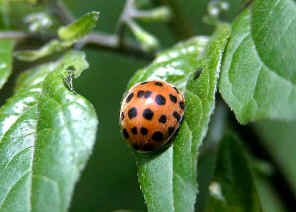
- Most other ladybird beetles are predators on soft body insects. This ladybird
species, both larvae and adults, feed
on plants. Usually the adults
feed on the upper surface of leaves, while the larvae feeds on the lower
surface.
-
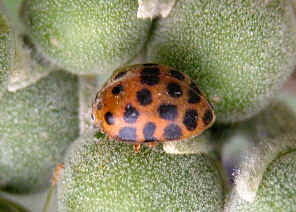  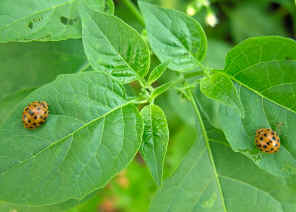 -
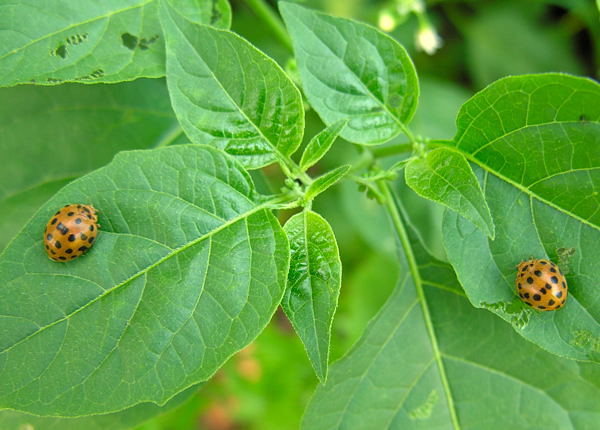
- Usually many of them can be found on a small plant. They are considered as
pests on agricultural crops such as potatoes, pumpkin,
turnips, radishes, beans and spinach.
-
 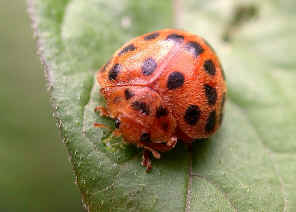  -
- There ladybird is slow moving. When disturbed, they escape by dropping onto
the ground.
-
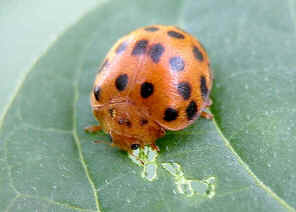 -
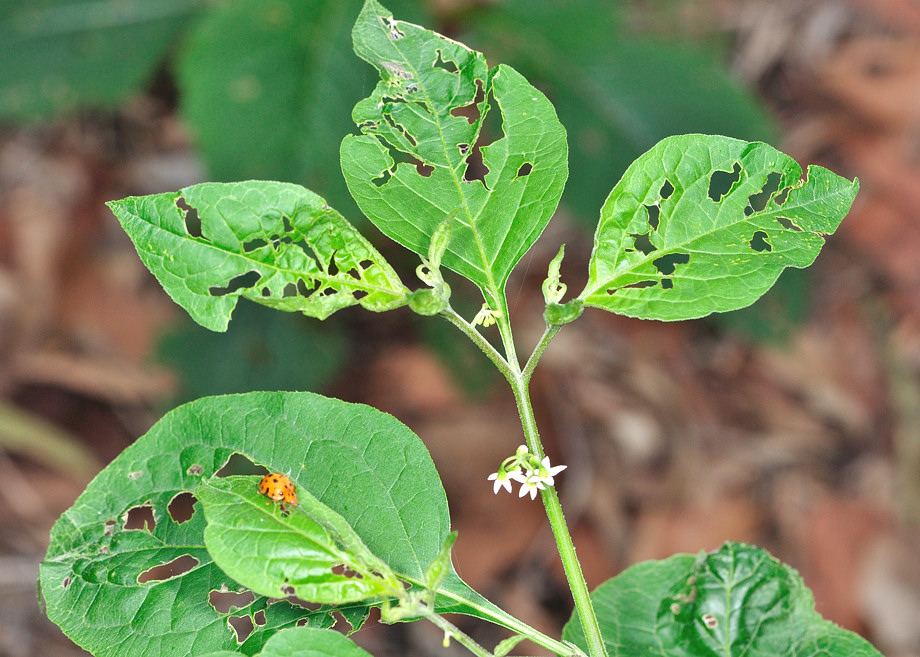
- Notice the bite marks on the leaves.
-
Eggs, Larva and Pupa
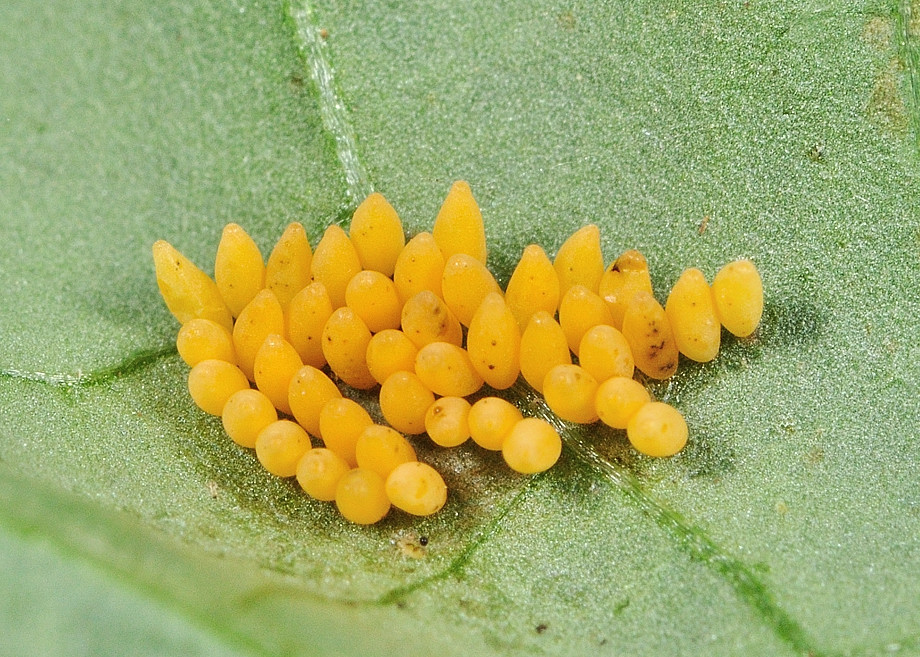
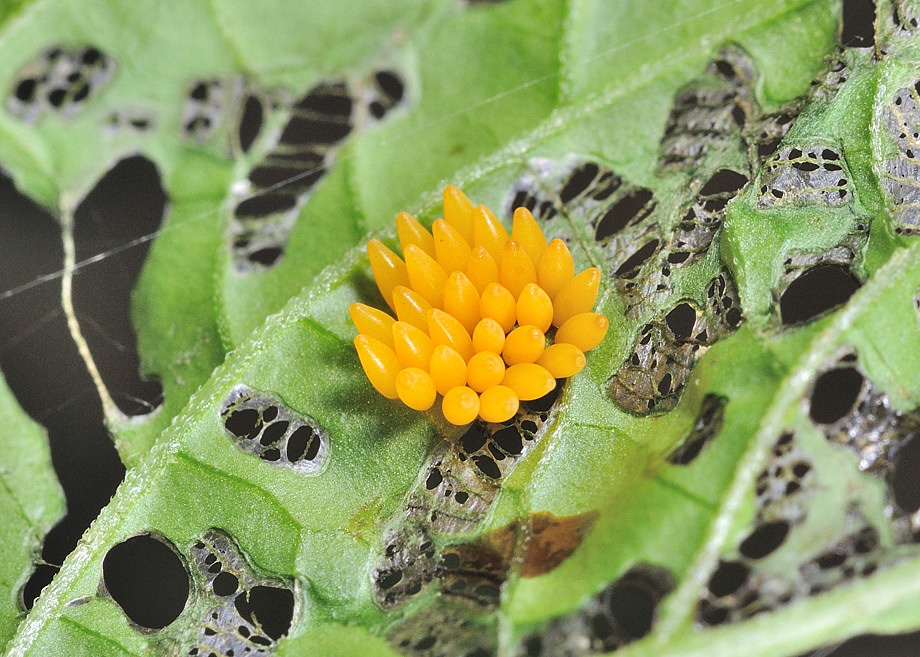
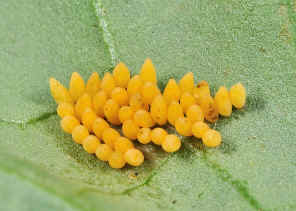
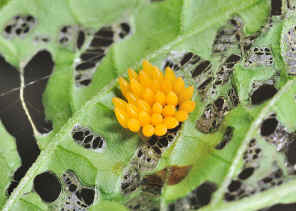
- On early summer, on the plant that we found the ladybird, we also found
some eggs and larvae. Both eggs and larvae only found on the bottom side of
leaves. The plants are short. Larvae and eggs are usually not be seen unless
you turn those leave over.
-
 -
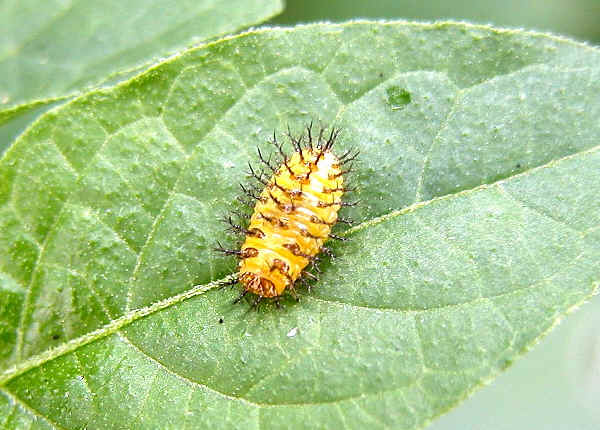
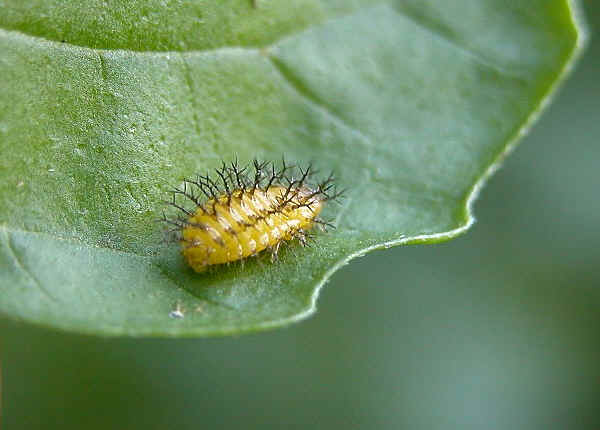
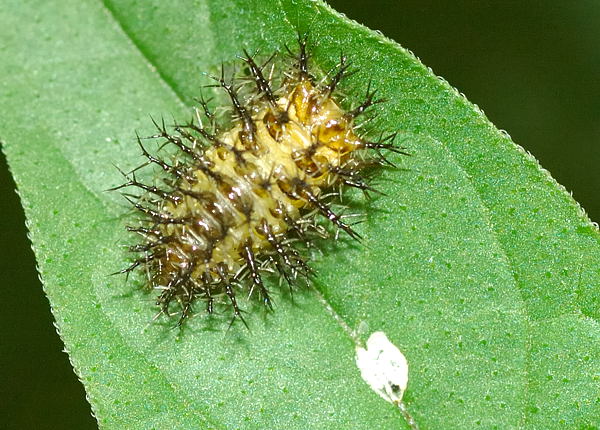
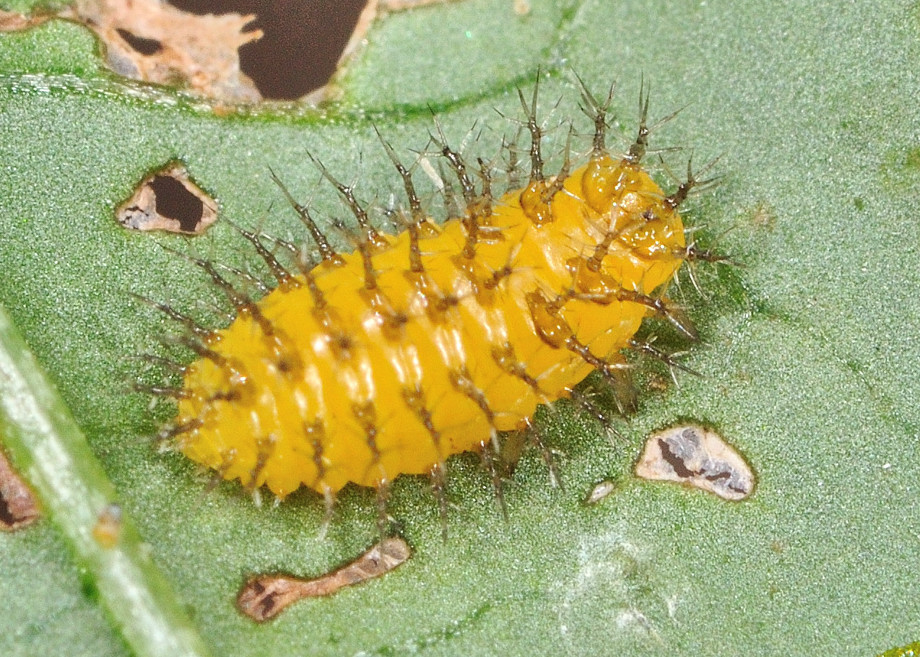
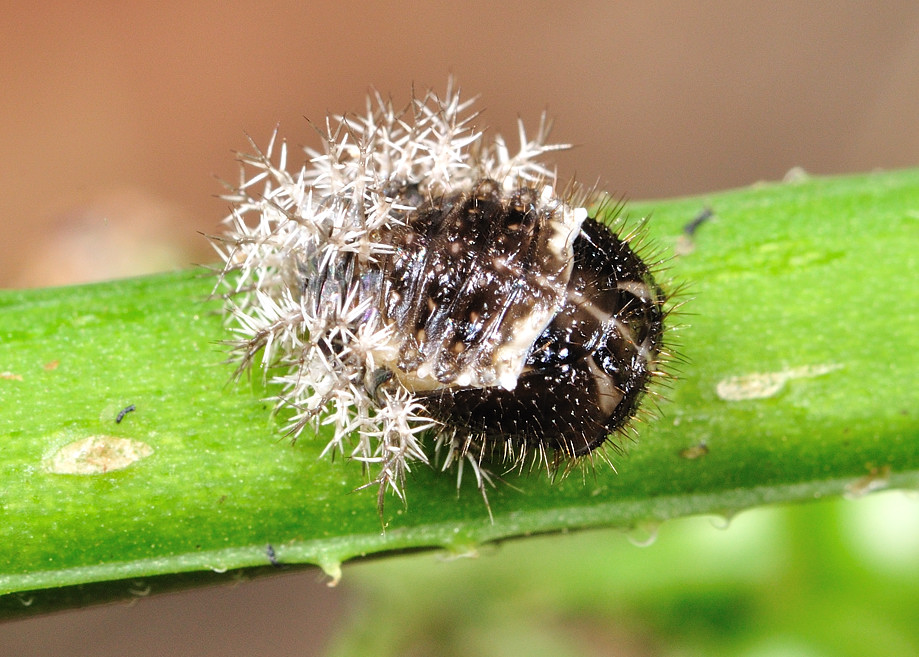
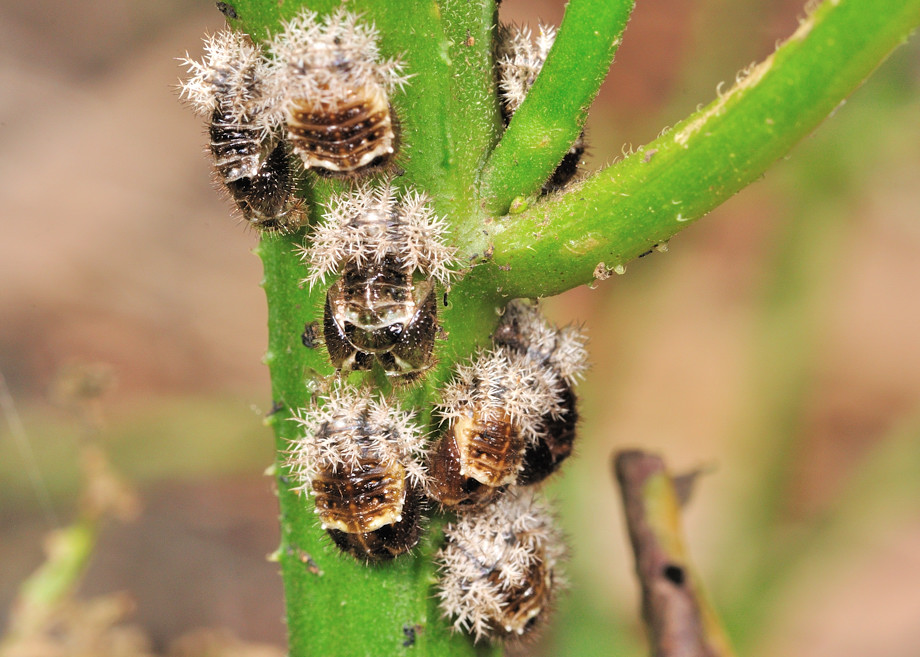
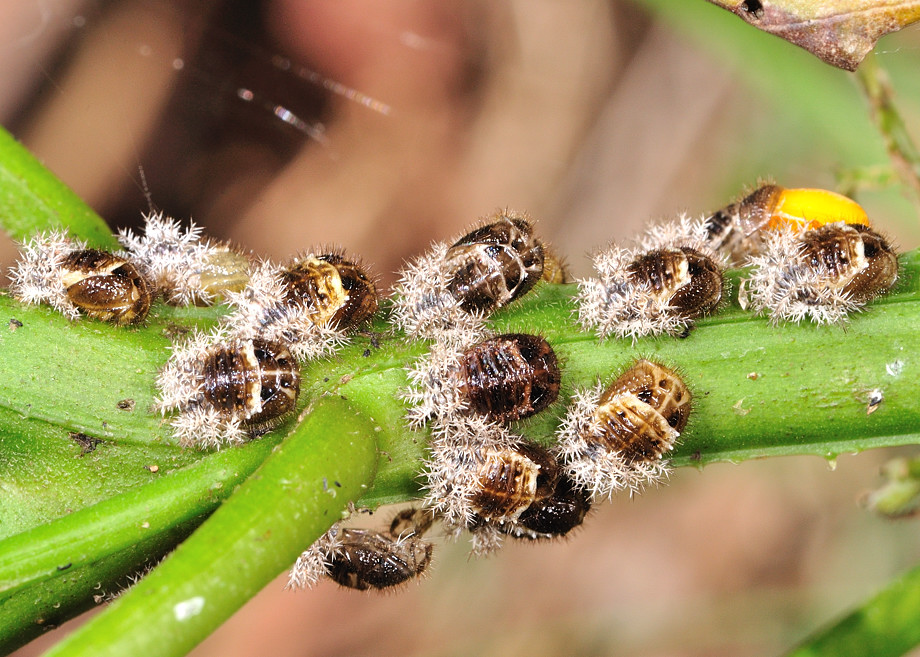
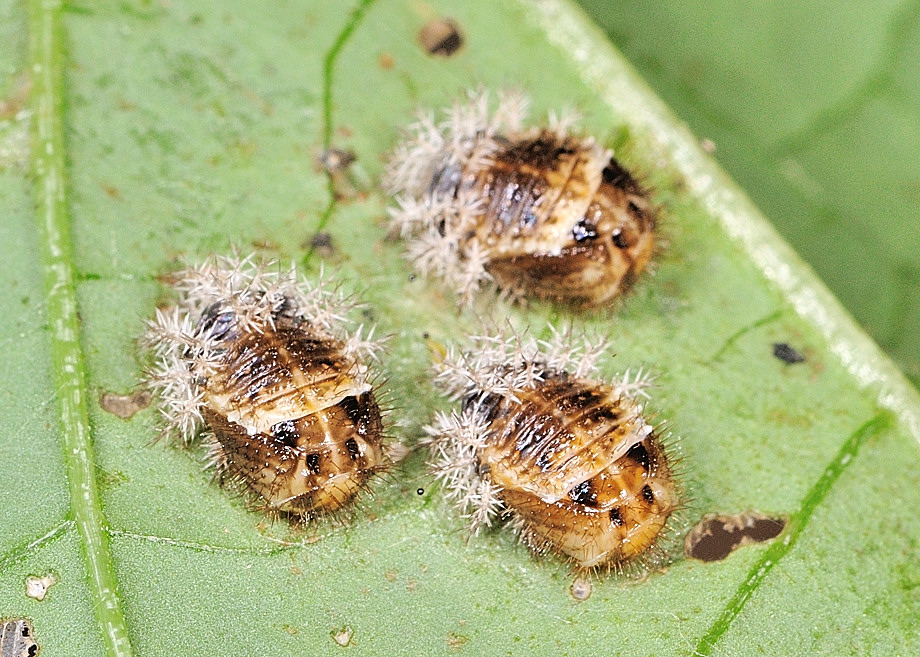
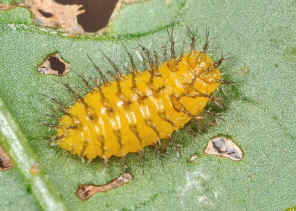
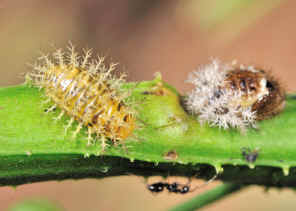
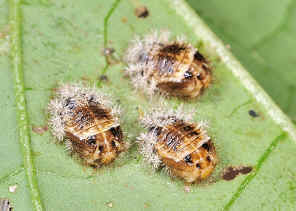
- The larvae are creamy white in colour with black spiny hairs.
We believed they are the 28-spotted Potato
Ladybird larvae. As the adults, the larvae also feed on plants. We took two
home, with some leaves of the host-plant as their food.
-
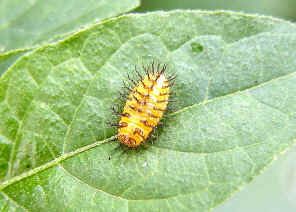 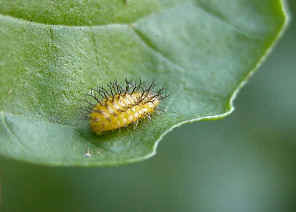
 - Larva, length 10mm
-
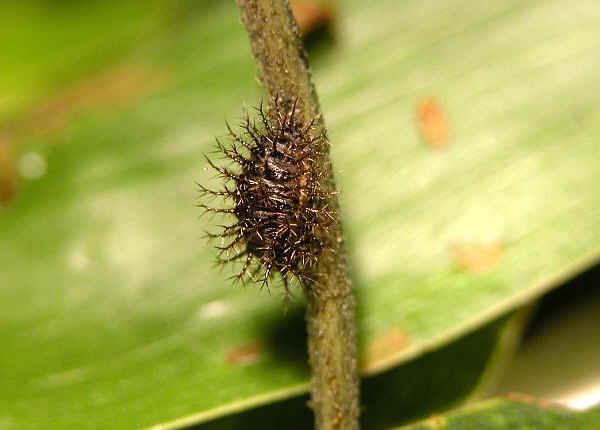
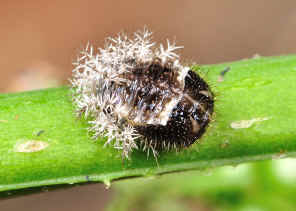
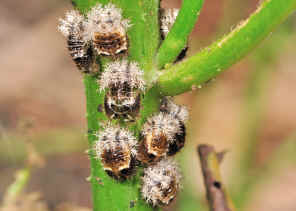
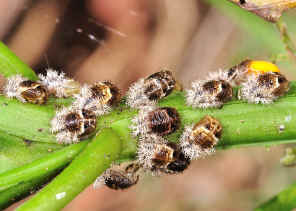
- Few days later, they turned into pupa. The pupa looked the same as the
larvae except darker in colour.
-
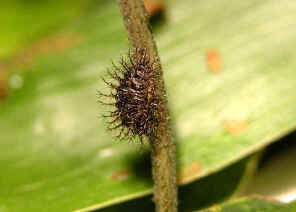
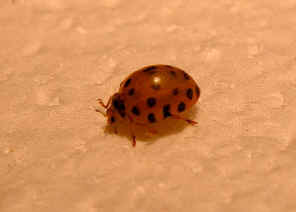 - Pupa
-
- Another week later, they became the 28-spotted Potato
Ladybird adults.
-
-
-
-
-
-
-
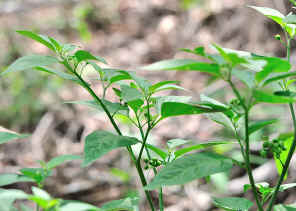 -
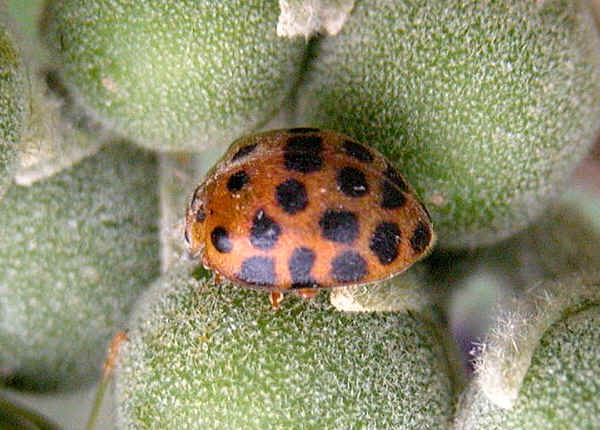
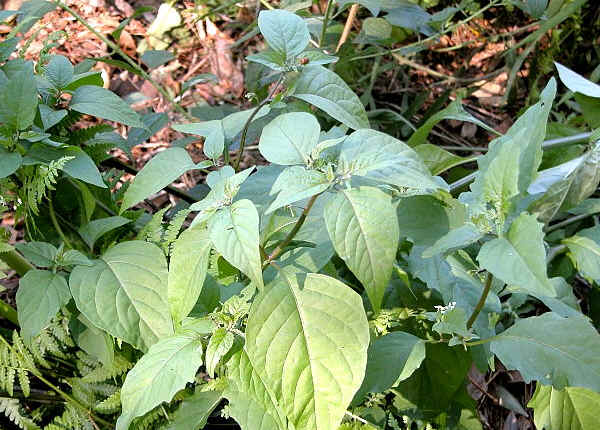
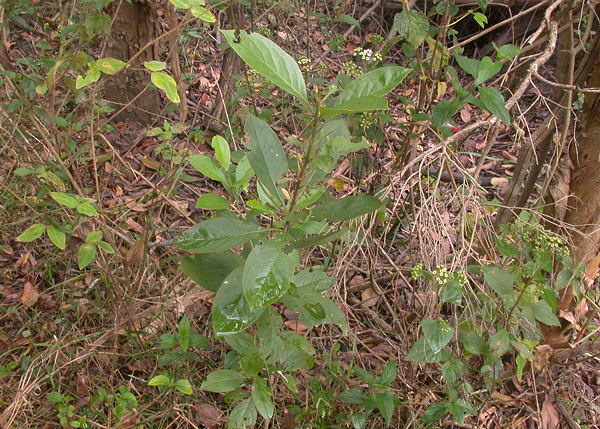
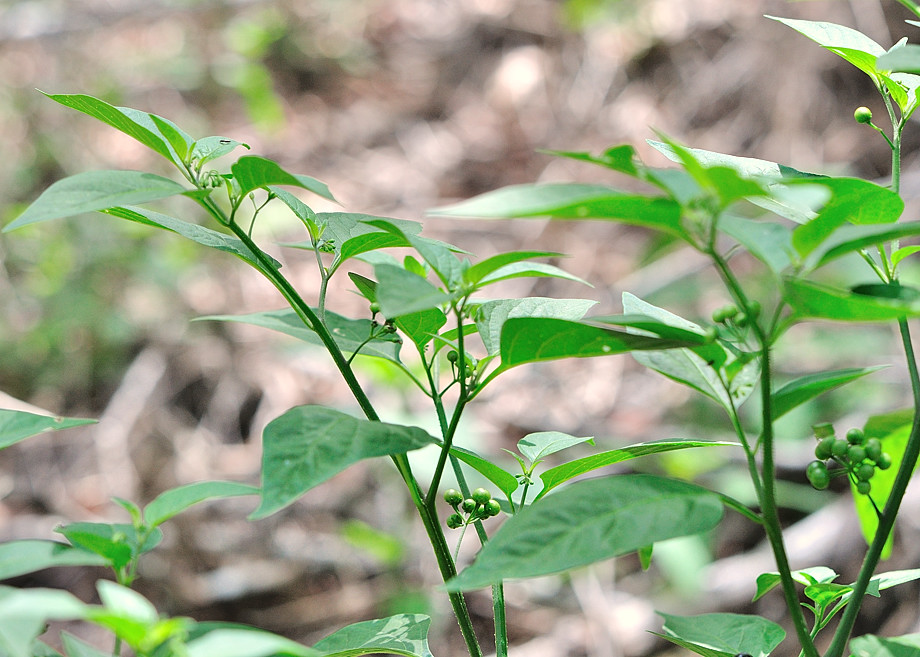
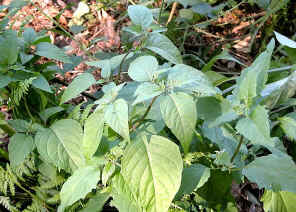
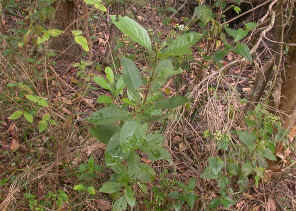
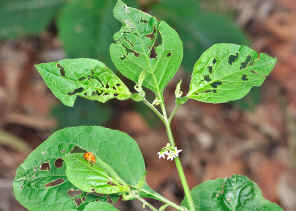
- The ladybird can be found on this plant, one of the weedy Solanacea
(nightshades).
-
-
-
- Reference:
- 1. 28
Spot Ladybird - Don Herbison-Evans & Stella Crossley, 2004
- 2.
Henosepilachna vigintioctopunctata
- 中山大学生物数字博物馆,
2005
- 3. Australian Ladybird Beetles
(Coleoptera: Coccinellidae) Their biology and
classification - A.Ślipiński, Australian Biological Resources,
2007, p182.
- 4. REVIEW OF THE AUSTRALIAN EPILACHNINAE (COLEOPTERA: COCCINELLIDAE)
-
C.S. LI, J.Aust.ent.Soc., 1993. Department of Primary Industry and
Fisheries.
-
[ Up ] [ 28-spotted Potato Ladybird ] [ 26-spotted Potato Ladybird ] [ Large Leafeating Ladybird ]
| |
|