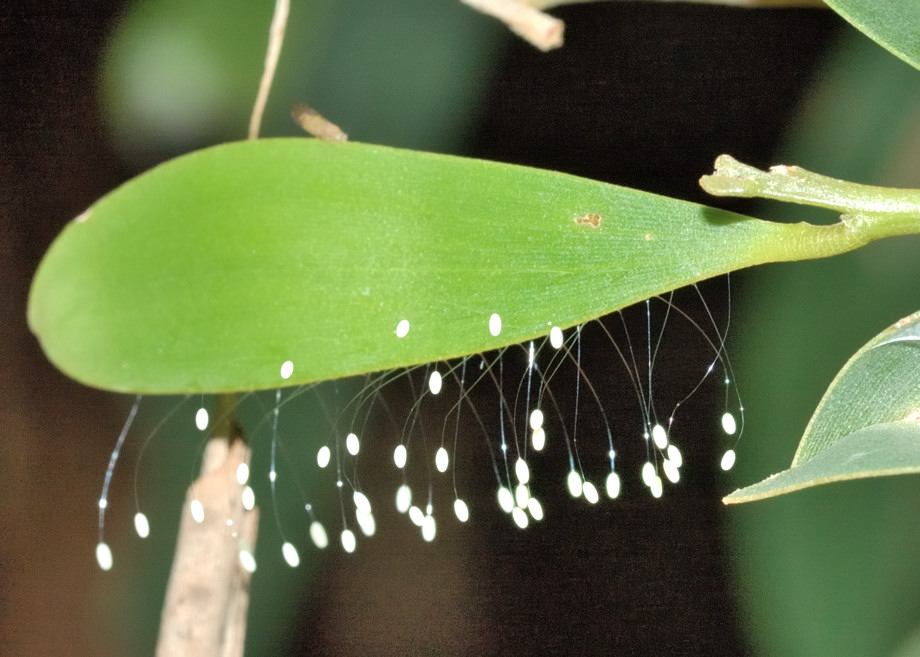
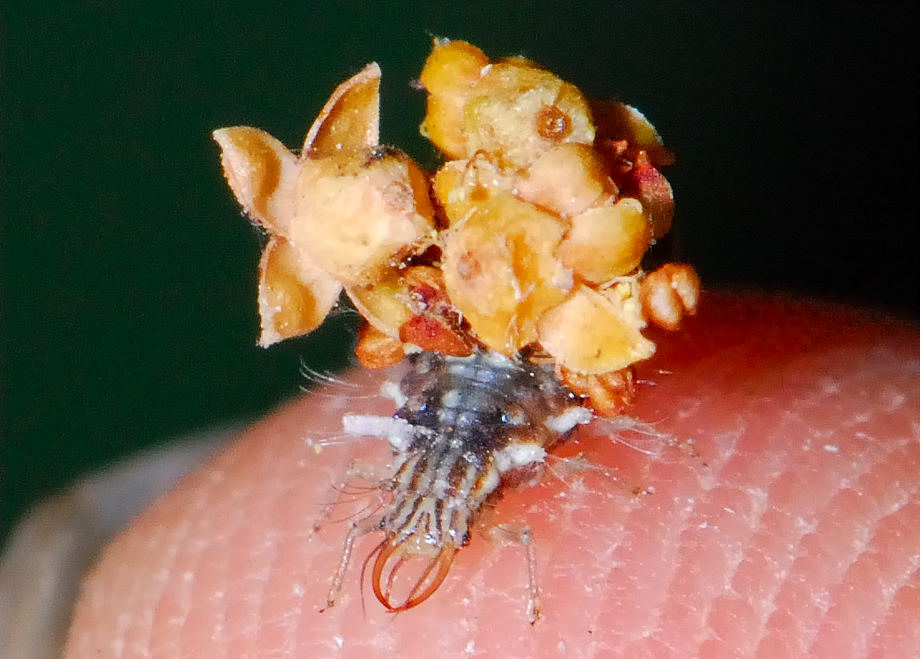
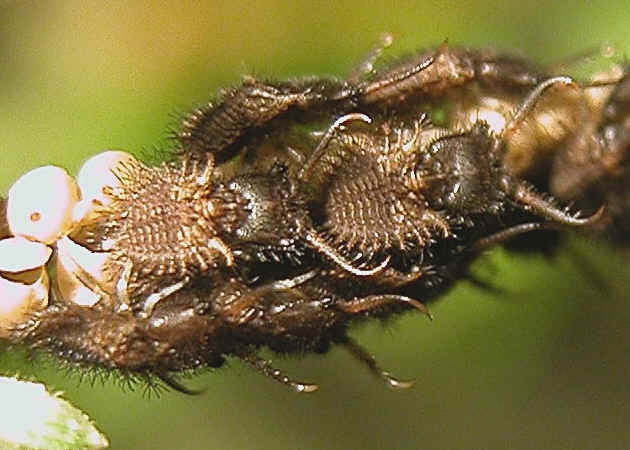
- This page contains pictures and information about Lacewings, Antlions and Owl Flies
in Order Neuroptera that
we found in the Brisbane area, Queensland, Australia.
-
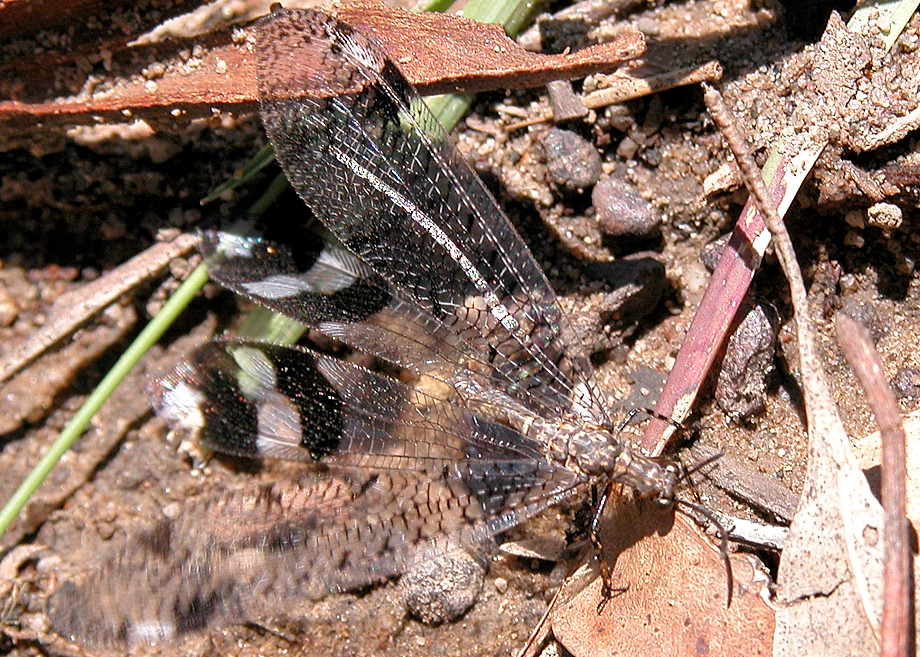 - Lacewing Adult
-
- Lacewings, Antlions and Owl Flies are insects belonged to the Order Neuroptera.
Adults in this insect order
have two pairs of transparent wings about the same size. Their wings are
large and membranous with complex vein pattern, although they are not very
good flier. Their bodies are long and soft. They have the biting and chewing
mouthparts. They are the predators on other insects. Their body size range
from very small 5mm to very large 150mm.
-
- The adults insects have two pairs of lace wings. They have two pairs of
large to very large eyes with cerci absent. When fly, they may be mistaken
as dragonflies. When rest,
their wings fold on their back as a tent-like shape which dragonflies never
do. They can also be distinguished by their pair of long to very long
antenna while dragonflies' are very short.
-

-
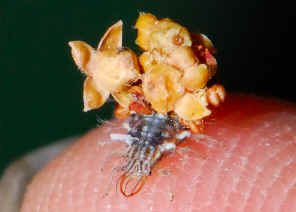
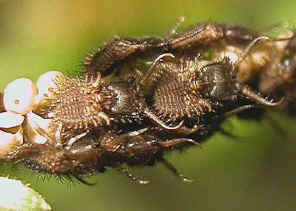
- Lacewings develop in complete
metamorphosis, with egg, larvae, pupa and adult states. Most of them lay
eggs on leafs or stalks. Eggs are either in rows or in 'U' shaped arrangement.
Some species larvae are active predators while some are in parasites
forms. Larvae are 3-5 instars stages. More general information about Lacewings, Antlions and Owl Flies
in Order Neuroptera can be found in the Biology
page.
-
- Although the Lacewings order is not a very large insect order, we
found many species in Brisbane. They are listed as
below.
-
- Family
Osmylidae - Osmylid Lacewings
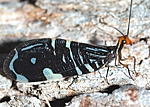
- The Lacewings have the steel blue coloured wings with white patterns. The
abdomen is brown covered by its wings. Their head is orange in colour,
antenna in filiform. Their larvae are long and slender, with elongated
spear-like jaws, hunt under bark. Their eggs are not stalked. We found only
one species in this family.
- Family Mantispidae - Mantid Lacewings
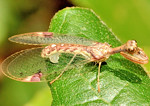
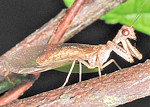
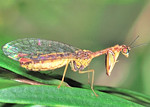
- The Mantid Lacewings are sometimes known as Mantis Flies. Their
forelegs, head and thorax look like Mantid. They have the typical clear
membranous wings. They can be found easily in bush. Sometime the attached to
house by window lights. They are active predators, chasing prey with
their spiny forelegs.
 -
- Family Hemerobiidae - Brown Lacewings
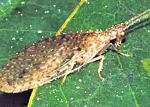
Most species in this family are pale brown in colour and small in size. Antenna usually same length as forewings.
-
- Family Chrysopidae - Green Lacewings
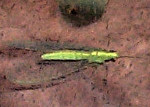
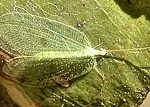
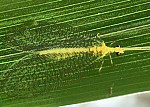
- Those Green Lacewings are common in gardens and bush-lands. Their bodies are
long and green in colour. Adults have a slow, fluttering flight. They usually
feed on nectar. When rest, they like to hide under the bottom side of the leaf.
The Green Lacewings lay their eggs in group on leafs. They are commonly seen
in garden plants.
 -
- Family Nymphidae Large Lacewings
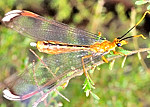
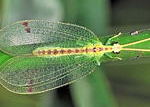
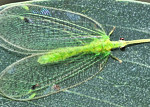
- They have two pair of transparent wings of about equal size. When flying,
may mistaken they are dragonflies. But their wings are fold in tent shape
whish is different from dragonflies and damselflies. They can also
distinguished by their long antenna.
 -
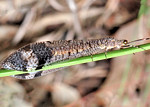
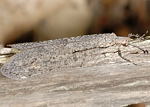
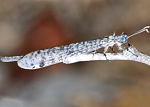
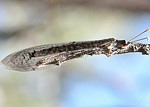
- Family Myrmeleontidae - Antlions
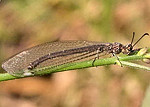
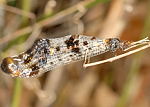
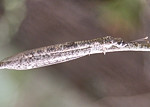
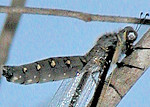
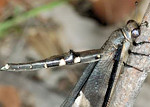
- Antlions is the common name given to the larvae of those insects.
The adults have shout antenna. The larvae build sand traps
to trap the ants walk by. The Antlions sit at the middle of the trap and
covered by sands. When an ant walk inside the trap, it flicks more sands to
the ant and cause the 'land sliding'. The ant then fall and the Antlions
attack the ant by its long jaws.

 -
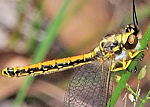
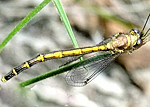
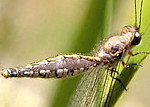
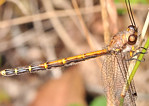
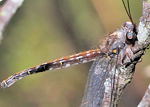
- Family Ascalaphidae - Owl-flies
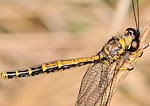
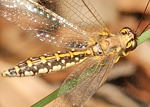
- The Owlfly has the long and clubbed antenna, otherwise it looks like a dragonfly.
Adults in this family are from medium to large size. When rest, their abdomen
is extended above the stem that they are sitting on while their wings hanging
downwards. Adults are predator, hunting insects in flight. Usually they
are active during the day.
  -
- Reference:
- 1. Insects
of Australia, CSIRO, Division of Entomology, Melbourne University
Press, 2nd Edition 1991, pp 525.
- 2. Lacewings
- by Charlma Phillips, Forest Health Scientist, Forest Insects, ForestrySA,
1993.
- 3. Order NEUROPTERA, Ant-lions, Lacewings - Australian Faunal Directory, Australian Biological Resources Study.
- 4. A revision of the Australian Mantispidae
(Insecta : Neuroptera) with a contribution to the classification of the family. I. General and Drepanicinae - KJ Lambkin, Australian Journal of Zoology Supplementary Series 34(116) 1 - 142,
1986.
- 5. A revision of the Australian Mantispidae
(Insecta : Neuroptera) with a contribution to the classification of the family. II.* Calomantispinae and Mantispinae - KJ Lambkin, Australian Journal of Zoology Supplementary Series 34(117) 1 - 113,
1986.
- 6. Northern
Territory Insects, A Comprehensive Guide CD - Graham Brown, 2009.
[ Home ] [ Lacewings, Antlions and Owl Flies Biology ] [ Osmylidae ] [ Mantispidae ] [ Hemerobiidae ] [ Chrysopidae ] [ Nymphidae ] [ Myrmeleontinae ] [ Stilbopteryginae ] [ Ascalaphidae ]
|