|
| |
Family Nymphidae
- This page contains pictures and information about Blue Eyes Lacewings that
we found in the Brisbane area, Queensland, Australia. They are also known as Common
Lacewing and Giant Orange Lacewing.
-

- Body length 40mm
-
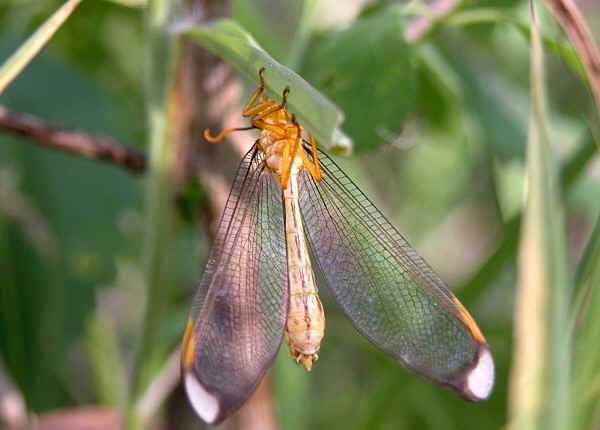
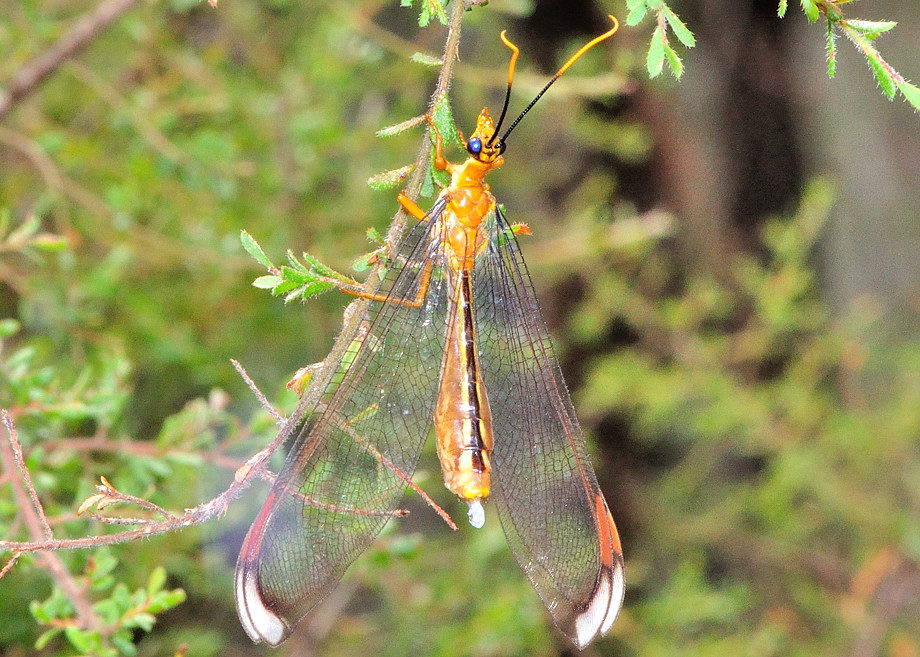
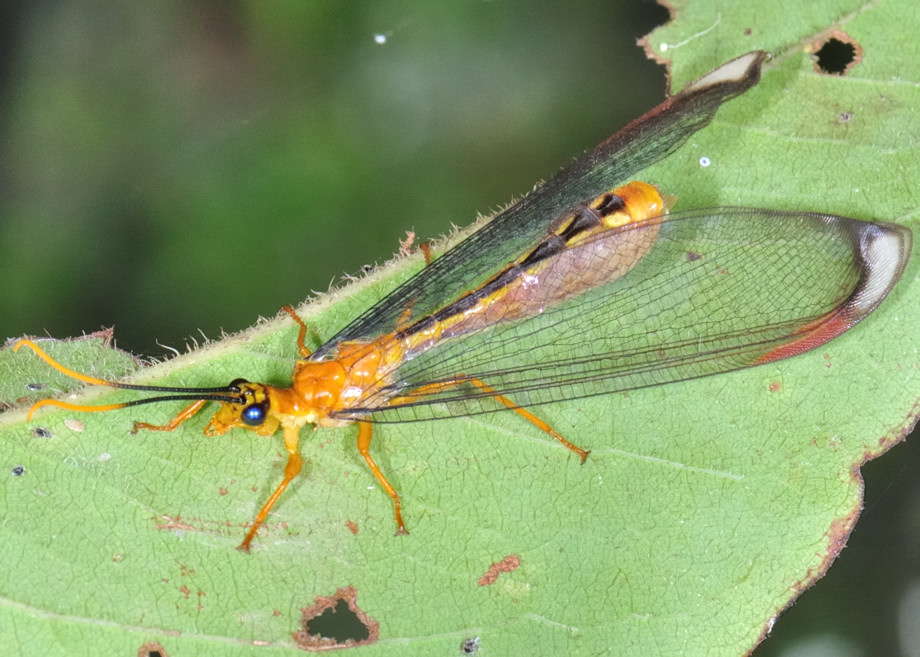
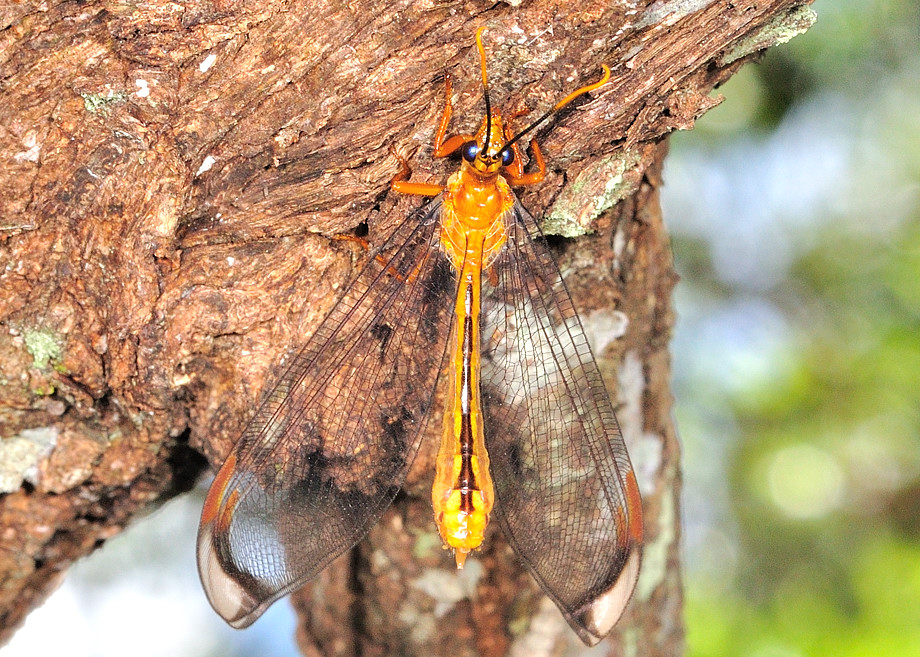
- We found a lot of Blue Eyes Lacewings in Brisbane bushland in mid summer.
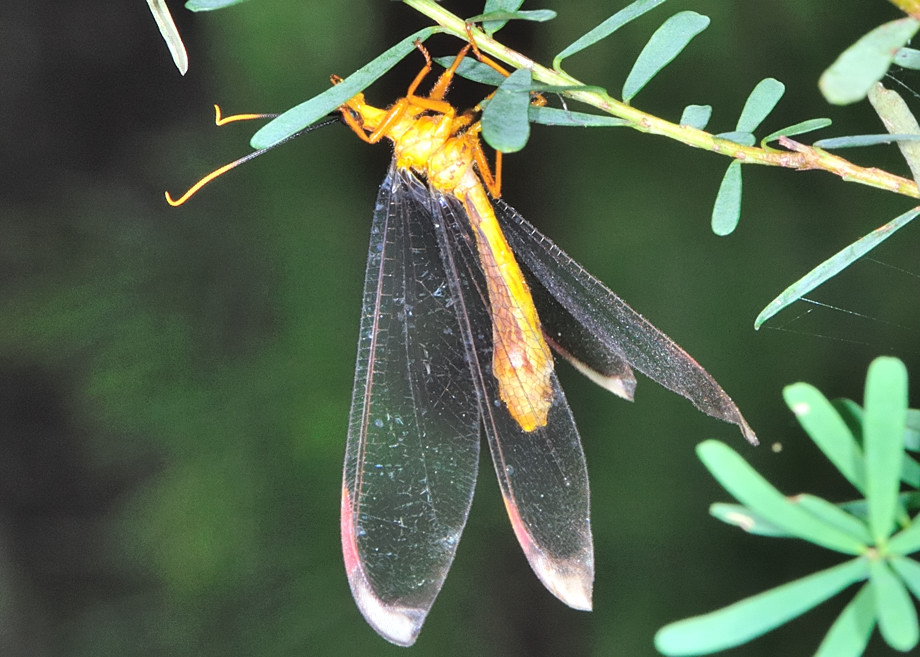
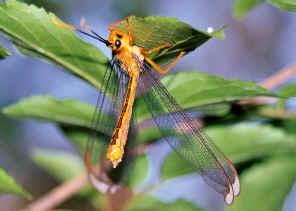
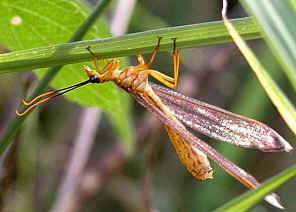
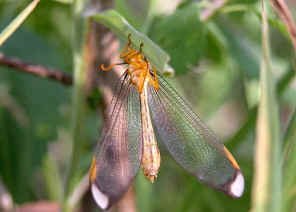
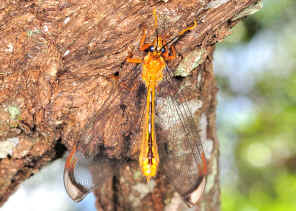
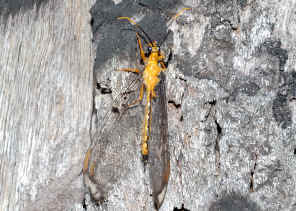
They have a pair of transparent wings of about equal size. When fly, they may be mistaken
as dragonflies. But their wings are fold in tent shape whish dragonflies
do not do. They can also distinguished by
their long antenna.
-
-
-
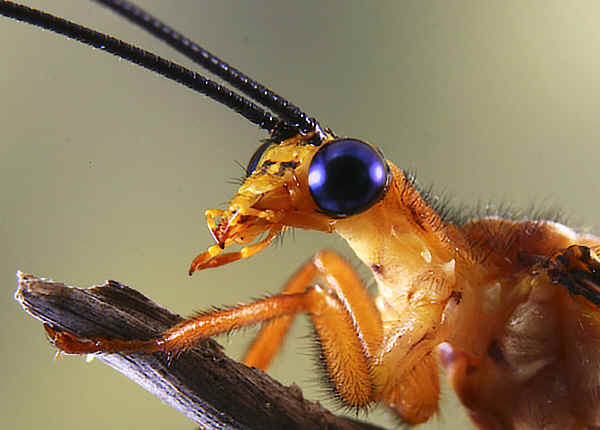
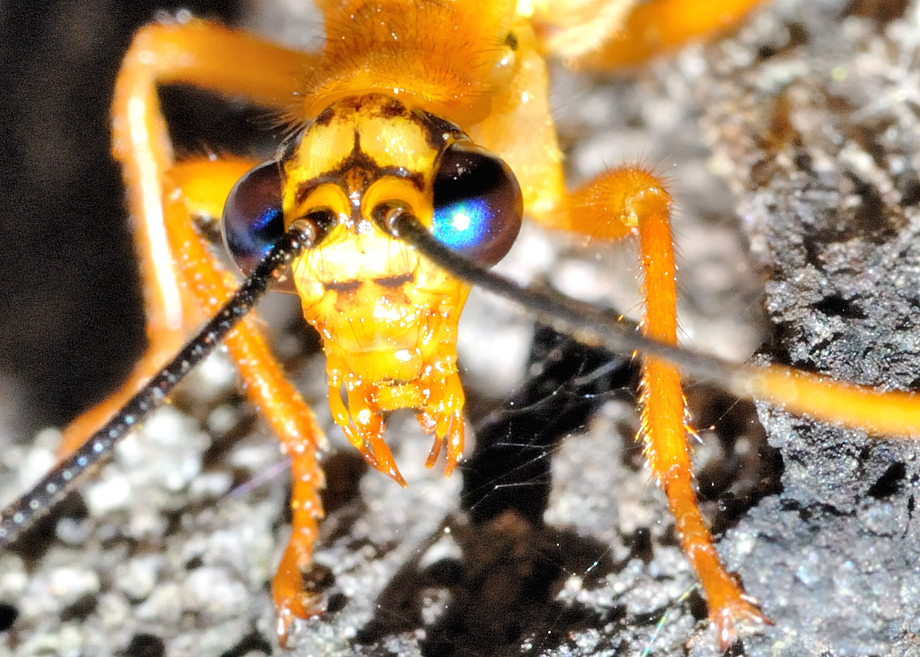
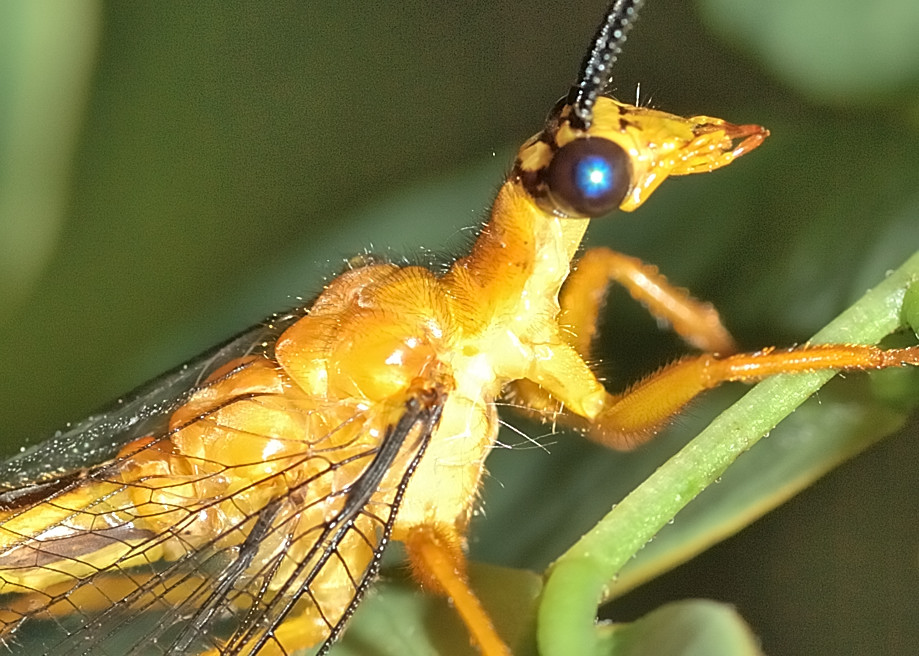
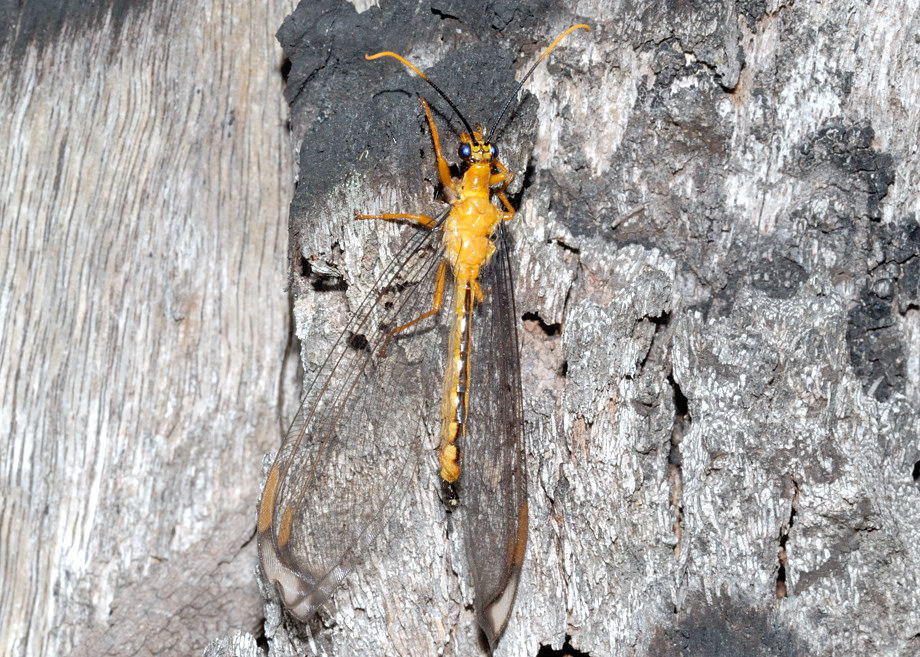
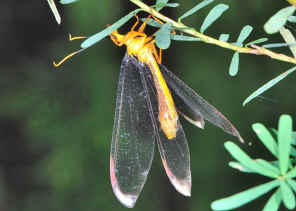
- Adult body is orange-brown in colour, with iridescent grey eyes. The
moniliform antennae are black with pale apex. Legs are pale yellow. Their transparence wings are
narrow with a white marking on the wing
tips.
-

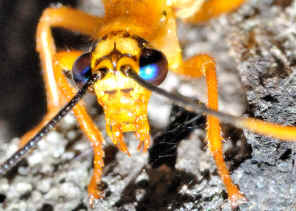
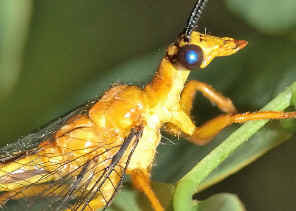
- Photo: Keith Power, Toowoomba
-
- A closer look of the Blue Eyes Lacewing.
-
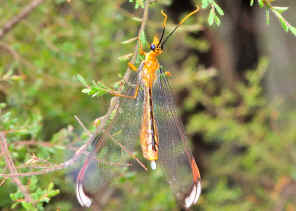
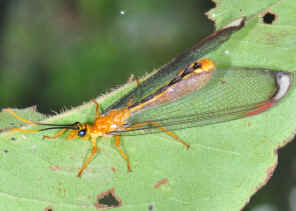
-
- They are usually found hiding in dense vegetations hang under leaves. They are not very
good flier. When disturbed, they usually fly slowly to two or three metes away.
-
-
Eggs and Larvae
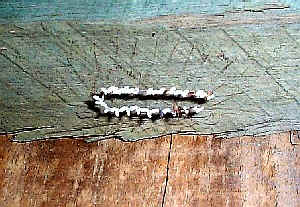
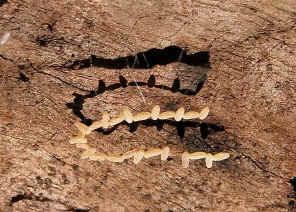
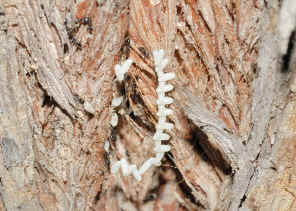
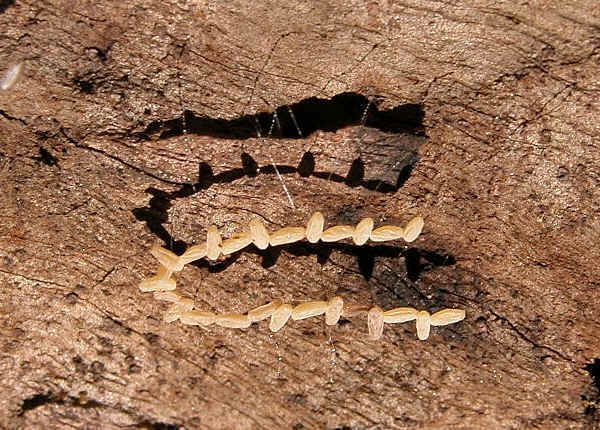
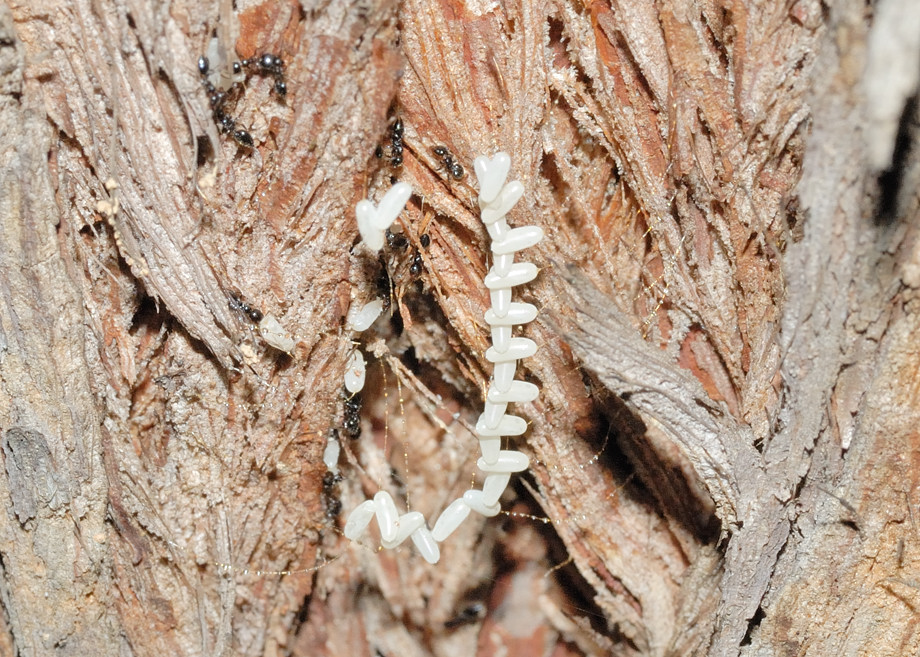
- Eggs of Blue Eyes Lacewing
-
-
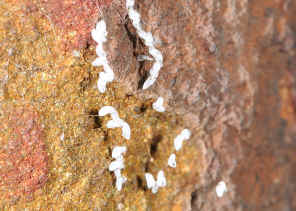
-
- They lay white eggs arranged in 'U' shape on large tree trunk and fences.
-
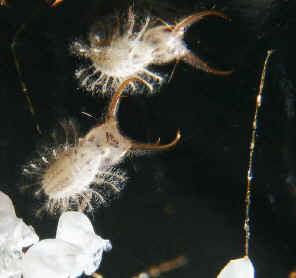
- Photo by: Keith Power, Toowoomba Larvae
raised by : Sue Ellis, Toowoomba
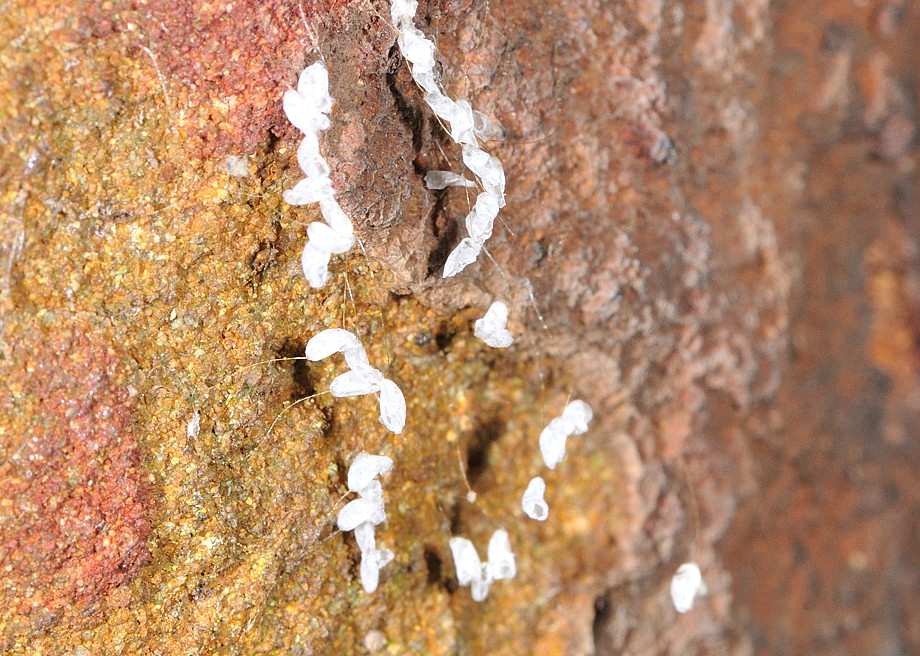
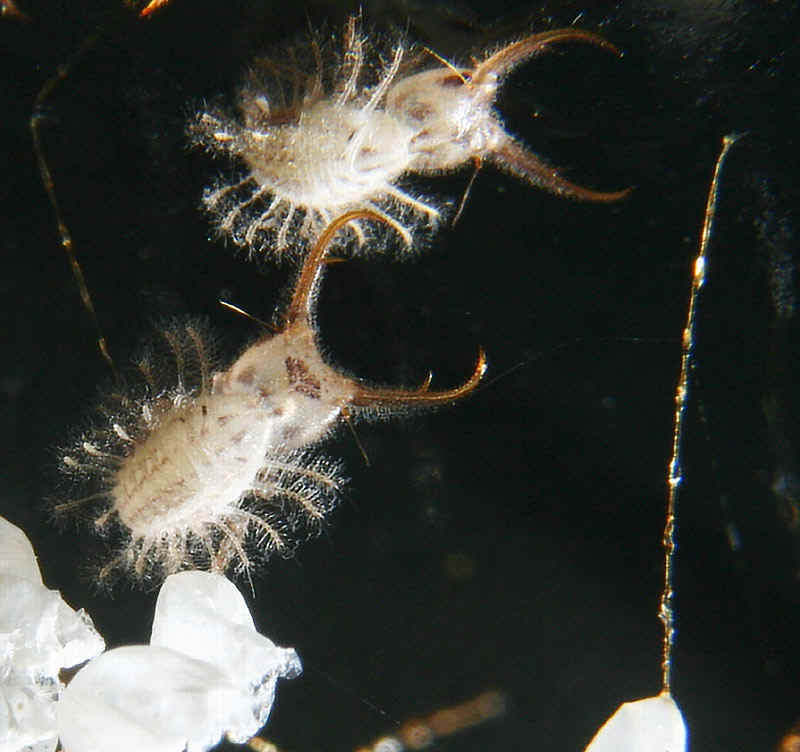
- Lacewing larvae just hatched.
-
- The larvae are litter dwellers, they cover themselves with debris. They are predators for other
small insects. They hunt under logs or debris. The larvae of this Nymphidae
family has one internal tooth on each mandible.
-
- Reference:
- 1. Insects
of Australia, CSIRO, Division of Entomology, Melbourne University
Press, 2nd Edition 1991, pp 530.
- 2. Wildlife
of greater Brisbane - Queensland Museum, p99.
- 3. Notes on the Common Lacewing (Nymphes myrmeleonides) - John
Stumm, Butterfly and Other Invertebrates Club,
Newsletter Issue 38, Sep 2005, page 6.
- 4. A
revision of the Australian Nymphidae (Insecta: Neuroptera) - TR New
1981, Australian Journal of Zoology 29(5) 707 - 750.
[ Up ] [ Blue Eyes Lacewing ] [ Diamond-banded Lacewing ] [ Green-black Dotted Lacewing ] [ Green Larges Lacewing ]
| |
|