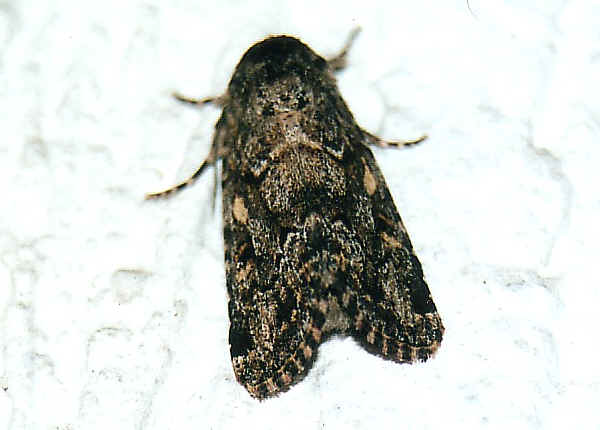
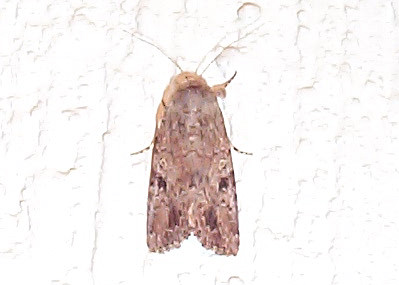
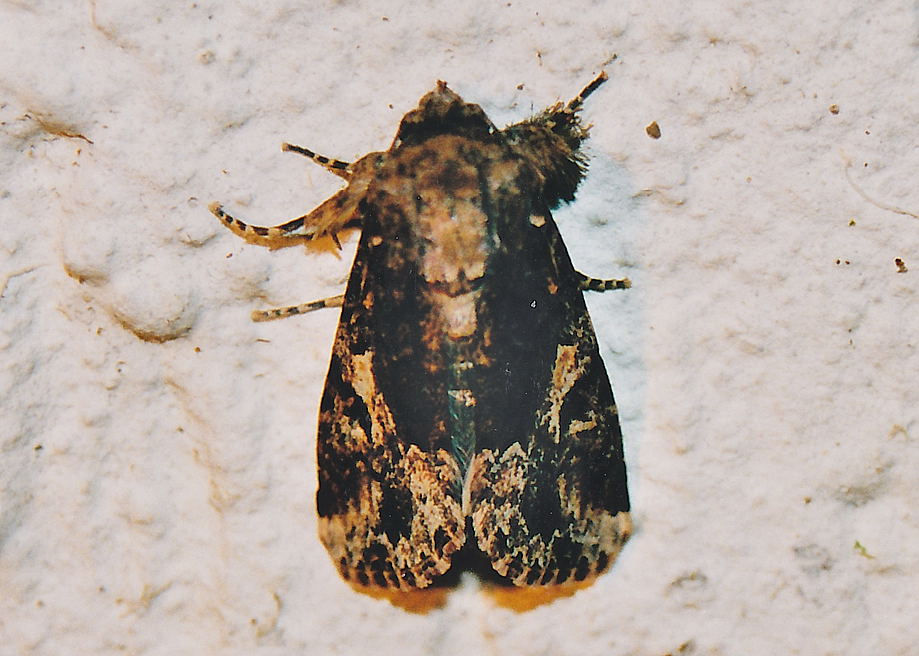
Lawn Armyworm Moth - Spodoptera mauritia
Family Noctuidae
This page contains pictures and information about Lawn Armyworm Moths that we found in the Brisbane area, Queensland, Australia.
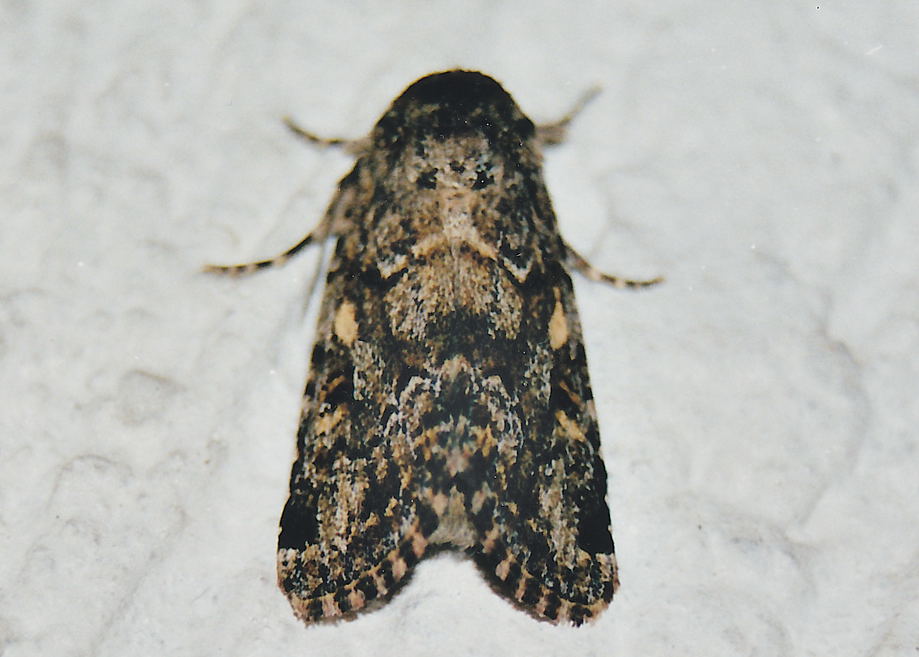
- Body length 20mm
-
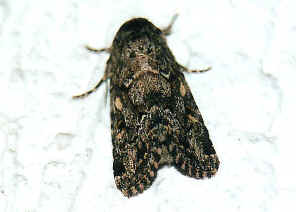
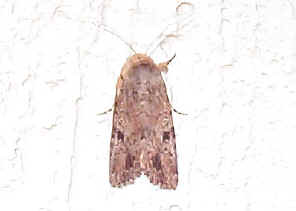

- The adult moth is brown in colour with brown pattern on the forewings. They are common in Brisbane bush and garden.
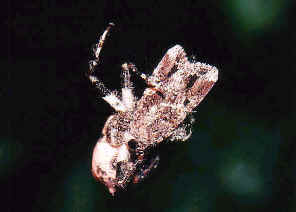

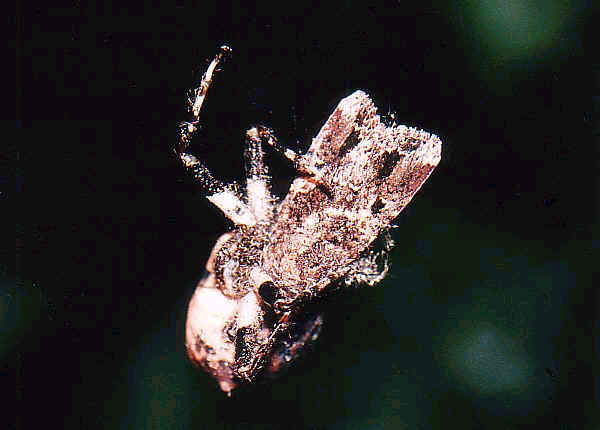
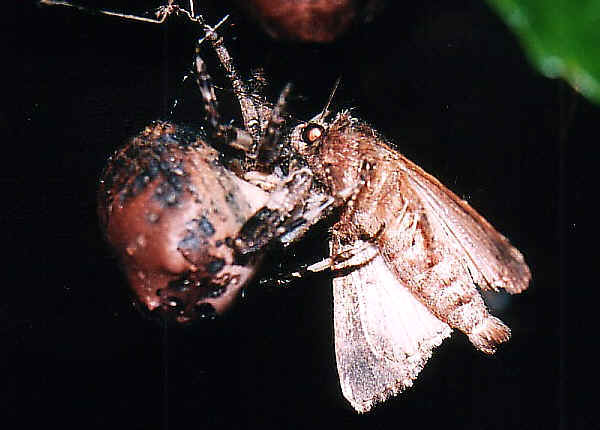
- The moth is preyed by Bird-dropping Spiders. This spider attack their prey directly when the moths come close. The spider emits a copy of the female moth's pheromone to attract the male moths.
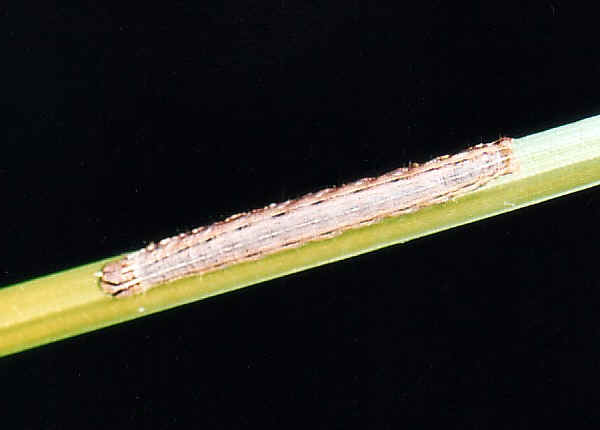
- Their eggs were laid on the painted wall of a house, as a hairy irregular mass. The caterpillars are green when young and become brown in colour with two rows of black dots on the back. The caterpillar in the above pictures was found wandering on the lawn at noon.

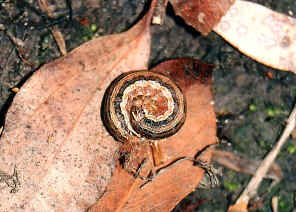
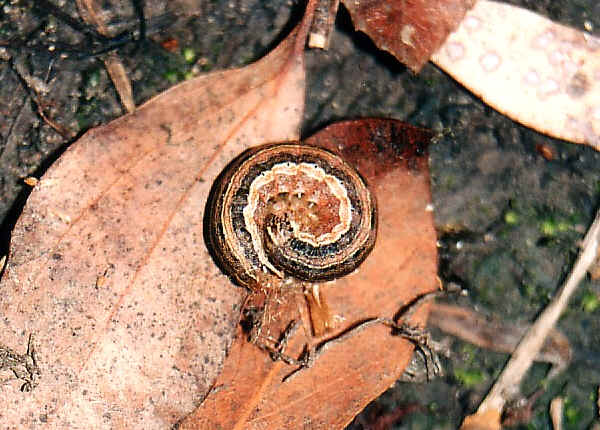
- When disturbed, they drop and curl into a spiral with the head in the middle. The Caterpillars grow to a length of about 30mm. They are an agricultural pest on crops. They burrow into the soil below the plant where they pupate without a cocoon.
- Reference:
- 1. Spodoptera mauritia (Boisduval, 1833) - Caterpillars of Australian, by Don Herbison-Evans & Stella Crossley, 2008.
- 2. Moths of Australia - I. F. B. Common, Melbourne University Press, 1990, p462, Fig49.1.