|
| |
FAMILY ARANEIDAE
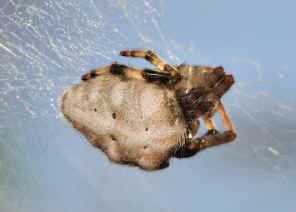
- This page contains pictures and information about Russian Tent Spiders that
we found in the Brisbane area, Queensland, Australia.
-
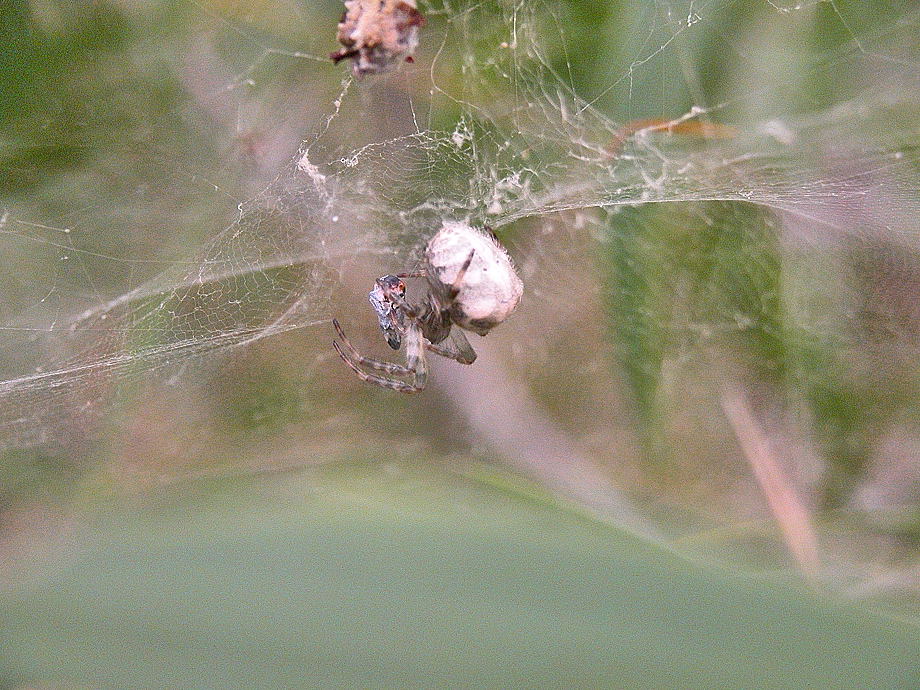
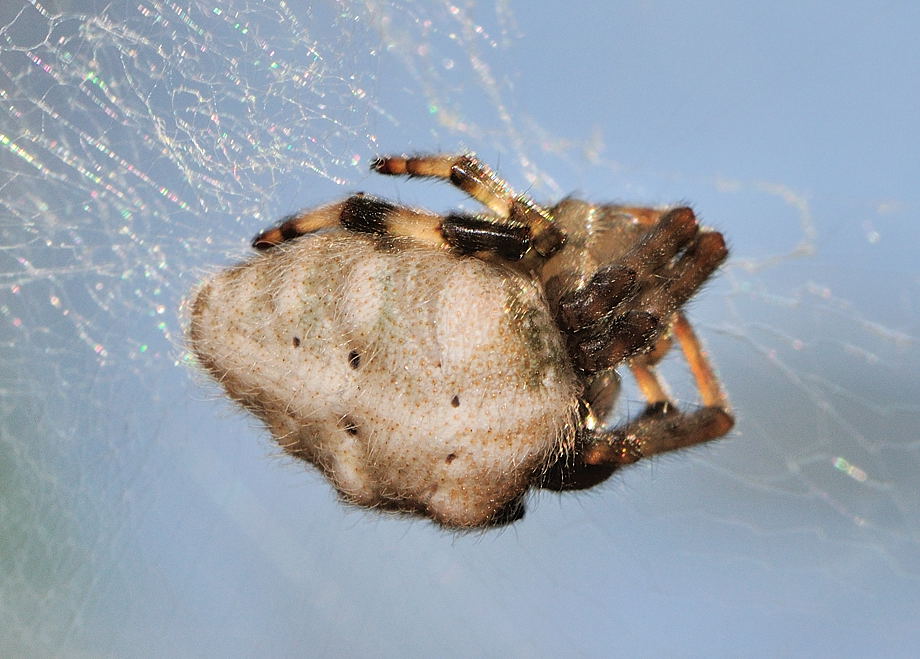
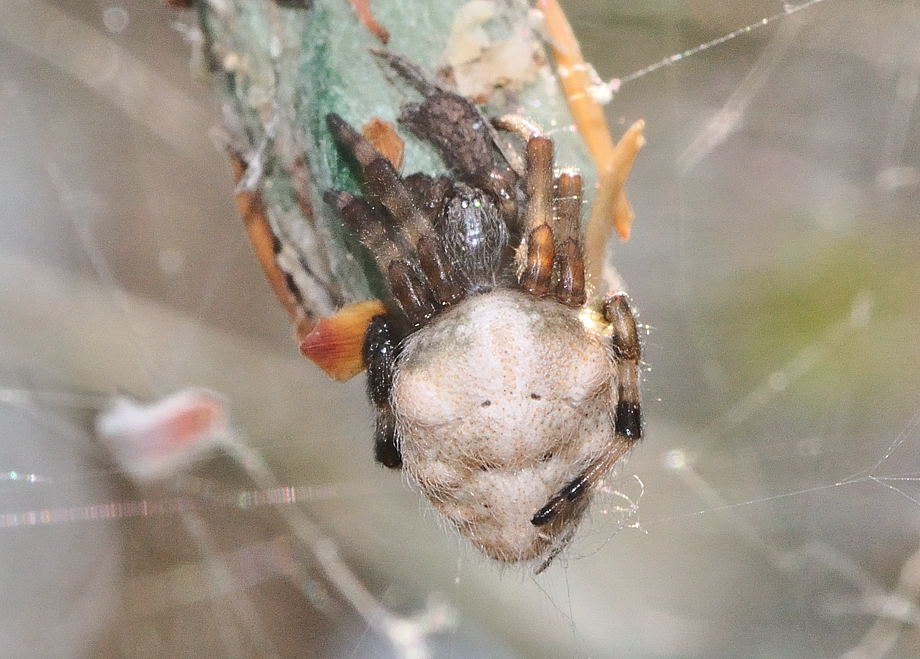
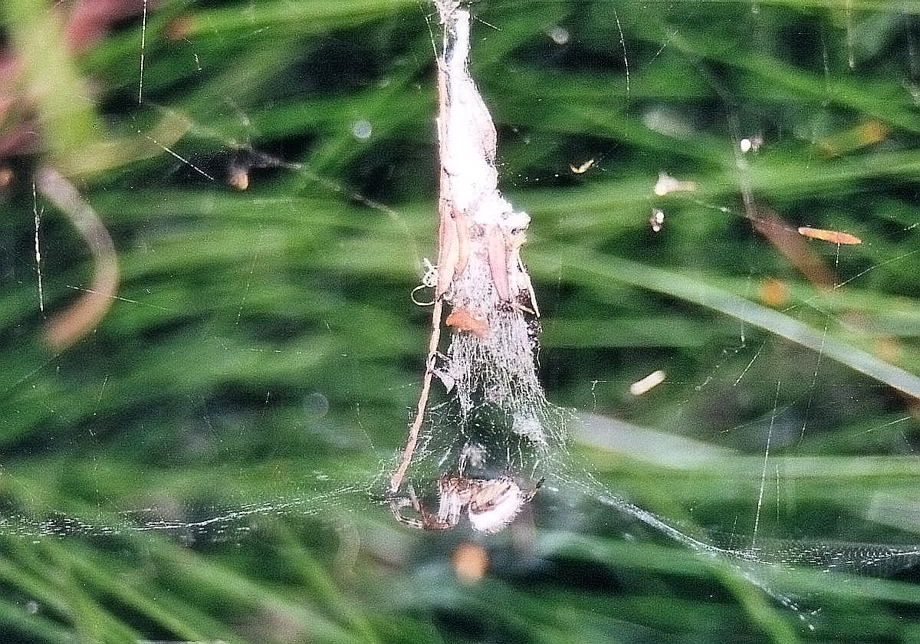 - Leg to leg 12mm
-
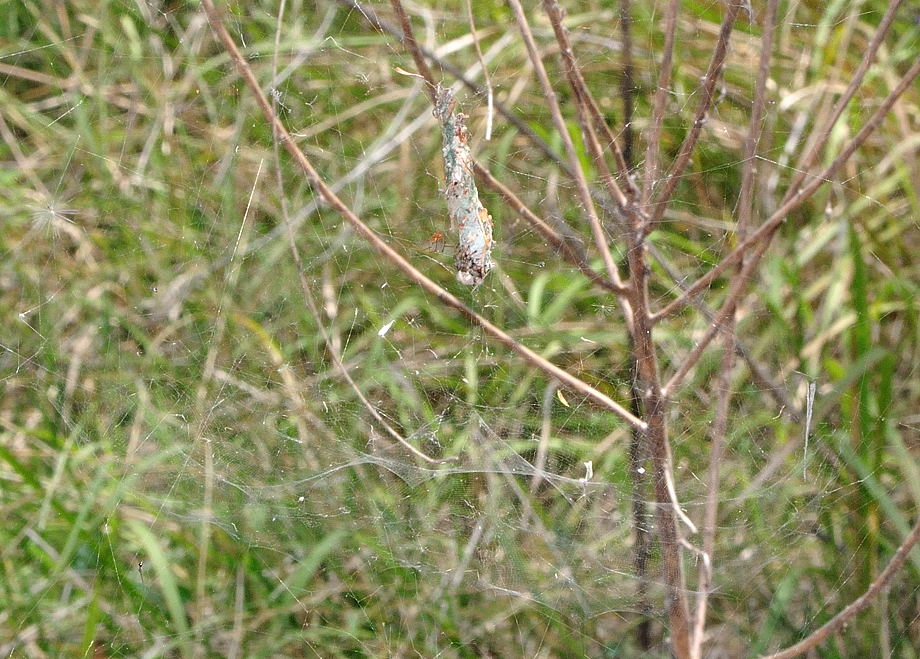
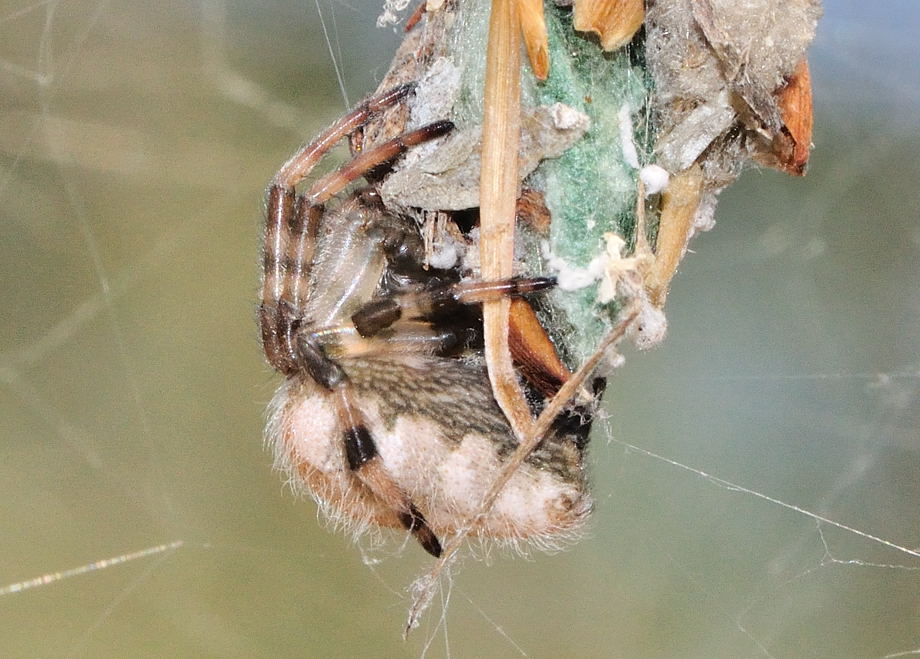
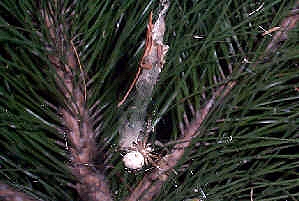
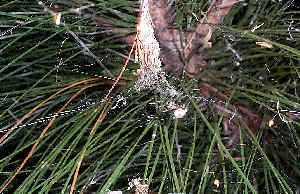
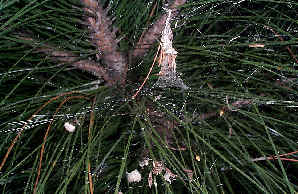
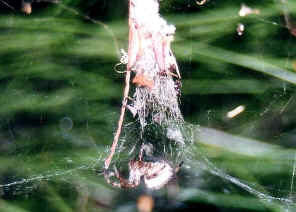
- This Russian Tent Spider had been living on the pine tree
in our backyard for quite a while. The spider made egg-sac so it must be a female.
Let's
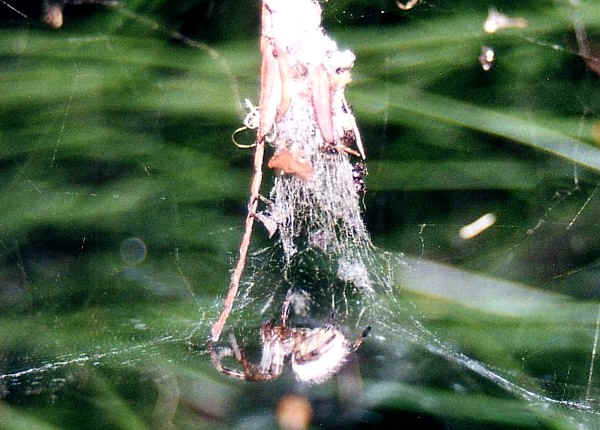
call her Mrs. Tent. During the daytime she hided in her web hub, where she made
egg-sac too. She rested upside down below the hub waited for prey every night. Unlike
the Garden Web Spiders who re-built new webs every night, Mrs.
Tent re-built her tent web only very occasionally. She repaired her tent if it was not damaged very much.
-
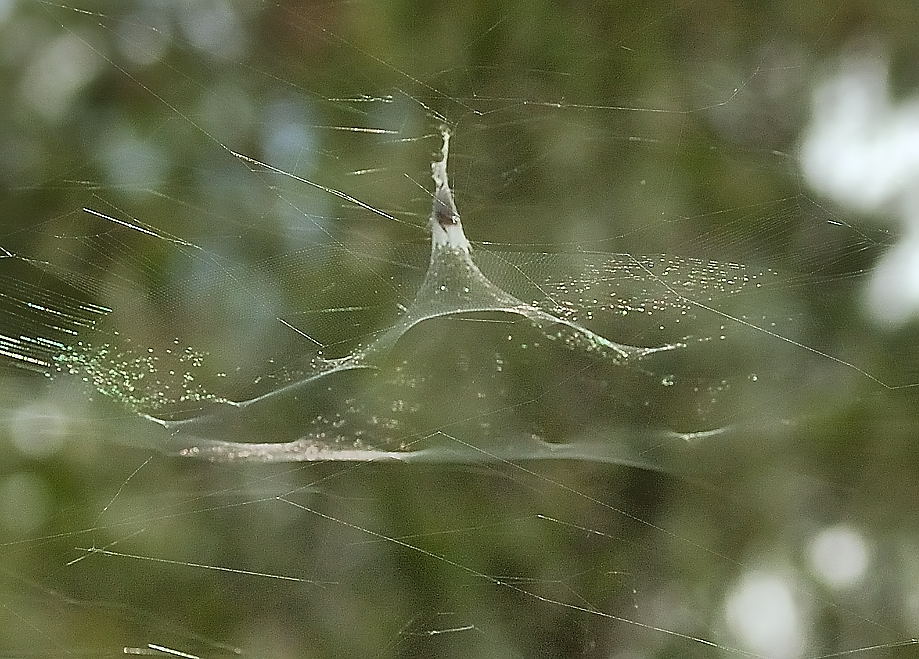
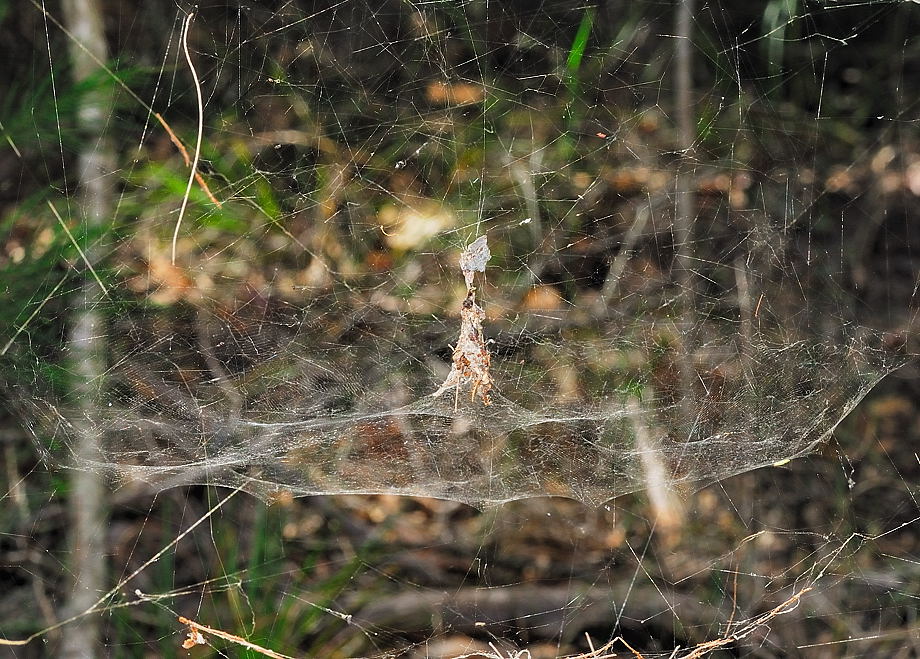
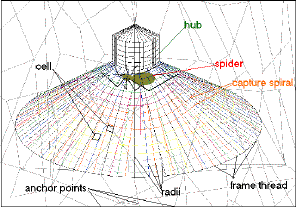
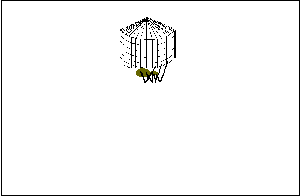
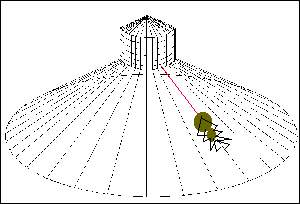
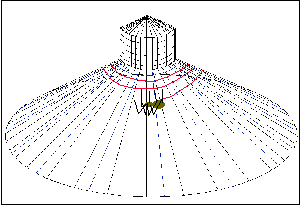
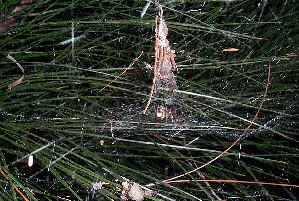
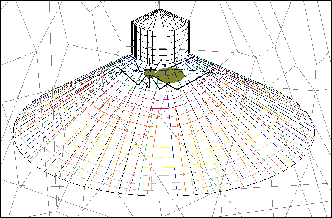
- Let's familiar with the structure of
it tent web.
-
-
-
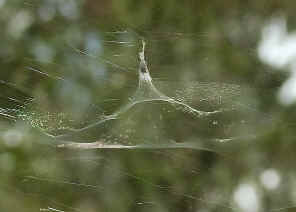
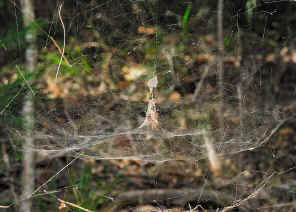
There
are some major differences between the tent webs and the normal orb
webs. Firstly tent webs are horizontal while most orb webs are vertical. Secondly all
silks on the tent webs are not sticky, in most of the orb webs the capture
spirals are sticky and are more elasticity. In comparing with the tent web and orb web, the orb web seems to have a better efficiency in capturing prey.
For the tent web, the main web is always surrounded by tangled thread. The
tangled thread is believed to absorb the first impact of preys so that they can
be captured in the main web. The third difference is on the tent web, each cell is always a square. All sides of the cell are in equal length.
In
orb web each cell is rectangle in shape.
-
  -
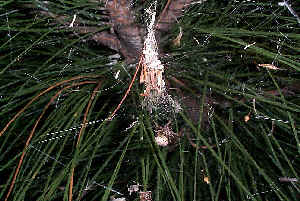
- One evening we saw Mrs. Tent removing the messy thread of her tent. We knew she was
about to build a new one. A Russian Tent
Spider building tent is rarely seen. We cancelled all our activities,
set up the cameras and watched how she built the tent.
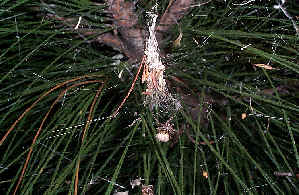
- After Mrs. Tent cleaned up the old messy thread, she just threw
the old silks as a ball under her web site. The Garden Orb Web Spider eats and recycles the
silk but Mrs. Tent did not do that. Notice
the white little ball near the bottom of the photos is the old
silk. All the old thread was removed except the centre hub and some supporting
frame threads at the outside surrounding. When doing the cleaning, she sometimes
went forwards and backwards in her site. Mrs. Tent was laying down some
new frame threads and anchor points. Mrs. Tent took about 30 minutes to clean up
her site.
-
  -
- Then Mrs. Tent put the radii threads from the hub to the
outside frame threads. She walked around her hub and check. If there was a gap,
she added a radius. Then she checked the other side of the hub and added
some other radii, until she found no gaps.
-
  -
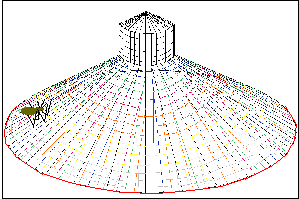
- Then Mrs. Tent laid the spiral threads. Unlike most orb web
spider, Tent Spiders do not lay the auxiliary spiral and the sticky capture
spiral. Mrs. Tent laid only one layer of spiral threads, which although was not
sticky but also worked as capture spiral.
-
-
-
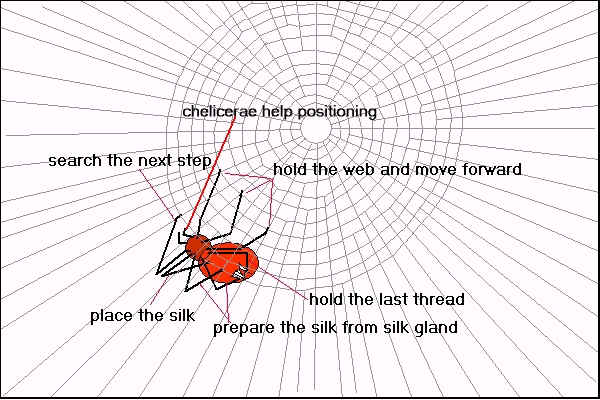
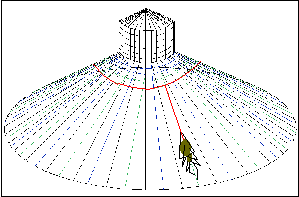
- When laying anti-clockwise, she used the left three legs, L1, L2 and L3
for holding herself and moving forwards. She used the last left leg L4 to hold
the last silk she just laid. She used the last three right legs R2, R3 and R4 to
put the new step silk on. She used the front right leg R1 to search for the next
step. She used her pedipalps for guiding and positioning. Mrs. Tent
took about 0.5 second to lay one step of the spiral threads.
-
  -
- Mrs. Tent kept each cell more or less a square. Once she found a gap
which was too large, she added another radii thread at that point
to the outside frame. On laying the spiral thread, Mrs. Tent sometimes made a U-turn.
We did not figured out why and when she did this.
-
  -
- Another different with normal
orb web is, there are clean cut of different stages in building normal orb web. Garden Orb Web Spider will
put frame, then radii, then auxiliary spiral, and then capture spiral. Every step is
clean. In each stage, Garden Orb Web Spider do only one thing until the
stage is finished. But Mr. Tent just did anything she felt necessary, she might lay
the spiral thread, or radii thread, or even put another anchor point as the next
step.
-
  -
- After a whole night, Mrs. Tent finished the whole main web. In the end of her
web building, Mrs. Tent added more anchor points to her web. During
building the web, from time to time, she went back to the centre and pulled
the web in different directions with all her legs. We believed she was checking the
tension of her web in all directions.
-
  -
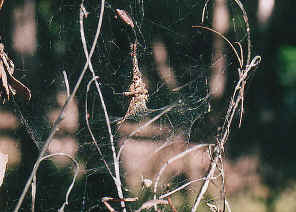
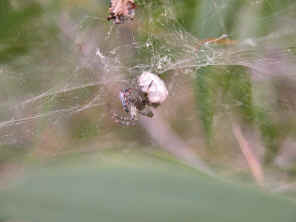
- In the final stage, Mrs. Tent put some more tangled threads on the top
and bottom of her web. It took her more that 12 hours to build her web. During
building, occasionally she took a few minutes rest inside her hub. When all was done,
the sun just shined on the web. Now was the time that Mrs. Tent took a
good sleep in her newly built web.
-
-
- Now we know how tent web is built. The next question is : How spiders learn to
build their web? The answers are in the Discussions
page.
-
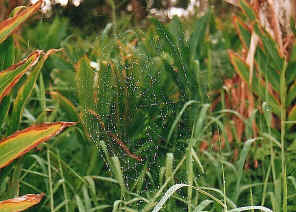
- Tent web silks are non-sticky. They are water proof as well. The water
drop will not attached to the web silks. This is different from orb web
silks. Tent web does not be even affected by heavy rainfall. We did an
experiment using a garden water hose, with a column of water sprayed on the
tent web. The tent web was not affected. Not a single drop of water attached
with the web silk and not any damages can be found. We did the same test
with a orb web build by Garden Orb-web Spider,
Tits web was slightly damage and with a lot of water drips left on the web.
We believed that the tent web silk has the special effect with water surface
tension. There could be some applications if we find out this secret.
-
 -
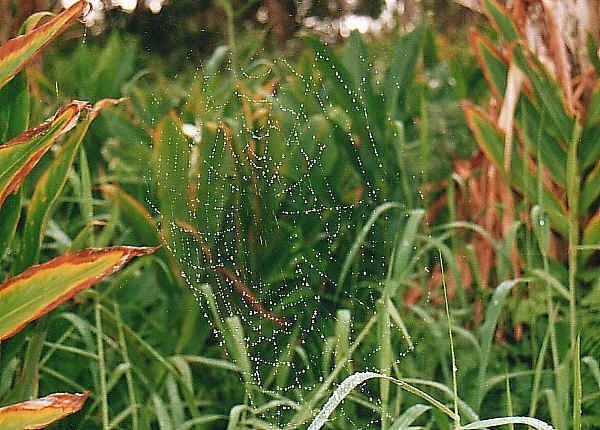
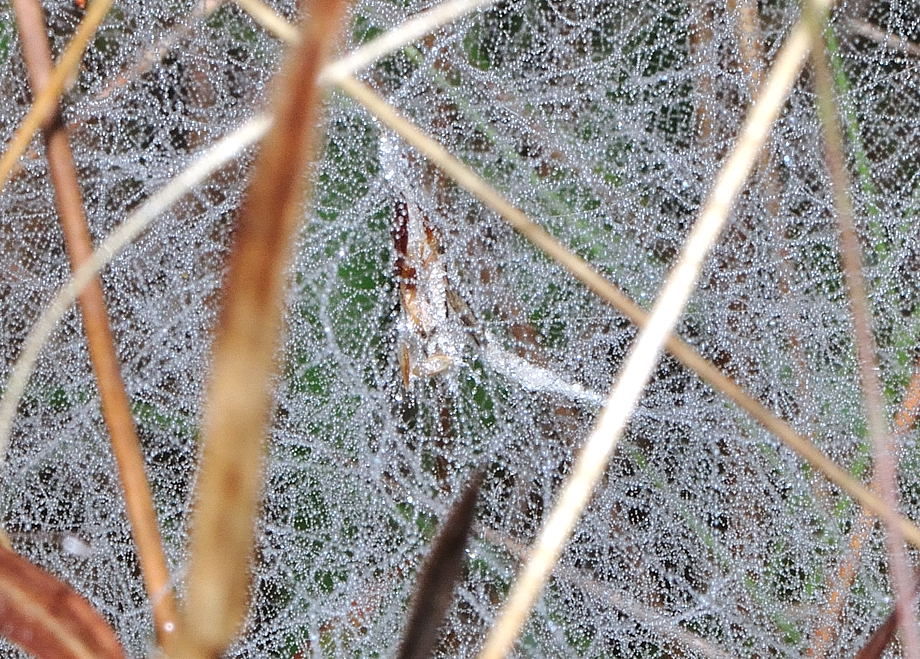
- Orb-web attached a lot of water drops after raining but
Tent Spider's webs are not affected.
-
 -
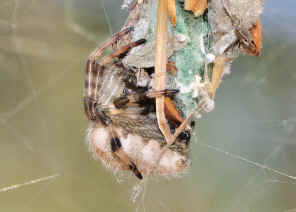 -
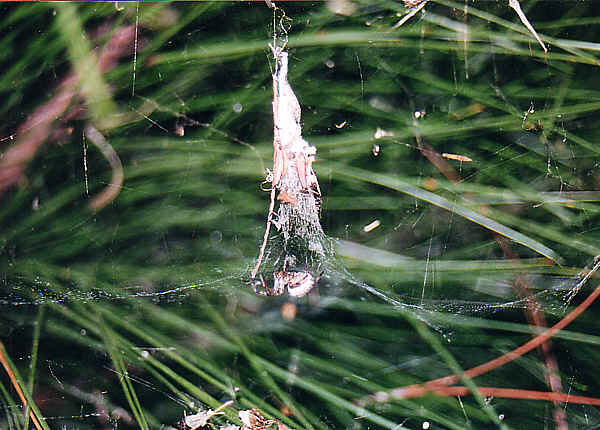
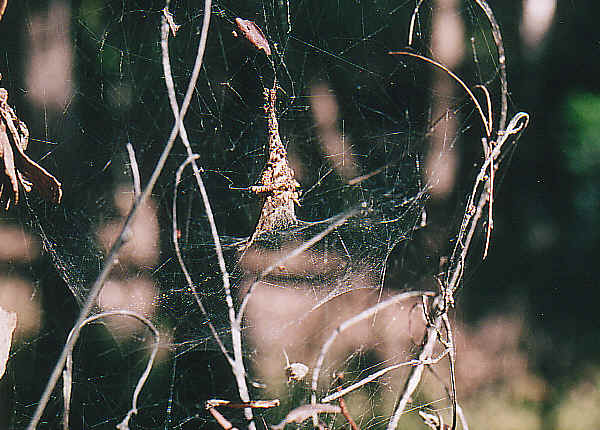
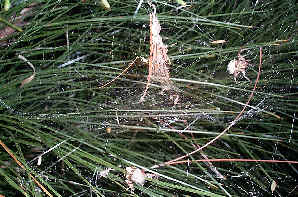
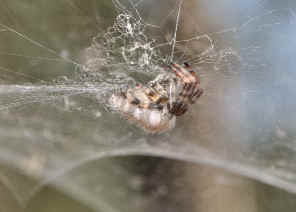
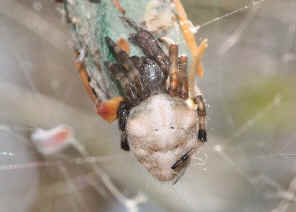
- The spider made so many egg-sacs that they filled up the hub. It could not
even hide inside the hub.
-

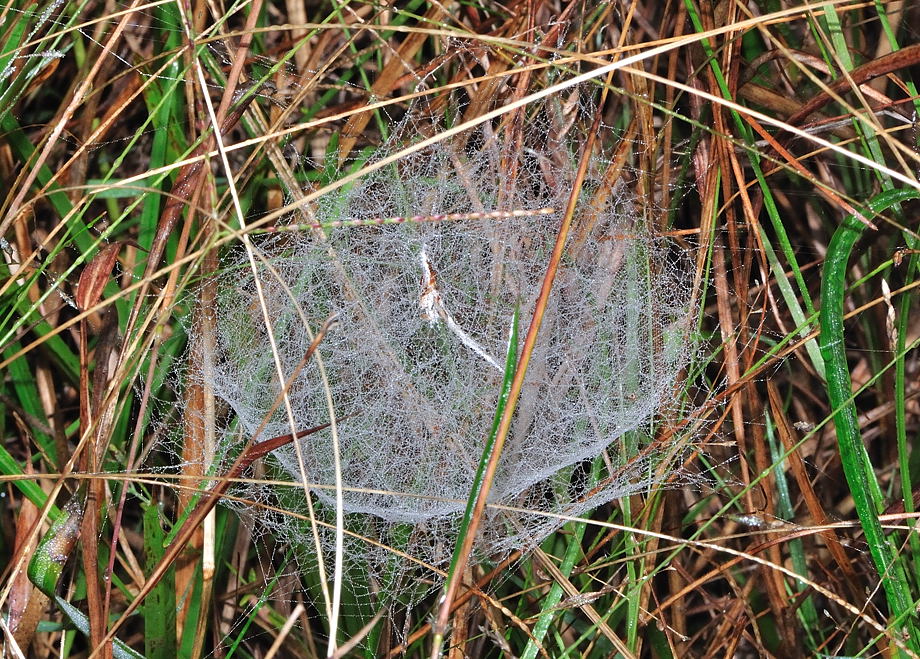
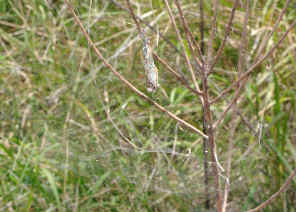
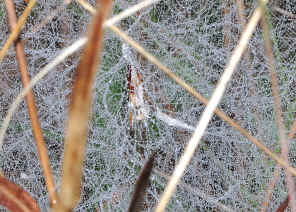 - Small Russian Tent on short
grasses, diameter 100mm.
-
- Reference:
- 1. Cyrtophora
parnasia - The
Find-a-spider Guide for Australian Spiders, University of Southern
Queensland, 2007.
Back to top
[ Up ] [ Tent Spider ] [ Russian Tent Spider ] [ Pan-web Spider ]
| |
|