Red-tipped Shadefly - Argiocnemis rubescens
FAMILY COENAGRIONIDAE
This page contains information and pictures about Red-tipped Shadefly that we found in the Brisbane area, Queensland, Australia.
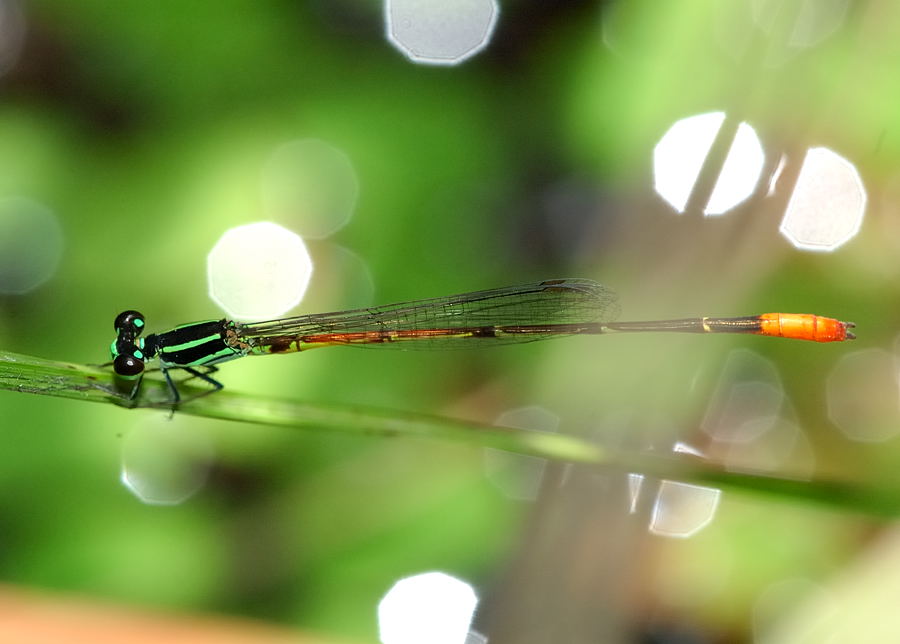
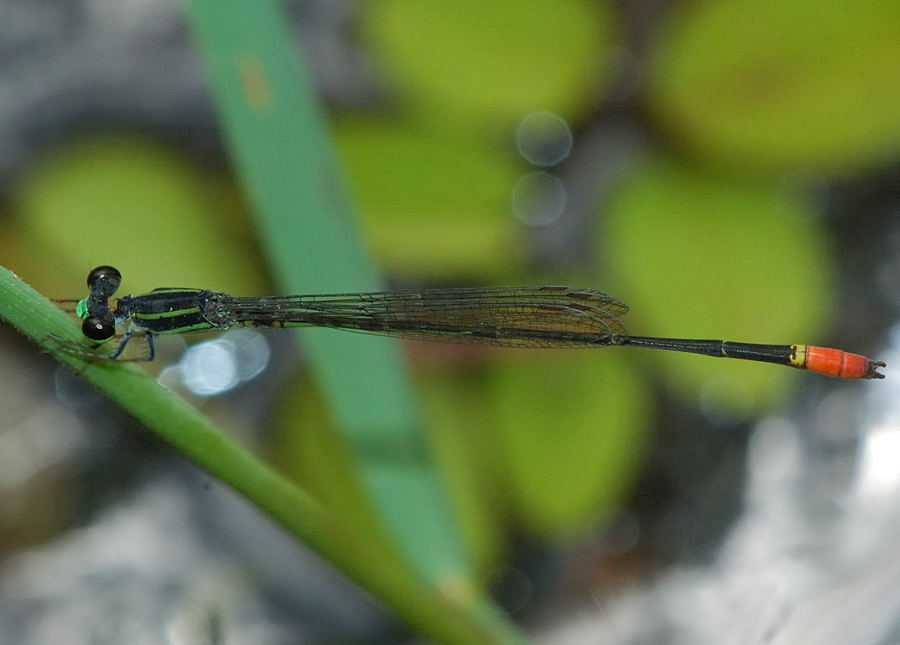
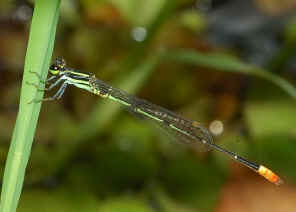
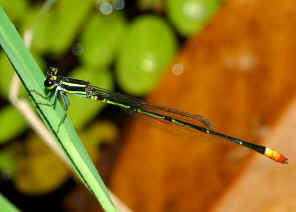
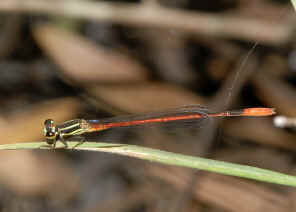
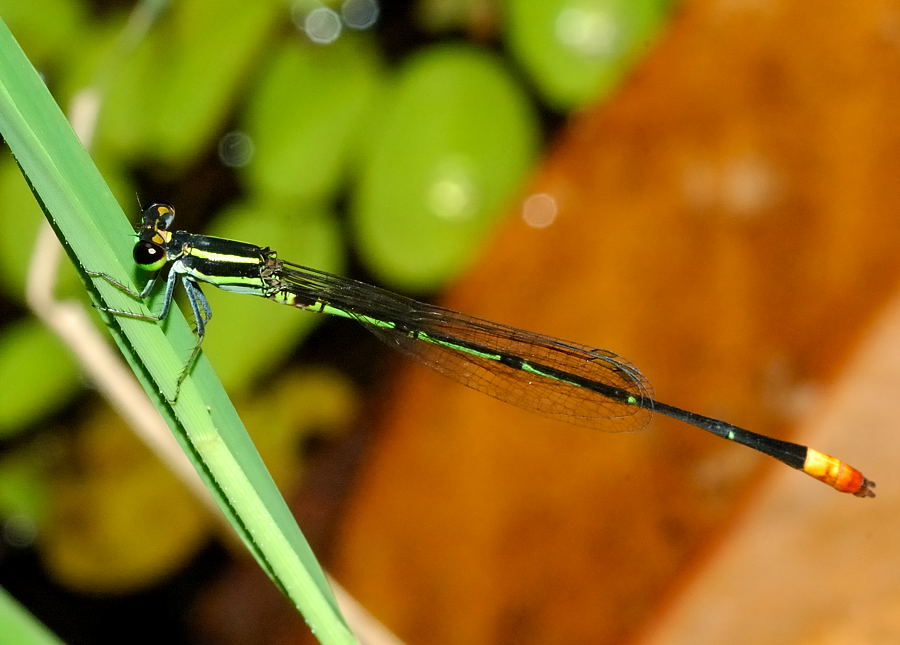
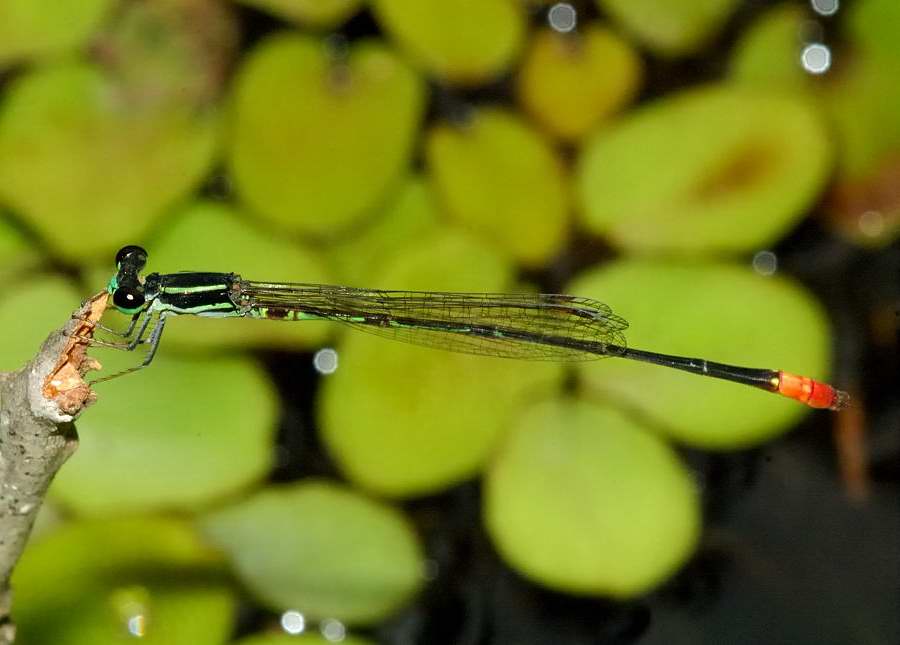
- Male, body length 35mm
- We found this male damselfly a few times in the Lagoon in Karawatha Forest Feb 2008. We sometimes confused this damselfly with the Red-rumped Wisp. They looked almost the same.
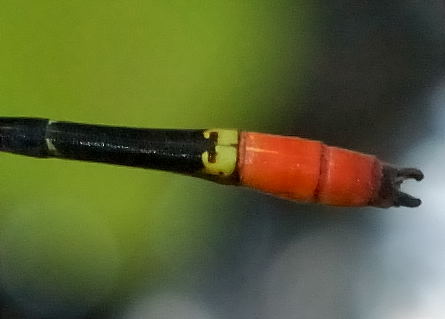
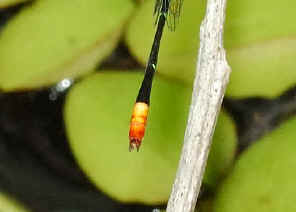
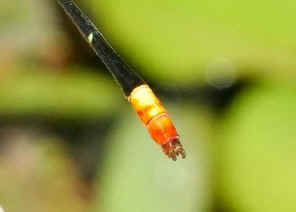
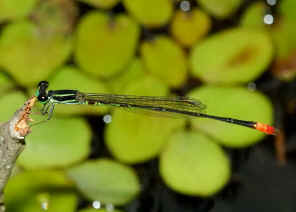
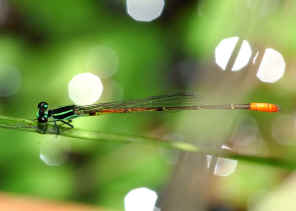
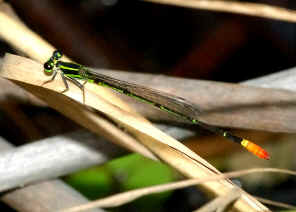
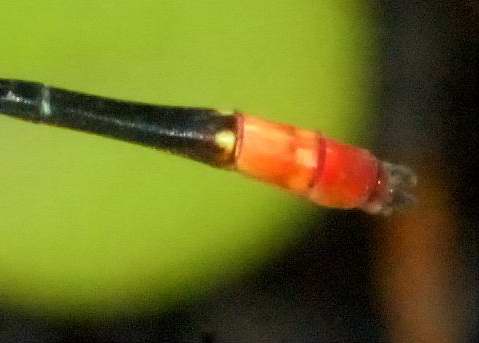
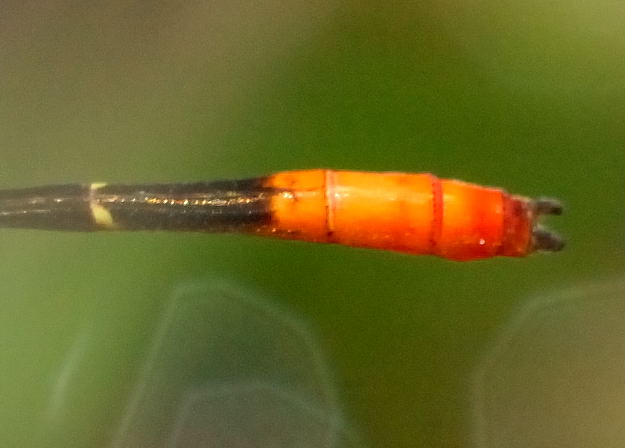
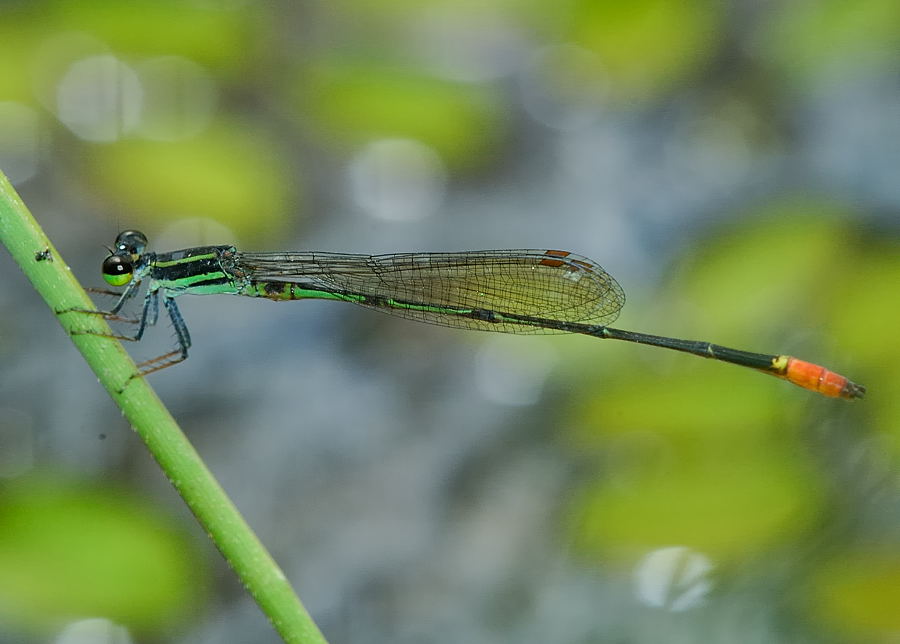
- From the reference information, in Australia there are three damselflies with orange-red tip (not include those with red adbomen or red thorax). All three can be found in Brisbane, although we need some luck to find either one of them. They are the Pygmy Wisp, the Red-rumped Wisp and this Red-tipped Shadefly. For the males, the Pygmy Wisp male is the smallest with abdomen tip in pale orange-red mixed with black colour. The Red-rumped Wisp male is medium size, with orange-red colour on 7-10 abdominal segments. The Red-tipped Shadefly male is slightly larger and with orange-red colour on 8 and 9 abdominal segments.
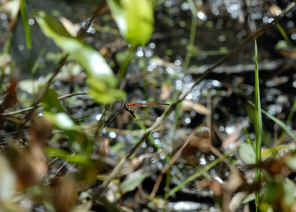
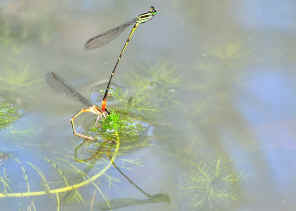
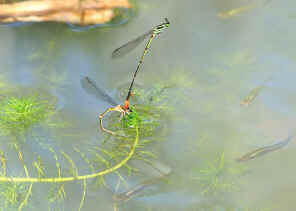
- The habitat
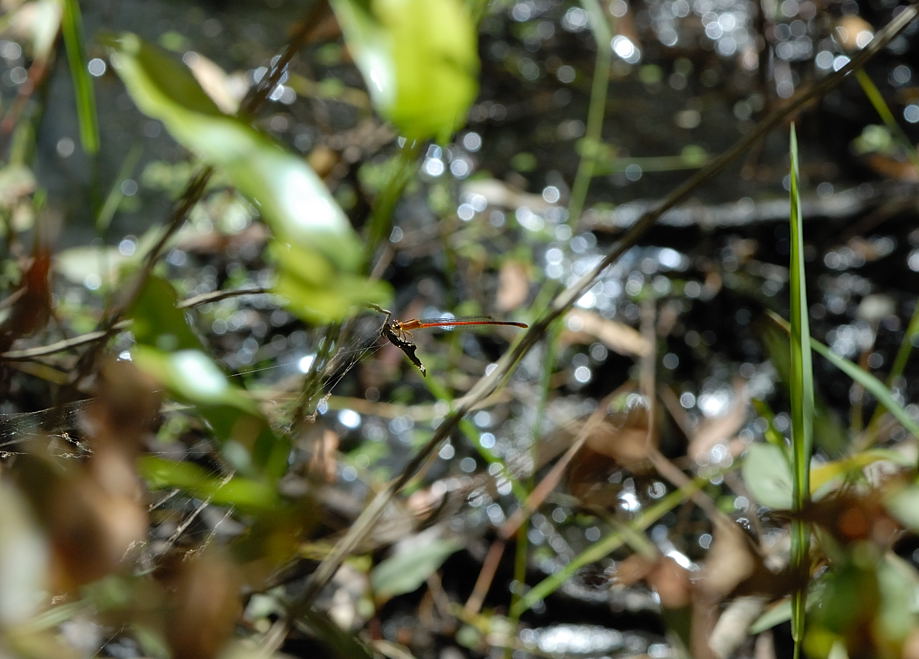
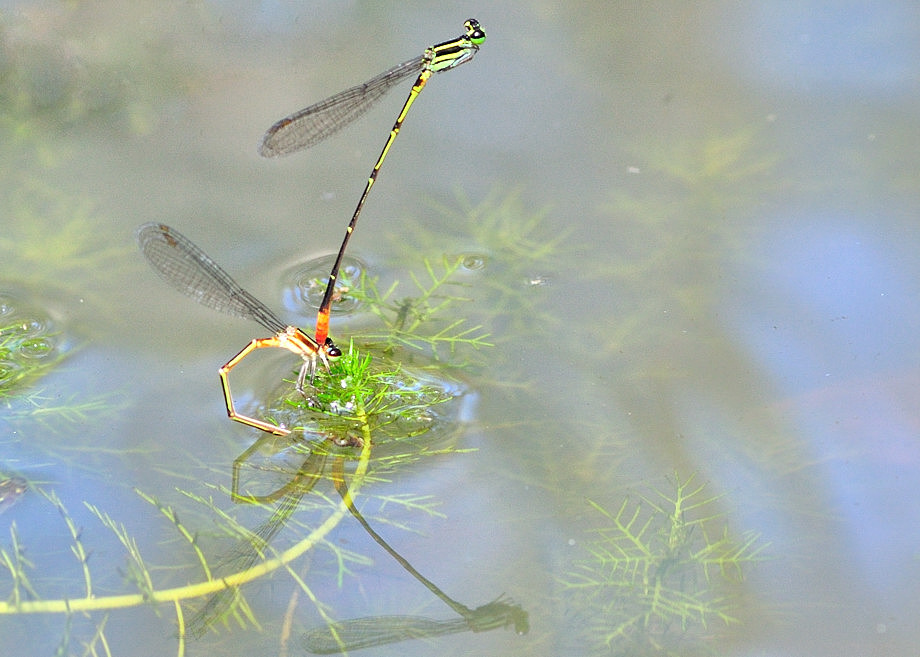
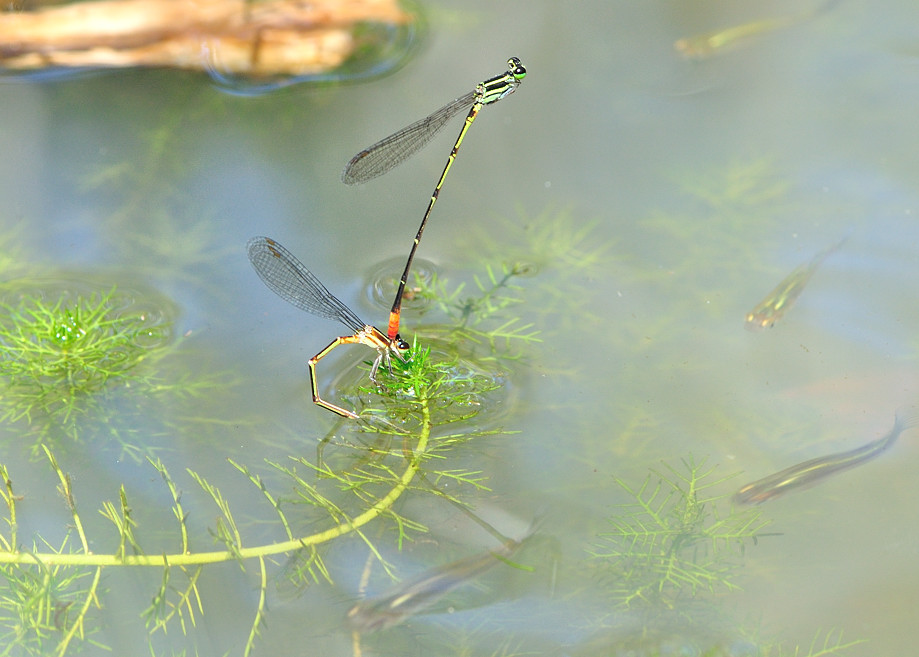
Male
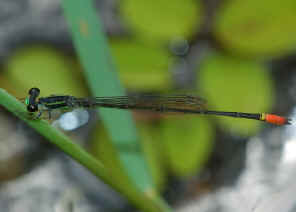

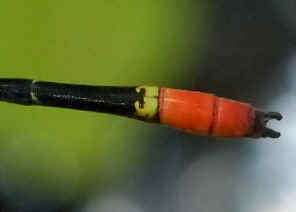
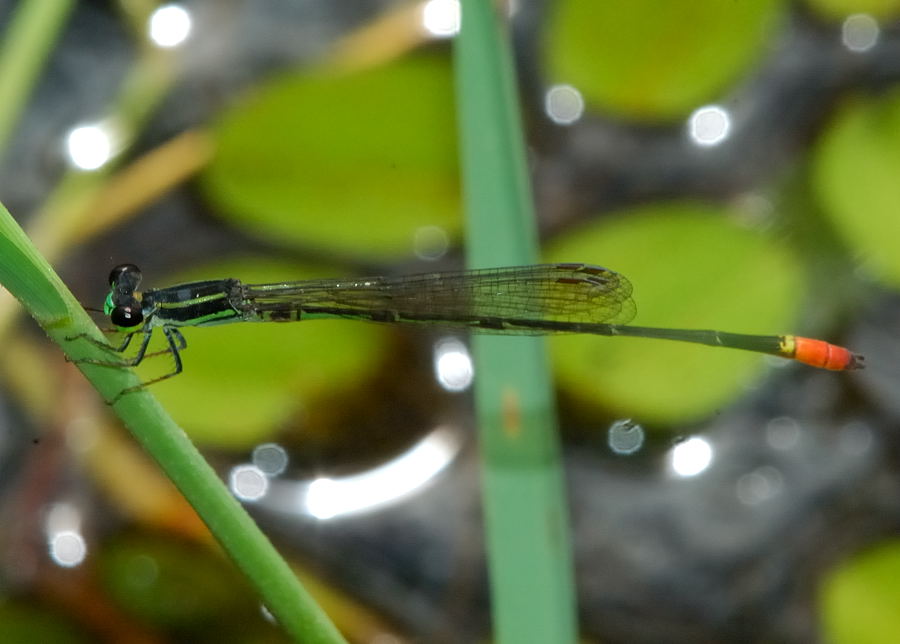
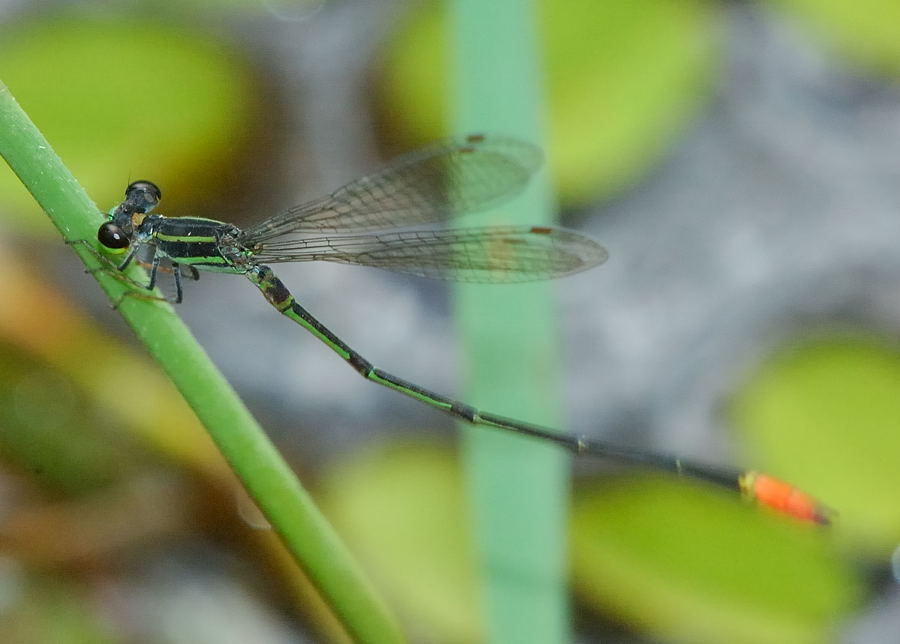
- The damselfly was resting on the edge of the lagoon on a reed. It was very camera friendly. So friendly that we can even touch it gently, then it flied to a few centimeters away.
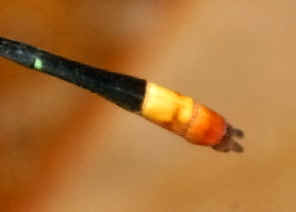
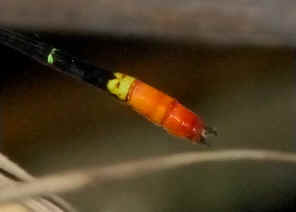
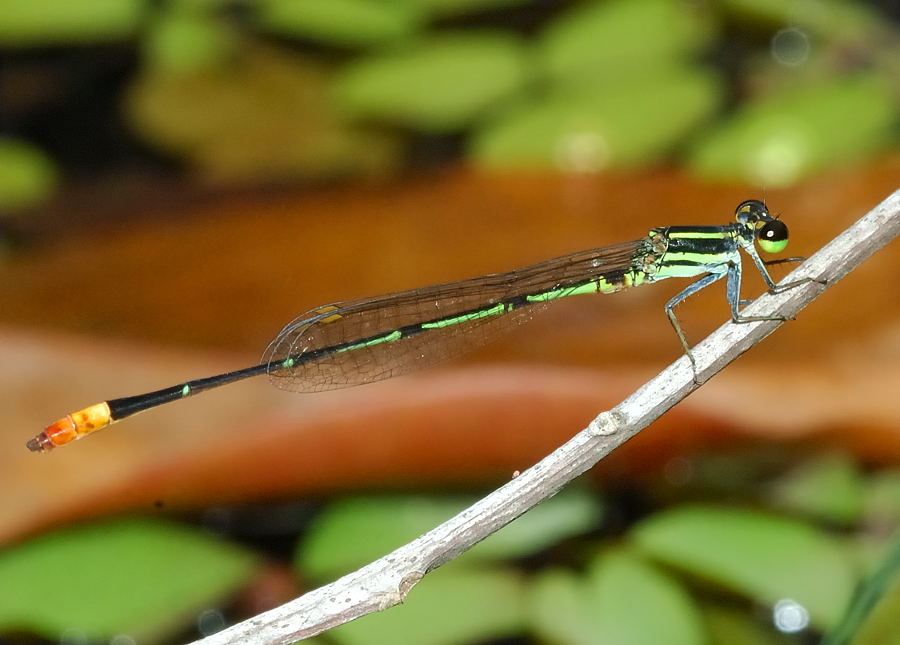
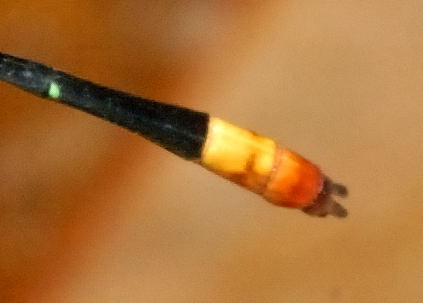
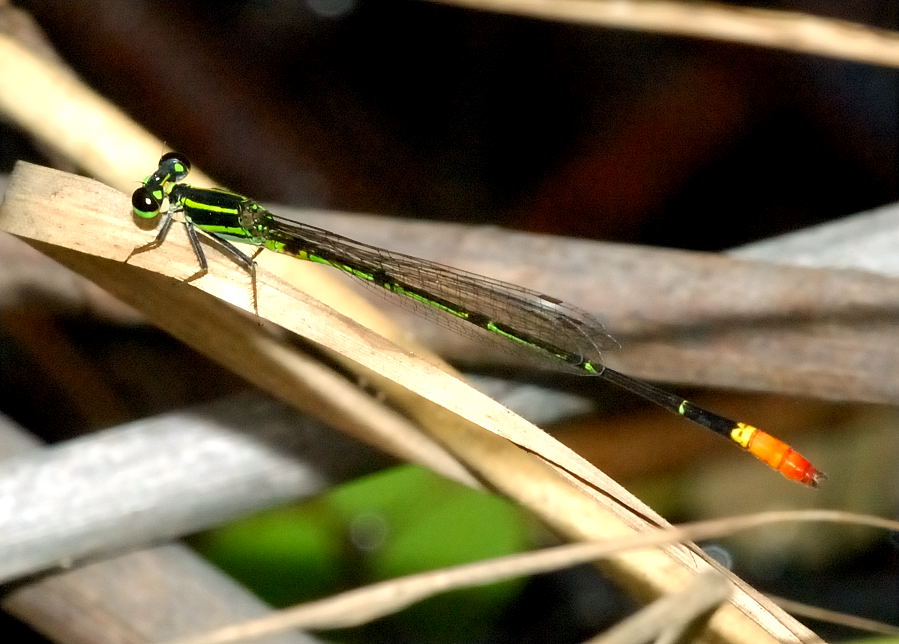
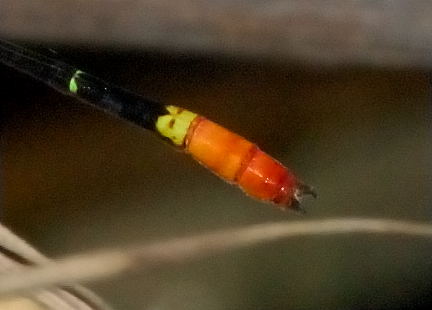
- There is the funny yellow marking on the 7 abdominal segment. But there is not any reference information about this. We think this could be just the variation markings within individuals.
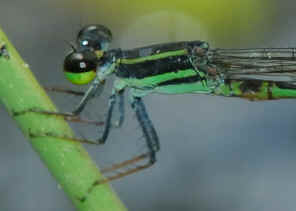
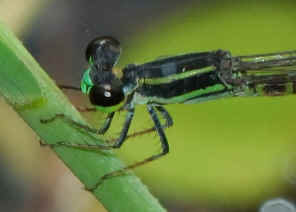
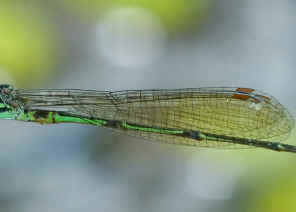
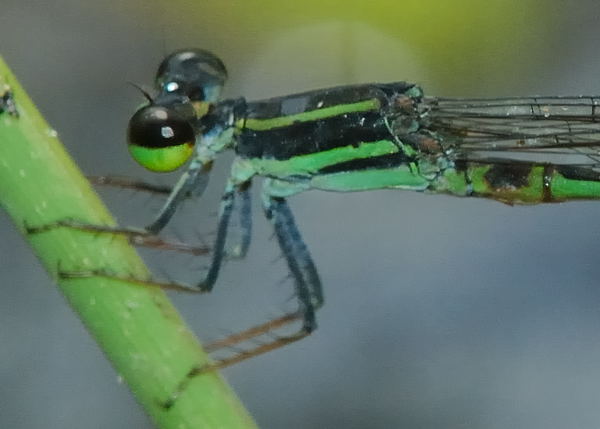
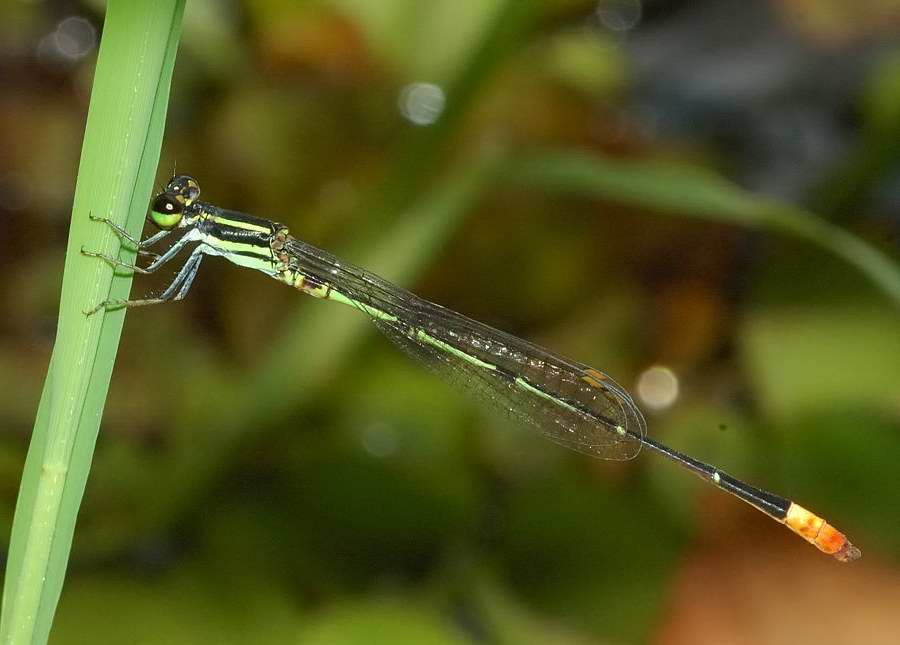
- The male damselfly has pale green stripes on black ground colour on thorax.
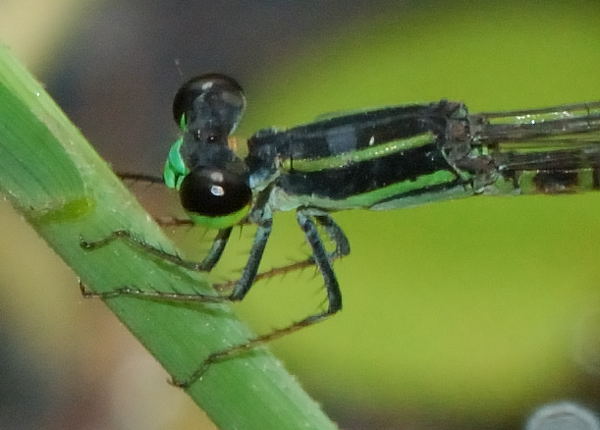
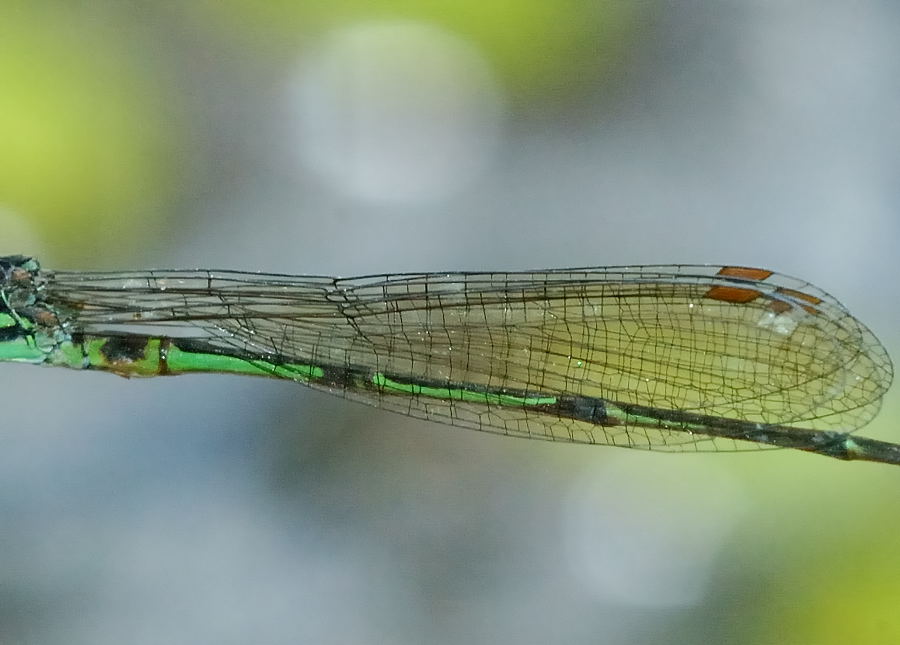
Female
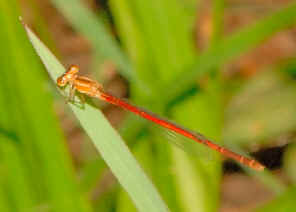
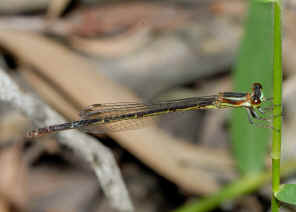
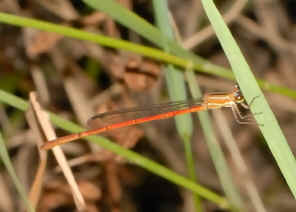
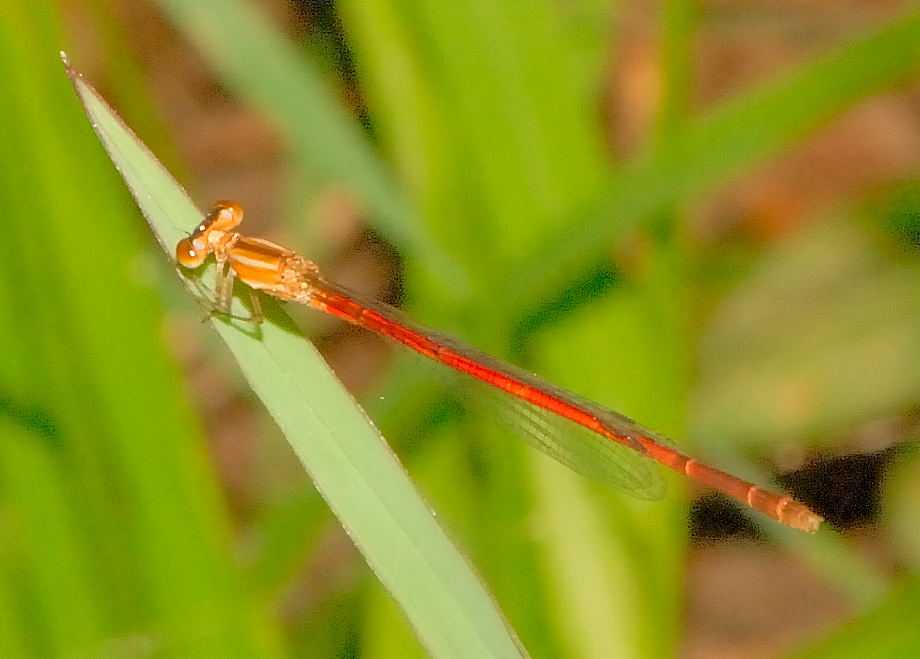
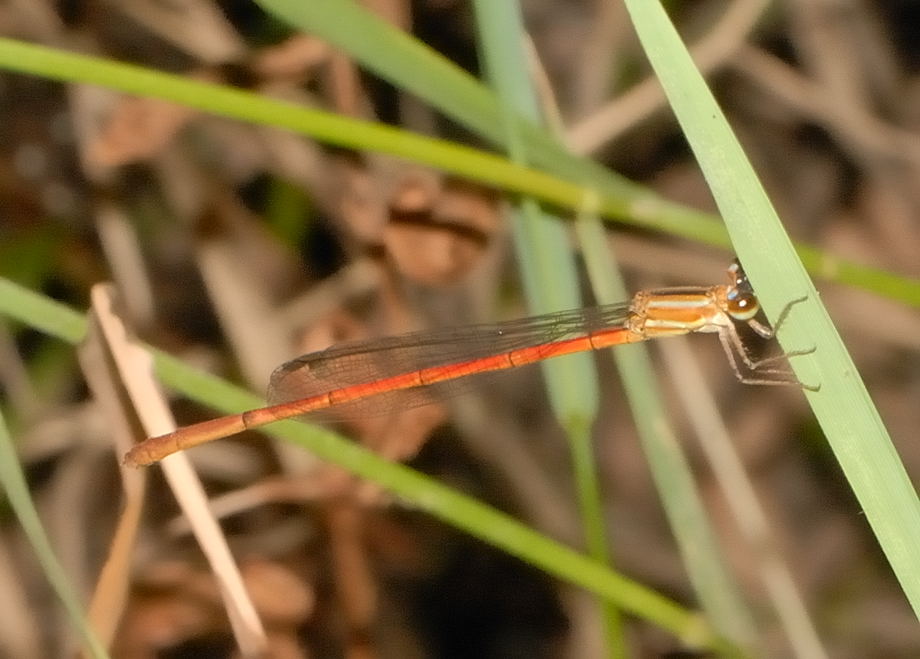
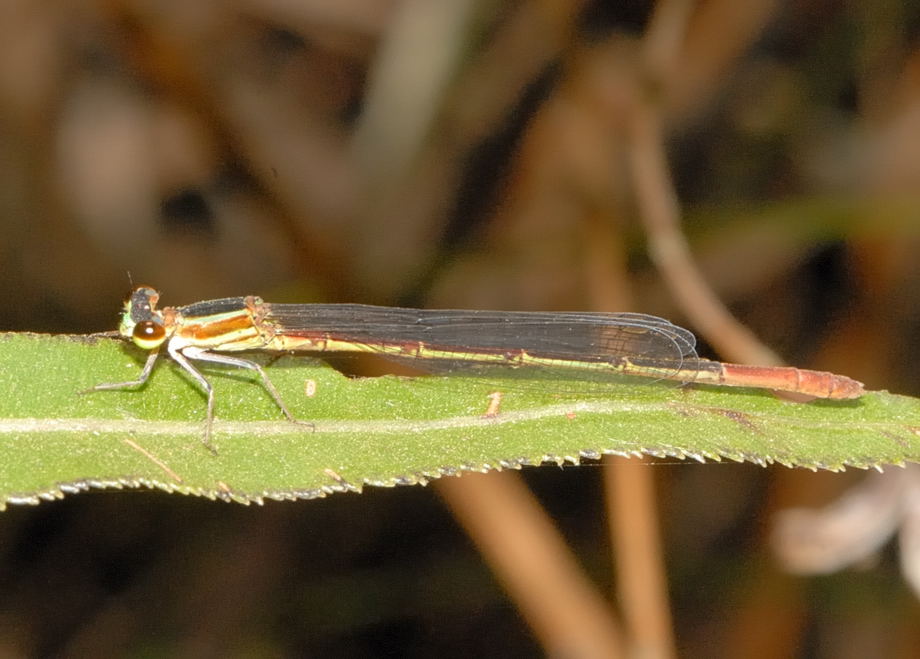
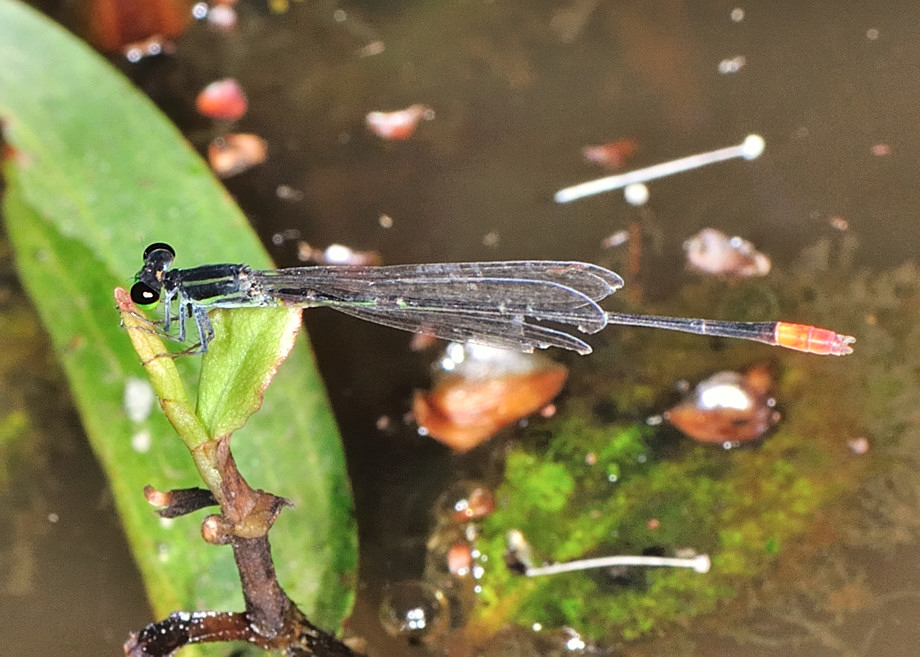
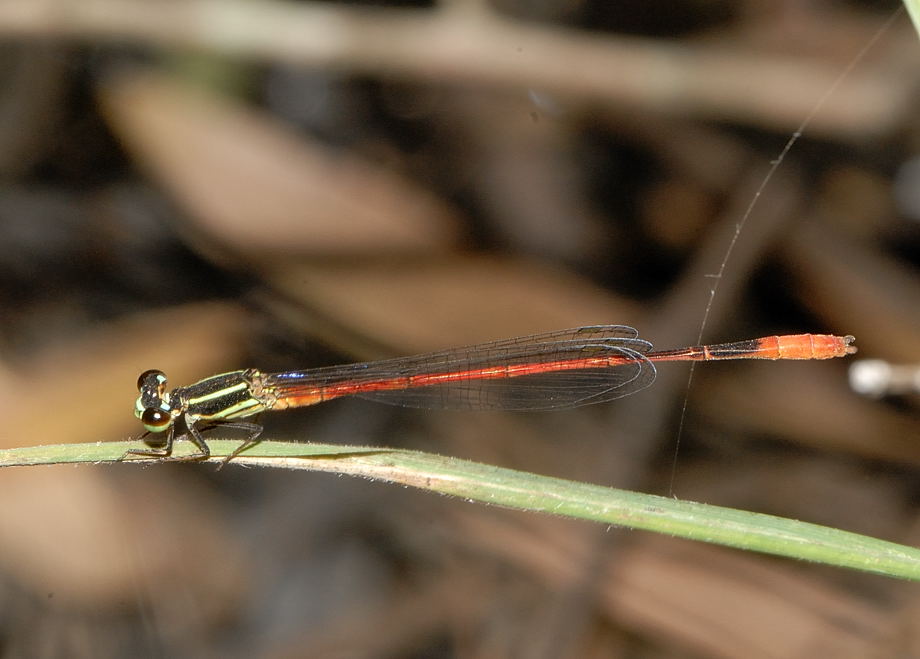
- The females' colour vary quite a bit between individuals. They are largely orange-red to deep reddish-brown. We found a few females on Sep 2009 in Carbrook Wetlands. They resting in the shade at the water edge in a sunny morning. They flied away after we took a few photos.
-
The "Tail Light"
- We came back to the lagoon we found the about damselfly the next week end. We found this damselfly was locally common. We found a few of them resting on the edge of the lagoon, each occupying a small area, about two meters apart. All are males, we did not found a female yet.
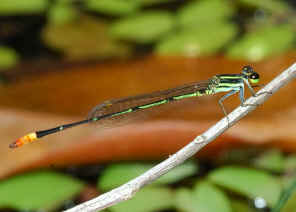
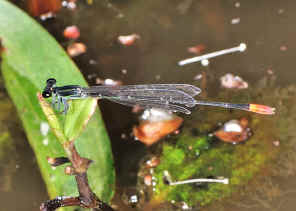
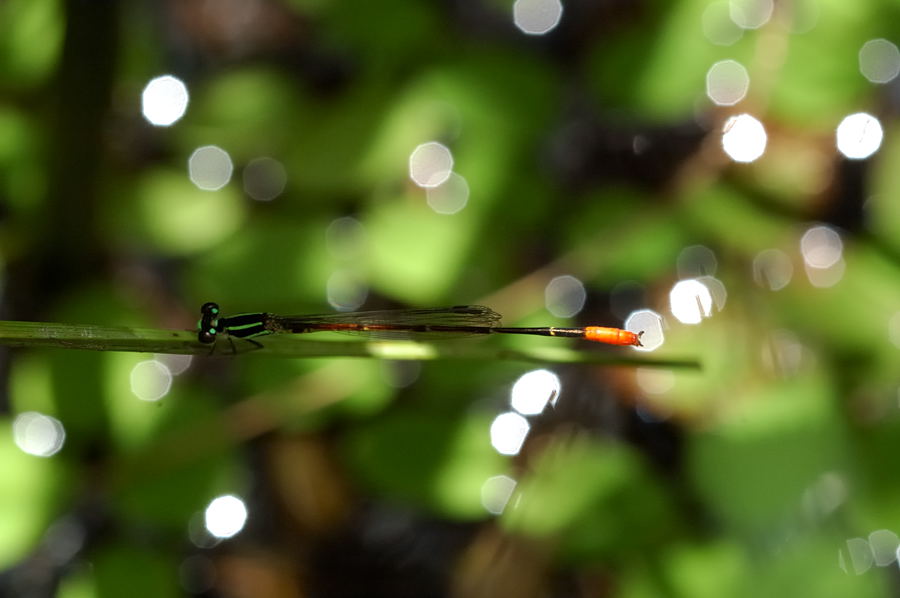
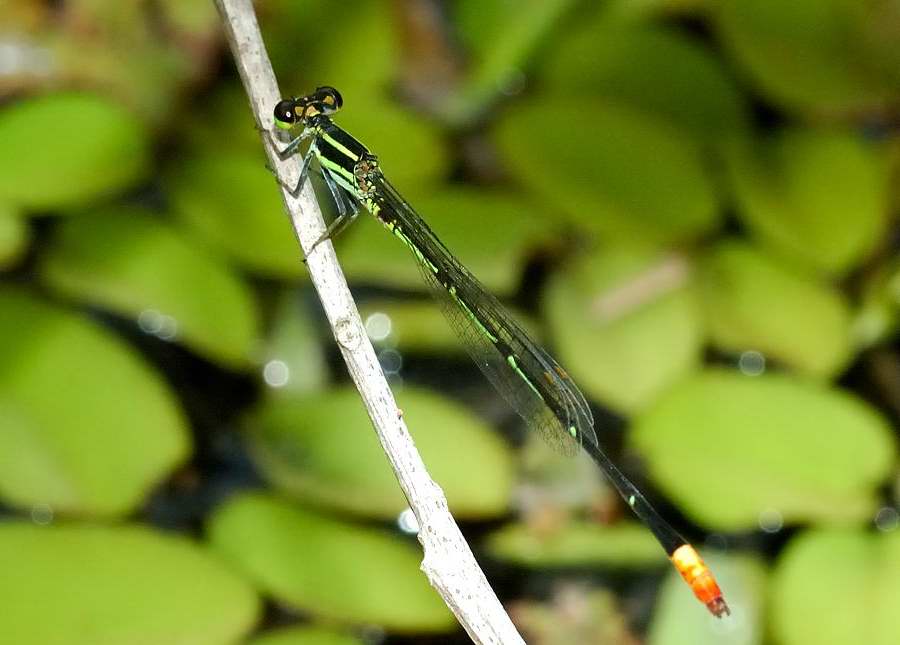
- They like to rest on the water edge with fairy open space but in the shade. This is logical because under shade with open area, their "red tail light" is even more noticeable from the distance.
-
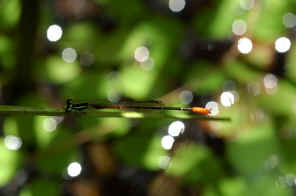
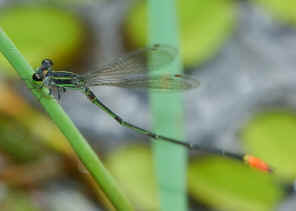
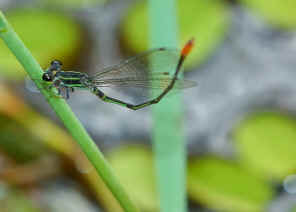
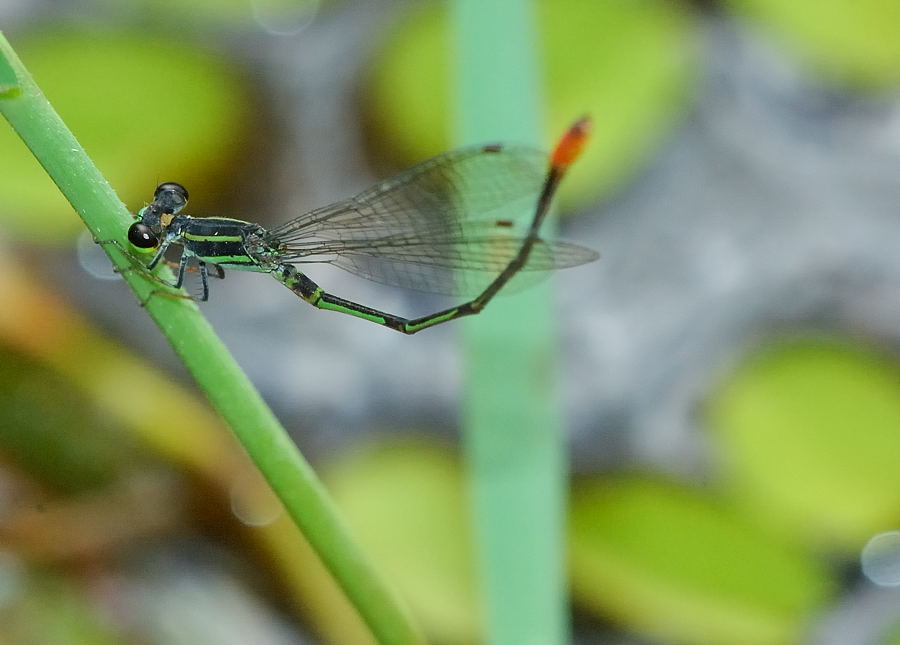
- While we were watching, the damselfly slowly waving its tail up and down. We believed it was advertising its red tail-light to attract the females or an territory behaviour as an signal to warn off other males, or both.
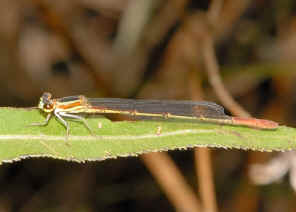
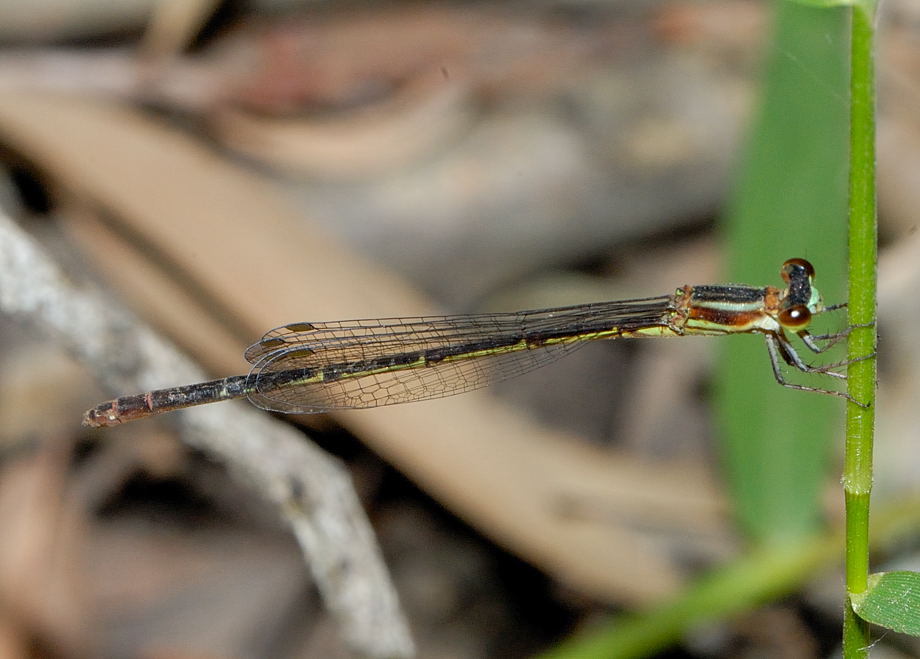
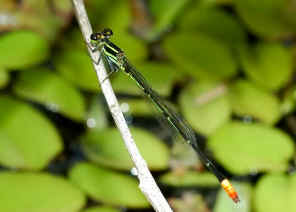
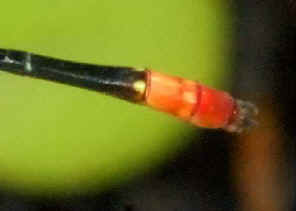
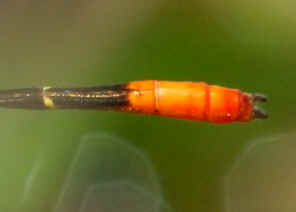
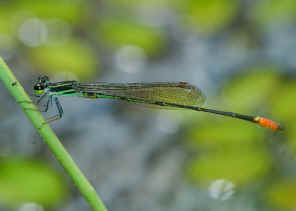
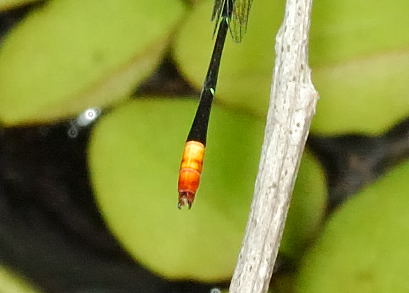
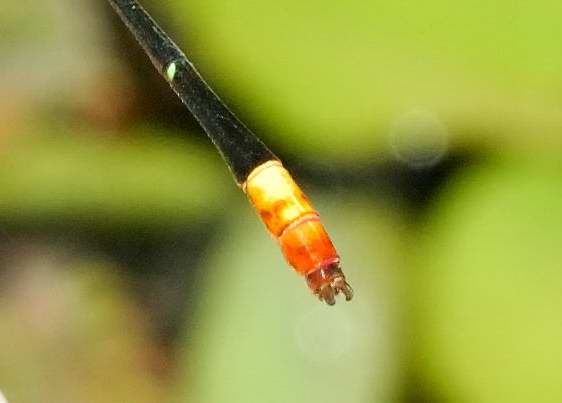
- The damselfly has a dot on top of each eye, a short cross line on neck pattern on the 7th segment. We noticed that for those six individuals that we took photo, all the colours of the patterns mention were different. The dots and line patterns were greenish blue on some individuals but pale grey on others. Some individuals were without any pattern on the 7th segment, some were yellow and some were orange-red.
-
-
-
The colour Variations
- Reference:
- 1. The Australian Dragonflies - CSIRO, Watson, Theisinger & Abbey,1991, p127.
- 2. A Field Guide to Dragonflies of South East Queensland - Ric Nattrass, 2006, p32.
- 3. The Complete Field Guide to Dragonflies of Australia - CSIRO, Günther Theischinger and John Hawking, 2006, p98.
